Alien Contact Attempts May Be Hidden by Space Weather, Study Suggests
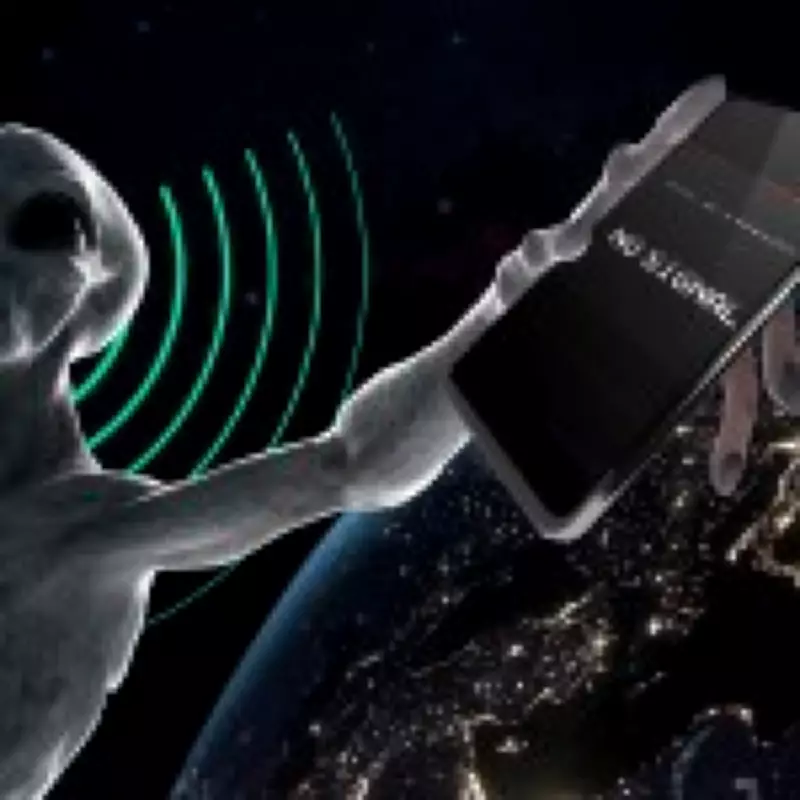
Aliens might have been trying to contact humans for years, but we could be unintentionally ignoring their signals due to space weather, according to a new study. The Search for Extraterrestrial Intelligence Institute has proposed that stellar activity could be distorting or "smearing" radio transmissions from potential extraterrestrial civilizations, making them undetectable with current methods.
The Challenge of Detecting Narrowband Signals
Published in The Astrophysical Journal, the research highlights how traditional searches for alien life focus on extremely narrow signals. Dr. Vishal Gajjar, an astronomer at the SETI Institute and lead author, explained that if a signal is broadened by its star's environment, it can slip below our detection thresholds. This phenomenon might account for the radio silence observed in technosignature searches, where technosignatures refer to evidence of technology used by alien life.
The study examined how space weather, particularly from cool and dim red dwarves—which make up 70% of stars in the cosmos—can distort these technosignatures. By analyzing radio transmissions from spacecraft in our solar system, researchers found that stellar activity can reshape signals, potentially hiding them from Earth-based detectors.
Understanding Space Weather and Its Effects
Space weather does not involve rain clouds in space but refers to conditions and events, primarily caused by the sun, that impact Earth. Our star regularly emits plasma and radiation through solar flares and coronal mass ejections. When these particles collide with Earth's atmosphere, they can trigger geomagnetic storms that fry satellites and create phenomena like the Northern Lights.
Grayce C. Brown, co-author of the study, emphasized the need to adapt detection strategies. "By quantifying how stellar activity can reshape narrowband signals, we can design searches that are better matched to what actually arrives at Earth, not just what might be transmitted," she said.
Implications for the Fermi Paradox and UFO Sightings
This research offers hope to long-time alien hunters like Mark Christopher Lee, who told Metro that it could help answer the Fermi Paradox—the question of why we haven't found aliens if the universe is so old. Lee compared the situation to tuning into a radio station during a solar storm, where signals get broadened and "ghost" us unintentionally.
From a UFO perspective, Lee suggested that the sun's plasma might explain why sightings often describe erratic behavior. "Perhaps alien tech is designed for interstellar travel but gets scrambled by our solar system's 'weather'," he added. "If true, it suggests we're not alone, but the universe's natural barriers are keeping the conversation one-sided."
The findings underscore the importance of refining our search techniques to account for volatile space weather, potentially unlocking new avenues in the quest for extraterrestrial intelligence.