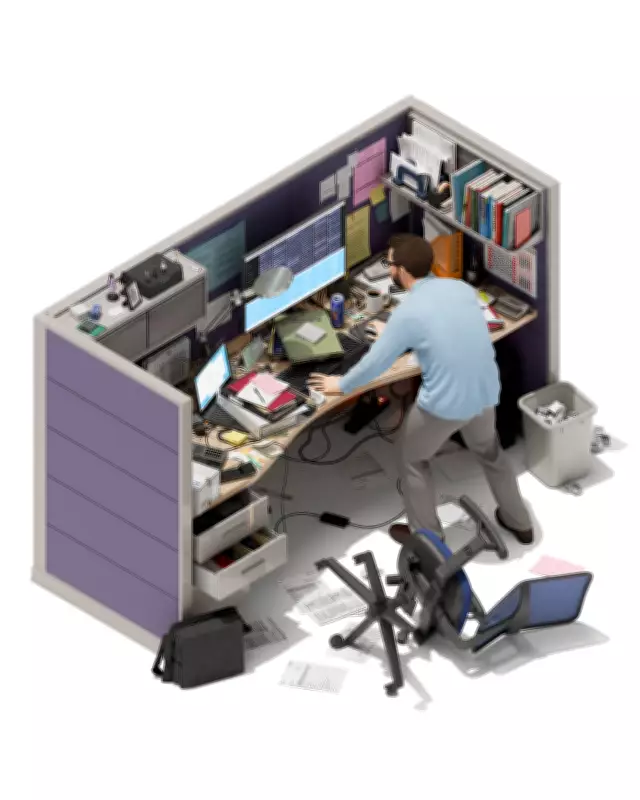
The Relentless Grind of San Francisco's AI Startup Scene
In the heart of San Francisco's artificial intelligence economy, a brutal work culture has taken root that serves as a stark warning for industries far beyond technology. Startup employees are routinely working 12-hour days, often seven days a week, with weekends becoming an increasingly rare luxury in the race to dominate the AI landscape.
Living the Startup Dream Without Balance
Sanju Lokuhitige, co-founder of pre-seed AI startup Mythril, embodies this relentless pace. "I work seven days a week, 12 hours a day," he admits, describing a schedule that leaves little room for personal life. "Sometimes I'm coding the whole day. I do not have work-life balance." Lokuhitige moved to San Francisco specifically to immerse himself in this environment, where even Sunday cafes are filled with people working on their laptops.
The intensity reaches extreme levels at some early-stage companies. One anonymous employee described working conditions at a Dogpatch apartment-turned-office where founders live and work from 9am until 3am, breaking only for DoorDash meals or sleep. "I'd heard about 996, but these guys don't even do 996," he says, referring to the notorious Chinese work schedule of 9am to 9pm, six days a week. "They're working 16-hour days." He characterized the situation as "horrendous" yet typical of the current AI startup environment.
A Shift in Tech Industry Dynamics
While startup hustle culture is nothing new, the current AI boom has created distinct pressures. Mike Robbins, an executive coach who has worked with Google, Microsoft, and other tech giants, notes a significant shift in priorities. "When companies become less scared about losing employees, then they can be a little more forthright in terms of what they want and be a little more demanding," he explains.
Robbins observes that conversations about employee wellbeing and burnout prevention, which were priorities during and after the pandemic, have largely been replaced by discussions about change, disruption, and uncertainty. This shift comes as major tech leaders like Mark Zuckerberg and Elon Musk openly discuss AI replacing junior and mid-level engineers while demanding increased efficiency from their workforces.
The statistics underscore this transformation. Tech companies laid off approximately 250,000 workers globally in 2025, with AI frequently cited as a contributing factor. Job postings for entry-level tech positions have dropped by a third since 2022, while positions requiring at least five years of experience have increased, according to Indeed's Hiring Lab.
The Anxiety Driving the Grind
Kyle Finken, a software engineer at AI tool developer Mintlify, captures the prevailing sentiment: "I think a lot of people are concerned like, 'Oh, am I going to have a job in three years?'" This anxiety drives many to work longer hours, both to keep up with rapidly evolving technology and to build impressive portfolios that might secure future employment.
Lokuhitige explains the new reality: "No one hires junior developers anymore." Instead, landing a job requires "doing something cool" like building innovative products that catch the attention of larger companies. The fear of falling behind is palpable, with workers concerned that taking a weekend off might mean missing a crucial technological development.
Despite these pressures, many tech workers remain energized by what they see as extraordinary innovation. Finken acknowledges the creative and productive aspects of this moment in tech history, where extra hours often come from genuine interest in new tools rather than employer demands alone.
A Harbinger for Other Industries
Economists increasingly view San Francisco's AI work culture as a "canary in the coalmine" for the broader economy. Stanford researchers found substantial declines in employment for early-career workers in AI-exposed industries, suggesting these trends will spread. Dario Amodei, CEO of Anthropic, has predicted AI could eliminate about half of all entry-level white-collar jobs within five years.
The International Monetary Fund head recently warned that 60% of jobs in advanced economies will be eliminated or transformed by artificial intelligence, describing the impact as "like a tsunami hitting the labour market." Already in San Francisco, Uber drivers compete with self-driving Waymo vehicles, and robotic coffee bars replace human baristas.
Robbins notes that Silicon Valley's influence has shifted. Where companies once looked to tech giants as models for workplace policies like unlimited vacation or free office meals, "Now, people aren't asking me to tell them what's going on in the Valley so that they can adopt it, the same way they were a decade ago."
Instead of representing an ideal workplace model, the tech industry may serve as a premonition of the anxiety and compensation attempts coming for workers across multiple sectors. The brutal work culture emerging in AI startups reflects not just the pressures of technological competition but the fundamental restructuring of work itself as artificial intelligence reshapes what jobs remain and what they require from those who hold them.