AI's Automation Wave Echoes Industrial Revolution's Turbulent History
The recent release of Anthropic's AI tool for automating legal tasks like contract review has reignited a centuries-old debate about technology's impact on employment. This development follows major law firms already investing in similar analysis software, with Clifford Chance announcing a 10 per cent reduction in business support staff last November. The fundamental question remains unchanged since the Industrial Revolution: does revolutionary new technology ultimately destroy or create jobs?
Historical Parallels: From Textile Mills to AI Algorithms
The mechanisation of weaving in the late 18th and early 19th centuries provides sobering historical context for today's AI revolution. Initially, the textile industry experienced massive growth as spinning efficiency improved dramatically - reducing the time needed to process 100 pounds of raw cotton from approximately 50,000 person hours to just 300 hours by 1800. However, this technological advancement created a complex employment landscape that economists like David Ricardo struggled to interpret.
Ricardo's evolving views on machinery reflect the nuanced reality of technological disruption. While initially optimistic about job creation through industry growth, he grew increasingly concerned about employment destruction as power looms replaced skilled handloom weavers in factories. These weavers, who had initially prospered from increased cotton yarn production, were gradually driven into appalling poverty by industrial mechanisation.

The Peterloo Legacy: When Technological Disruption Sparks Political Unrest
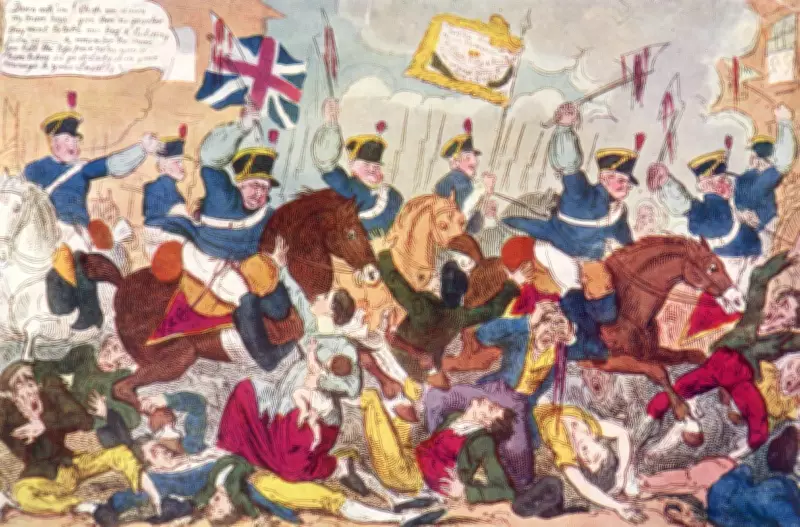
The social consequences of weaving mechanisation culminated in the Peterloo Massacre of 1819, when British militia fired upon a protesting crowd in Manchester. This tragic event occurred against a backdrop of widespread civil unrest throughout newly industrialising northern regions, particularly in Greater Manchester where textile manufacturing was concentrated.
Contemporary sources like "The Handloom Weavers' Lament" captured the era's tensions, denouncing both mill owners and government as "tyrants" while documenting plunging wages and dire poverty. Throughout the 1820s, the British government implemented repressive domestic policies that faced resistance in textile towns like Oldham, where local authorities essentially capitulated to militant working-class demands.
Modern Implications: Planning for AI's Employment Impact
Today's AI revolution presents similar challenges to those faced during the Industrial Revolution. While automation makes specific services cheaper - potentially freeing consumer and business spending for other areas - it simultaneously replaces workers in affected sectors. The legal profession's current experience with AI automation demonstrates how even highly skilled occupations face disruption.
The historical precedent suggests that while economic growth eventually generated new employment opportunities after the Industrial Revolution's initial disruption, this process required at least two decades of painful adjustment. Real wages only began rising after handloom weavers had essentially died off as a professional class.
This historical perspective underscores the urgent need for contemporary governments to develop comprehensive plans addressing potential large-scale redundancies in coming years. As with the textile industry's transformation, the transition period between job destruction and new employment creation represents a critical window for social stability and economic planning.
Paul Ormerod, Honorary Professor at the Alliance Business School at the University of Manchester, emphasises that today's leaders must learn from history's lessons as AI continues transforming professional sectors. The parallel between 19th-century weaving mechanisation and 21st-century AI automation serves as a powerful reminder that technological progress without adequate social planning can have profound political consequences.