AI Expert Warns of Hindenburg-Style Disaster in Race for Artificial Intelligence
A leading artificial intelligence researcher has issued a stark warning that the intense commercial race to bring AI products to market is creating conditions ripe for a catastrophic, Hindenburg-style disaster that could shatter global confidence in the technology. Professor Michael Wooldridge of Oxford University, a prominent figure in AI research, argues that the immense pressure on technology firms to release new tools before their capabilities and potential flaws are fully understood presents a grave risk to public trust and safety.
The Commercial Pressure Behind AI Development
Professor Wooldridge points to the current surge in AI chatbots with easily bypassed guardrails as evidence that commercial incentives are being prioritized over more cautious development and rigorous safety testing. "It's the classic technology scenario," he explains. "You've got a technology that's very, very promising, but not as rigorously tested as you would like it to be, and the commercial pressure behind it is unbearable." This environment, he warns, makes a major public failure increasingly plausible as companies rush to deploy increasingly advanced AI systems.
The Hindenburg Analogy: A Warning from History
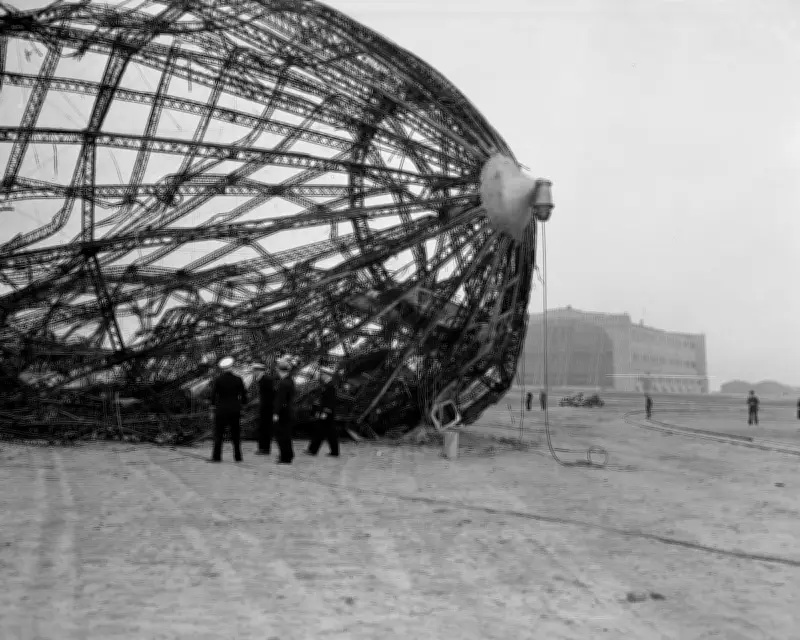
Wooldridge draws a direct parallel to the 1937 Hindenburg disaster, in which the 245-meter airship burst into flames while preparing to land in New Jersey, killing 36 people. The inferno, caused by a spark igniting the massive volume of hydrogen that kept the craft aloft, effectively ended global interest in airship travel overnight. "The Hindenburg disaster destroyed global interest in airships; it was a dead technology from that point on, and a similar moment is a real risk for AI," Wooldridge states. Given that AI is now embedded in countless critical systems across various sectors, a major incident could strike almost anywhere with devastating consequences.

Plausible Catastrophic Scenarios
The scenarios Wooldridge envisions are alarmingly realistic. He cites potential disasters such as:
- A deadly software update for autonomous self-driving vehicles
- An AI-powered cyberattack that grounds global airline fleets
- A Barings bank-style collapse of a major corporation triggered by AI making catastrophic decisions
"These are very, very plausible scenarios," he emphasizes. "There are all sorts of ways AI could very publicly go wrong." The widespread integration of AI into financial systems, transportation networks, healthcare, and infrastructure means that any significant failure could have cascading effects across multiple industries and national economies.
The Fundamental Problem with Modern AI Systems
Despite his warnings, Wooldridge clarifies that he is not attacking modern AI technology itself. His concern stems from the significant gap between what researchers originally anticipated and what has actually emerged in the marketplace. Many experts expected AI systems that would compute solutions to problems and provide answers that were both sound and complete. Instead, "Contemporary AI is neither sound nor complete: it's very, very approximate," he notes.
This approximation arises because the large language models underpinning today's AI chatbots generate responses by predicting the next word or word fragment based on probability distributions learned during training. This results in AI systems with jagged capabilities—incredibly effective at some tasks yet profoundly inadequate at others. The core problem, according to Wooldridge, is that these AI chatbots fail in unpredictable ways and have no inherent understanding of when they are incorrect, yet they are designed to deliver answers with unwavering confidence.

The Danger of Human-Like Presentation
Wooldridge identifies a particularly troubling trend: the deliberate presentation of AI systems as human-like entities. When AI delivers responses in human-like, sycophantic tones, it can easily mislead users into treating these systems as if they possess genuine understanding and consciousness. A 2025 survey by the Center for Democracy and Technology revealed that nearly one-third of students reported that they or a friend had engaged in a romantic relationship with an AI, highlighting the depth of this psychological confusion.
"Companies want to present AIs in a very human-like way, but I think that is a very dangerous path to take," Wooldridge argues. "We need to understand that these are just glorified spreadsheets, they are tools and nothing more than that." This anthropomorphism, he suggests, creates unrealistic expectations and dangerous dependencies.
A Better Model: The Star Trek Computer
Wooldridge sees a preferable alternative in the kind of AI depicted in the early years of Star Trek. He references a 1968 episode, The Day of the Dove, in which Mr. Spock questions the Enterprise's computer only to receive a distinctly non-human voice stating that it has insufficient data to provide an answer. "That's not what we get. We get an overconfident AI that says: yes, here's the answer," he observes. "Maybe we need AIs to talk to us in the voice of the Star Trek computer. You would never believe it was a human being." This approach, he suggests, would help maintain appropriate boundaries and expectations regarding AI capabilities.
As AI continues its rapid advancement and integration into society, Wooldridge's warning serves as a crucial reminder that technological progress must be balanced with rigorous safety protocols, transparent development practices, and realistic public understanding of what these systems can and cannot do. The race for AI supremacy must not come at the cost of creating conditions for a catastrophic failure that could set back technological progress for decades.