
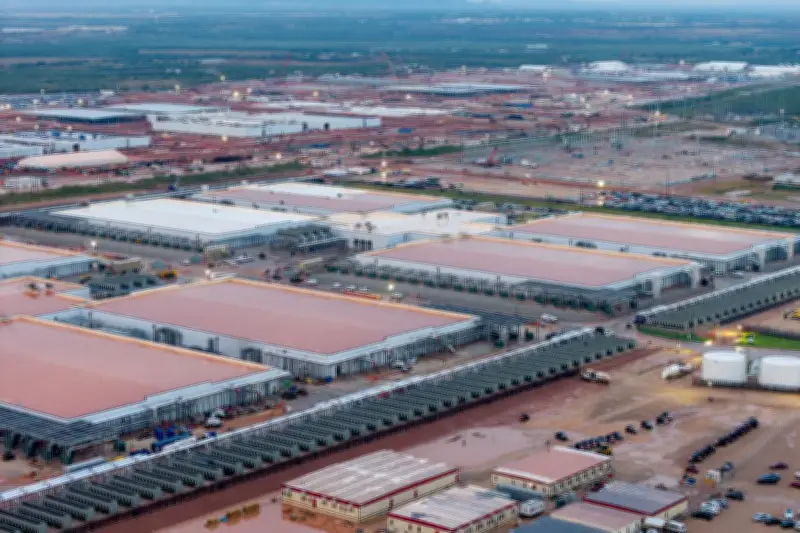
Fears of a looming AI datacenter 'debt bomb' are exaggerated, according to finance expert Gene Marks. In a recent commentary, Marks argues that the off-balance-sheet financing strategies used by major tech firms are not comparable to the Enron scandal and that the risks are both different and more recoverable than in past financial engineering cases.
Off-Balance-Sheet Financing Explained
Marks explains the mechanism: a company like Meta wants to build a datacenter for its AI and cloud computing needs. It forms a separate, non-consolidated entity that constructs the facility. This entity raises funds from investors, banks, and other financial firms, including some from Meta, who own the majority. A contract ensures Meta has exclusive and full use of the datacenter once built. Consequently, Meta secures its datacenter without showing most of the incurred debt as a liability on its balance sheet.
The concern stems from the sheer scale of investment. The Financial Times reported in December 2025 that tech companies had shifted more than $120 billion of AI datacenter spending off their balance sheets through special-purpose vehicles and similar structures. Goldman Sachs estimates that hyperscalers could spend $5.3 trillion on AI and datacenters through 2030, with private markets playing an increasingly important financing role.
Historical Precedents and Modern Differences
Marks, who started in accounting in the mid-1980s, draws parallels to his early client Centocor, a publicly held biotechnology firm. Centocor used off-balance-sheet financing through limited partnerships to fund drug development, raising hundreds of millions of dollars in the 1980s and early 1990s. While some drugs failed clinical testing, it did not cause a stock market panic. Marks notes that accounting has evolved, but the economic idea remains the same.
He acknowledges that today's risks differ from those of the biotech era. Disclosures are significant, scrutiny is intense, and the investing public is smarter. Unlike drug candidates that can fail trials, datacenters are tangible assets—land, buildings, electrical infrastructure, and computing equipment. As Jeff Bezos calls AI an 'industrial bubble,' Marks points out that industrial bubbles leave behind lasting infrastructure like railways and fiber-optic cables.
Market Demand and Recoverable Risks
Marks highlights that the datacenter market shows no signs of oversupply. Developers increased North American capacity by 36% last year, yet vacancy fell to a record 1.4%. According to CBRE's North America Data Center Trends H2 2025 report, demand is outpacing supply in nearly every major market. Microsoft estimates that only 17.8% of the world's working-age population currently uses generative AI, suggesting adoption is still in its early stages.
While some investments will fail and some lenders will lose money, Marks argues that these financing structures exist precisely to spread enormous capital requirements and risk among willing investors. The obligations are disclosed, the assets are real, and demand for computing capacity remains strong. He concludes, 'I see financial engineering, yes. I don't see a debt bomb.'




