American Agriculture Under Siege as Fertilizer Costs Skyrocket
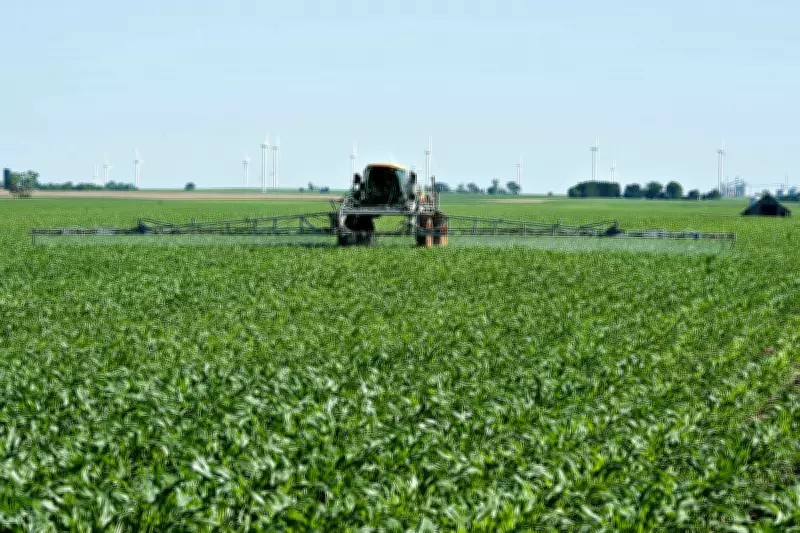
Rodney Bushmeyer has spent his entire life working the land in Illinois, continuing a family tradition that stretches back over a century. At 69, he still rises before dawn to tend to wheat, soy, and corn crops on Bushmeyer Farms, a legacy operation that has weathered countless challenges. But the current crisis feels different.
"There is really no profit right now," Bushmeyer confesses. "It's not sustainable in the long term. We can do that for a few years, but eventually it'll put us out of business."
The Strait of Hormuz Closure Squeezes Farmers
The catalyst for this agricultural emergency traces back to the Middle East, where Iran's closure of the Strait of Hormuz has severed a critical fertilizer production and transportation route. This strategic waterway typically handles 35% of global urea trade and significant phosphate shipments from Saudi Arabia, according to industry experts.
For American farmers who import approximately 25% of their fertilizer needs, including 18% of nitrogen requirements, the timing couldn't be worse. The disruption coincides with the crucial spring planting season, compounding years of financial strain.
Matt Bennett, CEO of AgMarket and a seventh-generation Illinois farmer, summarizes the situation bluntly: "It's not a great time for the grower."
Price Spikes and Production Pressures
Fertilizer costs had already been elevated since the Russia-Ukraine war, but the current crisis has pushed prices to unprecedented levels. Benchmark nitrogen prices have surged from $350 per short ton in late December to approximately $600 as of March 10, representing a near-doubling in just weeks.
This volatility hits farmers particularly hard because fertilizer represents their most significant non-land expense. For corn production, America's largest crop, fertilizer can account for 20% of total production costs according to USDA data.
Philip Coffin, an independent grain industry analyst, warns: "With crop economics as bad as they are right now, it doesn't take much to destroy a farmer's income statement."
Generational Farms Face Uncertain Futures
Lance Lillibridge, who farms 1,250 acres of corn in east-central Iowa, understands agricultural crises intimately. He witnessed the devastating 1980s farm collapse firsthand and now fears history may be repeating itself.
"The fertilizer industry is probably the most concentrated industry in the entire world, and they are able to manipulate markets," Lillibridge asserts. "There's not a damn thing that we can do about it right now."
His concerns extend beyond his own operation to his 19-year-old son who dreams of continuing the family farming tradition. "I just don't know if it's going to be a good thing for him to do," Lillibridge admits with palpable worry.
Crop Decisions and Economic Domino Effects
The fertilizer crisis is already influencing planting decisions across America's agricultural heartland. The USDA's preliminary grain-acreage estimate forecasts a 4 million-acre shift from corn to soybeans, partly because soybeans require less fertilizer and are therefore cheaper to grow.
Angela Guentzel, a sixth-generation Minnesota farmer and board member of the Minnesota Corn Growers Association, explains the impossible choices farmers face: "It's a double-edged sword. Putting inappropriate amounts of fertilizer is basically just not an option, because if you have less fertilizer, then you're going to have less yield."
Guentzel emphasizes the broader implications: "Food security is basically national security. Everything on the table starts with a farmer and seed in the ground. And fertilizer isn't really an optional thing."
Political and Economic Ramifications
The crisis extends beyond farm gates to potentially influence national politics. Brittany Martinez, a Republican strategist and executive director of Principles First, notes: "Farmers are the backbone of America, and when they're squeezed by rising costs like fertilizer, it carries real political weight."
Martinez warns that voter frustration could impact election outcomes if economic relief doesn't materialize: "To earn their support, both parties need to focus on practical relief – lowering input costs, stabilizing supply chains, and actually showing up for rural communities with solutions, not rhetoric."
Adaptation and Resilience in Uncertain Times
Despite the bleak outlook, farmers continue adapting. Some have delayed fertilizer applications hoping for price relief, while others leverage modern farming technology to apply nutrients more precisely and efficiently.
Yet uncertainty persists about fertilizer shipments currently in transit. Philip Coffin notes that deliveries from the Middle East can take up to two months, leaving farmers wondering how much of their ordered fertilizer will actually arrive in time for spring planting.
Rodney Bushmeyer maintains the cautious optimism that has sustained generations of farmers: "My dad used to say, we're at the mercy of the weather and the government, and we can't control either. When you grow up in this business, you just take whatever comes and you raise the best crop you can and rest is up to God and mother nature."
As planting season progresses across Illinois, Iowa, Minnesota and beyond, America's agricultural community faces its most significant challenge in decades, with implications that will ripple through grocery stores, political campaigns, and the very fabric of rural America.