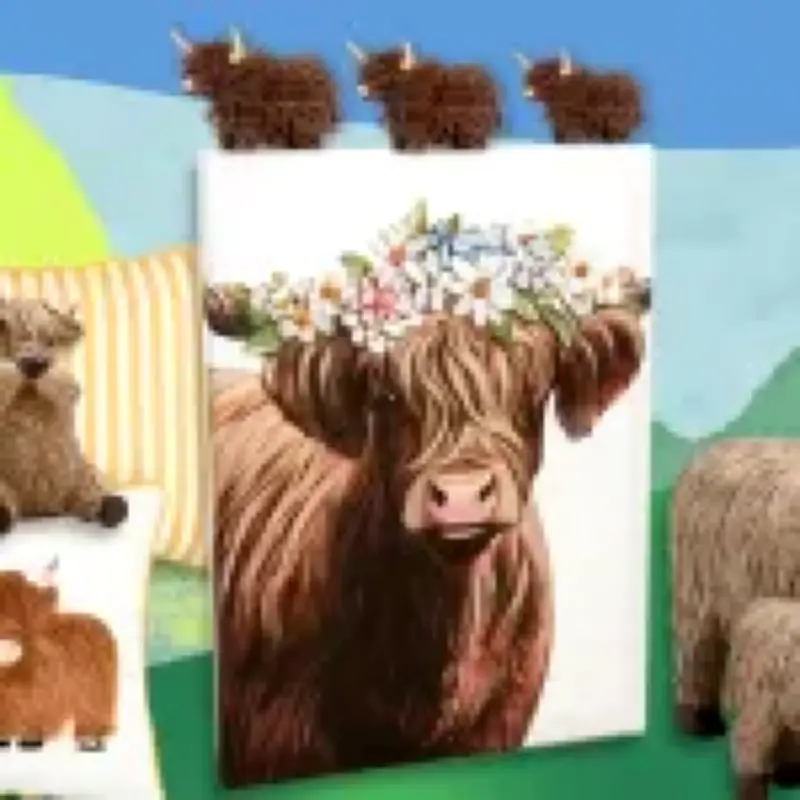
Highland cows have become a dominant motif in UK homeware, with major retailers such as Next, Dunelm, Matalan, George at Asda, and John Lewis all stocking extensive ranges of products featuring the shaggy, long-horned animals. The trend has grown so significantly that Next has created a dedicated character, Hamish, with his own section on the retailer's website, while a search for 'Highland cow' on Dunelm's site returns 205 results.
Retailers embrace the Highland cow craze
Next offers a wide array of Highland cow-themed items, including toasters adorned with images of the animals, a £475 swivel chair shaped like one, and even Highland cow Christmas trees. The store's Hamish collection has become a bestseller, according to an anonymous employee who shared on social media: 'I work in Next Home. At least once an hour someone buys a Highland cow thing.'
Dunelm, Matalan, George at Asda, and John Lewis have also embraced the trend, with dozens of products available across their stores and websites. When approached for comment, Next Home declined to discuss the phenomenon.

Why are Highland cows so popular?
Interior design experts suggest that animal motifs have long been a staple in home decor. Lia Gold, winner of Interior Design Masters, and fellow contestant and designer Jonni Knight noted that previous trends included dachshunds in 2019, leopards, dolphins, bees, sheep, foxes, and owls. They told Metro: 'We talk a lot about why certain interior trends take off on our podcast. Sometimes it's nostalgia, sometimes it's social media, and sometimes it's simply that a trend makes a home feel warmer or more characterful. The Highland cow phenomenon is a perfect example of that.'
The trend aligns with the 'cottagecore' aesthetic, which romanticises rural life, mystical Scottish landscapes, and cosy cottages. Highland cows are also seen as symbols of resilience, able to survive Scotland's rugged terrain, and are rooted in Scottish history and folklore. Their fluffy, docile nature makes them appealing, with some farms offering cow cuddling sessions, Highland cow safaris, and even yoga classes.
Farmers see increased interest
Jen Howard-Coombes, director of Almond Valley Heritage Centre in Livingston Village, Scotland, attributes the appeal to the cows' 'cartoon-esque' appearance. She said: 'The striking horns, enormous tongues, shaggy coats and quirky cowlick fringes give them a character that feels larger than life. Their gentle and curious nature only adds to the appeal.'
Stuart Hartley, owner of Hartley's Huts in Lancashire, a luxury glamping retreat with seven Highland cows, has seen business boom since highlighting the animals. He noted: 'We've had Highland cows on the farm for 20 years, but since we've started making a bit more of a thing of them we've had more guest interactions. They definitely do make a difference to guests wanting to come. The cows have become so much more popular in the last two years, and we're getting return visitors now too. One couple has visited four times just for the cows.'
Fatigue and safety concerns
Despite the popularity, some consumers are experiencing 'Highland cow fatigue.' TikTok user Caroline Daniels said: 'I love Highland cow stuff but now it's been over done. I've got Highland cow fatigue. It's been ruined!' Others have called the trend 'insanity' and 'scary,' with some comparing it to the 'hot honey' of homeware.
Experts also warn that despite their cute appearance, Highland cows are strong animals with sharp horns and can be protective, especially around calves. They advise keeping a safe distance and not attempting to touch or feed them without permission from their owners.