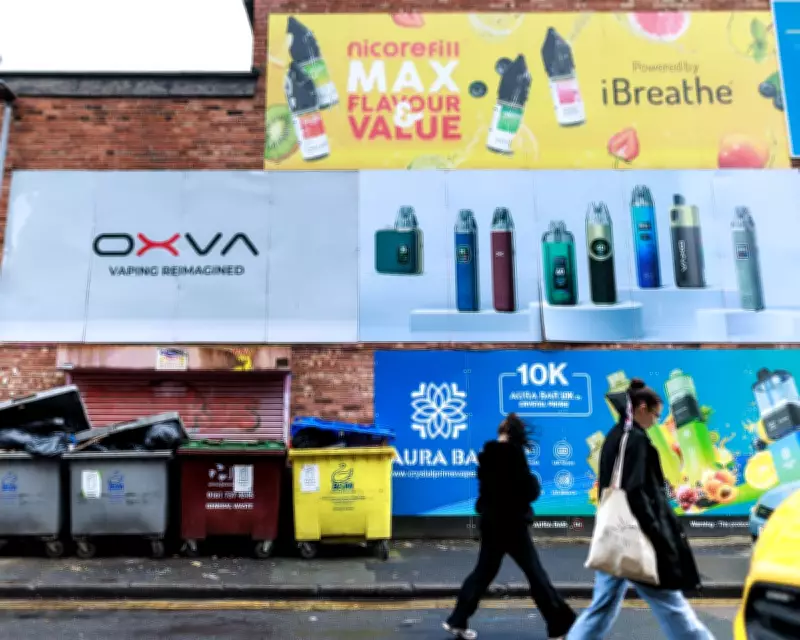
Cheetham Hill, once notorious as Manchester's counterfeit capital, has seen a dramatic transformation following a major police crackdown. While the area is now safer and calmer, business owners report a significant decline in footfall—down by as much as 30%—and complain that vape shops now dominate the high street.
Operation Vulcan's Success
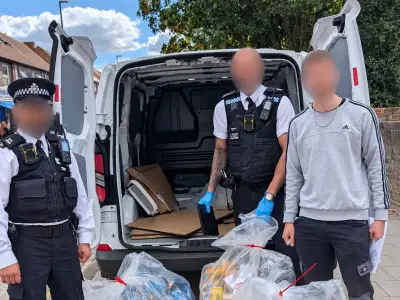
Greater Manchester Police launched Operation Vulcan in autumn 2022, targeting the illegal trade in fake goods that had flourished for decades. The operation resulted in the closure of over 200 counterfeit shops, the seizure of more than 1,000 tonnes of fake items and £520,000 in cash, and a 50% reduction in violent crime and public order offences.
Stephen Watson, then chief constable of Greater Manchester Police, had vowed four years ago that the situation "cannot be allowed to continue." The area, once a hive of activity for counterfeit hunters, now sees many shops permanently closed and streets quieter than before.
Impact on Legitimate Businesses
For legitimate traders, the crackdown has had mixed effects. Cafes and restaurants that previously thrived on the counterfeit trade have seen takings drop by about a third. Maiwand Safi, who has worked at Mughul Grill and Coffee since 2012, notes that while the area feels safer, customers are down by 30%. "Now it's all mobile shops, vape shops," he says.
Similarly, Mohammad Iqbal, manager of Desi Point for 15 years, reports a 33% drop in customers. "It's clean now, and peaceful, but business-wise it's very slow," he adds.
New Opportunities and Challenges
Despite the downturn, some new businesses are taking advantage of cheaper rents. Iman Ismael Zadeh opened supplement shop SuppCity a year ago, citing the area's proximity to the city centre and lower costs. "It's probably good for new businesses," he says, though footfall remains low.
Mohammad, who opened Al Maidah restaurant six months ago, feels the police have done their job. "There was open criminality before, but now it's all gone," he says, although he describes the area as "always dead" in terms of footfall.
Ammanuel Kahsay, owner of Momona Bar and Cafe, moved from Portsmouth earlier this year to invest in Manchester. He hasn't noticed any criminal activity and serves Ethiopian and Eritrean food to a community-based clientele. However, he acknowledges that "things are a bit slow" due to rising costs.
Struggles for Some
For others, survival is difficult. Surbir Arora, who runs Real Super Grocery in a former counterfeit shop, says people still come in asking for fake goods. "Some people are coming from Scotland, Ireland, and Liverpool," he says, but he struggles to attract customers for legitimate products. "This place is totally dead," he laments, and is already looking for a new location.
The government recently announced tens of millions of pounds to tackle "dodgy" shops suspected of laundering up to £1bn a year for criminal gangs. A new National Crime Agency unit will coordinate investigations, while 75 new officers will be recruited in Greater Manchester, the West Midlands, Kent, and Essex. For Cheetham Hill, the former home of Britain's dodgiest high street, the crackdown has brought safety but also a stark new reality.