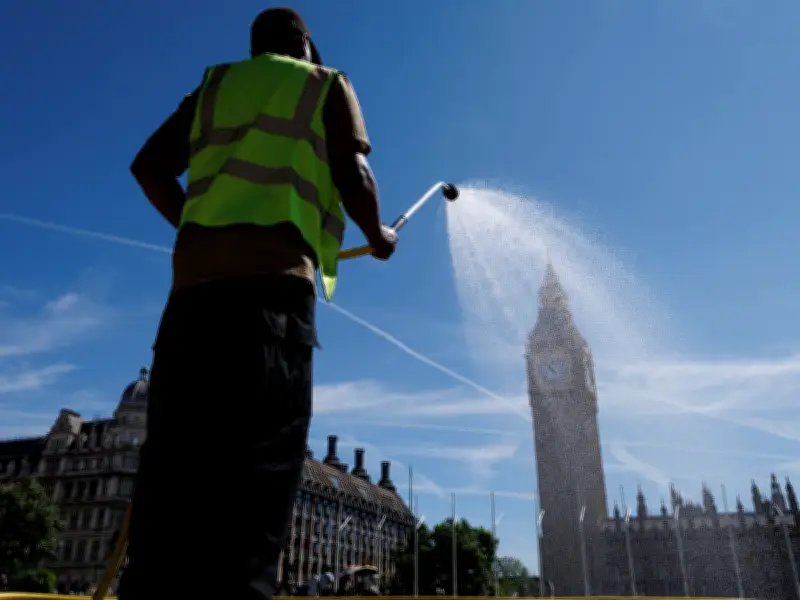
Thames Water has announced a temporary hosepipe ban for all its customers, including those in London, following exceptionally dry weather and sustained high water demand. The ban takes effect from midnight on Thursday, July 23, and prohibits the use of hosepipes for non-essential activities such as watering gardens, cleaning cars, filling paddling pools, or topping up hot tubs.
Reason for the ban
The decision comes after the driest spring in years, with three official heatwaves and record-breaking temperatures. The Thames Water region received only 40% of its average rainfall this spring, and the lack of rainfall in July has further stretched water resources. Last month was the hottest June on record in the UK, with temperatures reaching 37.7°C in Norfolk on June 26. The Met Office reported that 2026 is the first year where temperatures exceeding 35°C have been recorded in May, June, and July.
Water demand and supply pressures
Water demand is currently about 7% above normal levels in London and 10% across the Thames Valley and Home Counties. During peak periods, water is being used faster than it can be treated and moved through parts of the network, placing additional pressure on local supplies. Nevil Muncaster, Director of Strategic Water Resources at Thames Water, said: “We would not be taking this step unless it was necessary to protect water supplies for everyone and the environment. Recent heatwaves and a very dry spring and summer have led to sustained high demand. While there is enough water for essential use, we need to reduce non-essential outdoor demand to keep taps flowing.”

Exemptions and restrictions
Some customers may be exempt from the hosepipe ban under certain conditions, such as health and safety or animal needs. Thames Water wastewater-only customers are exempt, as well as some business services and activities. A full list of exemptions is available in the Thames Water legal notice. Activities prohibited under the ban include using a hosepipe or pressure washer to water gardens, lawns, or allotments; fill paddling pools, swimming pools, or hot tubs; clean vehicles, patios, paths, driveways, walls, windows, or any outdoor area; and use sprinkler systems or jet washers.
Customer response and next steps
Thames Water thanked customers who have already reduced their water use, stating that their support has made a difference. Muncaster added: “Our teams are working 24/7 to keep water moving, fix leaks and support customers. We will keep the situation under close review and lift restrictions as soon as it is safe to do so.” The ban is temporary and will be reviewed regularly.