Despite facing industry headwinds like high construction costs, property giant British Land is showing no signs of slowing down on its 170th anniversary, says Joanna Hodgson.
As millions of Brits headed to polling stations last week for the UK local elections, Emma Cariaga couldn’t help but think about the origins of her employer, the property giant British Land.
Cariaga, the firm’s chief operating officer and a long-standing real estate executive, says: “As one of the oldest companies in the FTSE 100 our history is really interesting. We were founded in the mid-1850s when you couldn’t vote unless you owned property, and so The British Land Company bought land in bulk which was then divided into plots for people to buy, giving them the right to vote.”

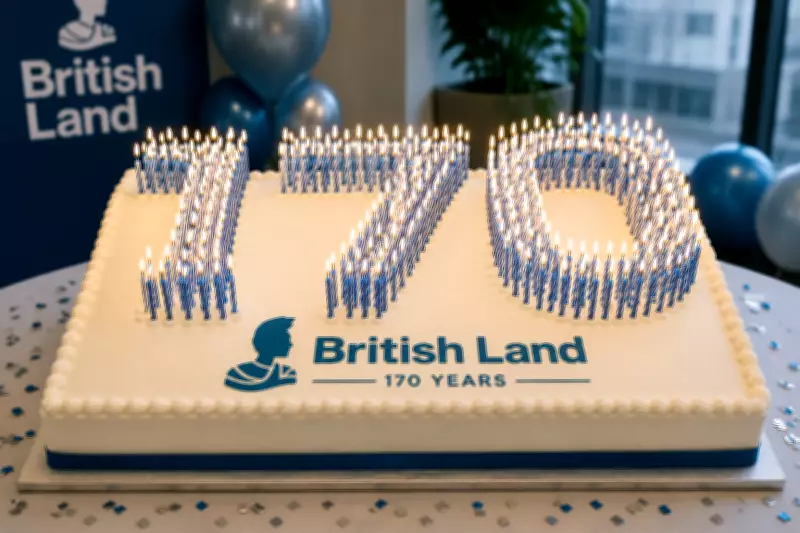
Speaking over breakfast during the firm’s 170th anniversary week in late April, Cariaga comments: “When I think of the origins of British Land I see that tenacious spirit still evident, it’s just responding to different patterns of demand more relevant to today.”
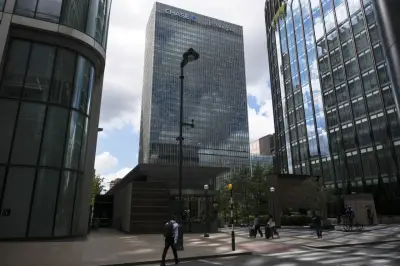
The landlord and developer has come a long way since being established, with a colourful history that includes Sir John Ritblat transforming the group from the 1970s into a major property business, with interests in other sectors too, such as fashion chain Dorothy Perkins. It is known for being one of the parties that added the ‘Cheesegrater’ to the Square Mile’s skyline, and as at last September has a £15.2bn portfolio of offices, retail parks and urban warehouses it owns or manages.
So what could the next chapter look like for British Land, and will the plot be smooth sailing amid industry-wide challenges such as climbing energy costs and high construction bills?
Looking at the remainder of 2026 alone, it sounds action-packed. The group will announce full-year results later this month. Then in the Summer it is relocating its headquarters from Marble Arch to 20 Triton Street at Regent’s Place, one of four campuses British Land has in London, with the others being Broadgate, Paddington, and another underway at Canada Water.
Meanwhile there is a search to replace Simon Carter as boss, after he announced he will take up a role to lead P3 Logistics Parks at a later date. Whoever takes the helm will join during a busy period, as British Land works on big plans in London, among which is providing high quality offices to some of the wave of businesses hunting for space that will entice staff to workplaces.
Cariaga is sat in a meeting room in One Triton Square, a new block moments from Warren Street station, where Anthropic, the maker of the Claude AI chatbot, has agreed to take 158,000 sq ft for its flagship UK office. She says: “The building is on our Regent’s Place campus, and it sits within this ‘smart mile’ where there is huge access to talent that sits in UCLH, UCL and AI and innovation-led firms that are based around here.”
The company is among firms whose decision to keep building during the pandemic is paying off now, at a time when supply is constrained in the capital. It has agreed over 1.6m square feet of London office lettings over 12 months. The developer’s offering that could appeal to specialist tech and science occupiers has been boosted further following its £150m deal to buy Life Sciences REIT at the start of the year.
Future schemes will include a significant refurbishment of Euston Tower, envisaging 560,000 sq ft of office space that will appeal to tech and science firms, while work on a major Canada Water masterplan featuring homes and commercial space is also underway.
But while the company has ambitious plans, it is not immune from headwinds the commercial property market is grappling with. For any future developments that it will negotiate it can currently expect high construction costs. With the Middle East conflict there will be further pressure on construction costs and the price of energy, and “this will make both the delivery of new developments and the operational costs of existing buildings more challenging”, Cariaga points out.
She also addresses commentary around residential viability and the lack of new homes in London. “While we are not necessarily directly exposed, the residential market is a proxy for a healthy economy, and if businesses are considering coming to London they may want to see there is suitable housing for employees.”

Cariaga sees signs of some people perhaps holding off on deals amid geopolitical tensions, but she is upbeat about London’s underlying appeal to investors. Peel Hunt analyst Matt Saperia says: “While there are clearly a number of challenges outside of British Land’s control today, the portfolio remains well-aligned to structurally supported sectors such as high-quality London office campuses and retail parks where we remain optimistic about growing revenue streams.”
Looking at the years ahead, Kelly Cleveland, British Land’s head of real estate and investment, wants the company “to continue creating high quality destinations that respond to how people want to live, work and connect, while remaining disciplined, responsible and resilient through cycles”.
At 170 British Land may be old, but it is certainly not slowing down.