Kent Kiehl, a neuroscientist who claims he can identify psychopathy in prisoners' brains, has seen his controversial research used in thousands of US criminal cases. His work has been invoked by defense attorneys seeking lighter sentences, but critics argue it echoes discredited eugenic theories and can backfire, leading to harsher punishments.
Kiehl's research and the Dugan case
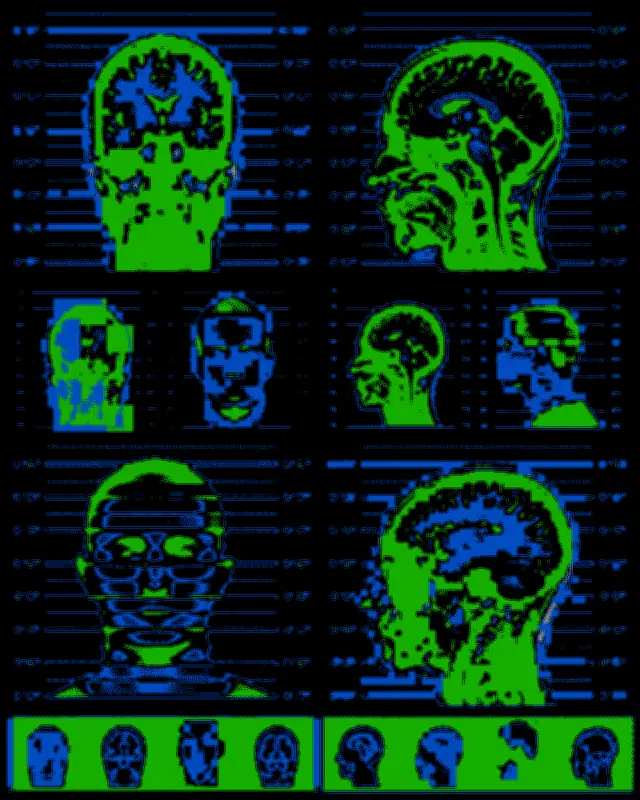
In 2009, Kiehl testified in the trial of serial killer Brian Dugan, who had confessed to the rape and murder of a 10-year-old girl. Kiehl scanned Dugan's brain using fMRI and assessed him as a psychopath, arguing that he lacked emotional capacity to know right from wrong. Despite the evidence, the jury sentenced Dugan to death, later commuted to life when Illinois halted executions.
Kiehl's work gained national attention. From 2005 to 2015, brain evidence appeared in over 2,800 judicial opinions, with neurological arguments used in roughly 10-12% of US murder trials and 25% of death penalty trials, according to a 2019 study. The study noted that the figure likely underrepresents the prevalence.

The Amos Wells case
In 2013, Amos Joseph Wells III shot and killed his pregnant girlfriend, her mother, and her 10-year-old brother in Texas. He confessed and was charged with capital murder. His trial attorneys hired Kiehl's company, Mindset, to conduct brain scans and genetic testing, arguing that Wells was biologically predisposed to violence.
During the sentencing phase, defense attorney William H Ray told jurors: "Amos didn't ask for his genetics, he didn't ask for the brain he got, and he darn sure didn't ask for the parents he got handed." The prosecution used this to argue that Wells would always be dangerous. The jury sentenced him to death.
Wells's post-conviction attorneys argue that the defense's strategy conceded the "future dangerousness" standard required for a death sentence in Texas. They have filed appeals, supported by the NAACP and 29 scientists, claiming the trial was tainted by pseudoscience and racism.
Criticism of the science
Critics say Kiehl's work revives phrenology and Lombrosian theories, which were discredited by the mid-20th century. Dr. Paul S. Appelbaum of Columbia University said deterministic approaches to complex behaviors "never work out." Satrajit Ghosh of MIT called predicting behavior from brain scans "extreme sci-fi."
Sociologist Oliver Rollins noted that prison populations are shaped by racial bias, so brain studies in prisons disproportionately study people of color, but neuroscience cannot account for that. Kiehl acknowledged bias but said it is based on socioeconomic status, not race. However, data show Black people are more than five times as likely to be incarcerated in Ohio as white people.
Kiehl has received over $41 million from the National Institutes of Health since 2005. He has lectured to federal judges about neuroscience. His company, Mindset, run by his wife, has been involved in over 200 capital cases.
Retracted study and ongoing concerns
In 2019, a paper by Kiehl and colleagues linking psychopathic traits to reduced brain volume was retracted due to errors. Kiehl blamed a student's misuse of data.
Despite the controversies, Kiehl continues his research. He told the Guardian he hopes to find a cure for criminal violence. But for defendants like Amos Wells, the consequences of his disputed science have been grave.