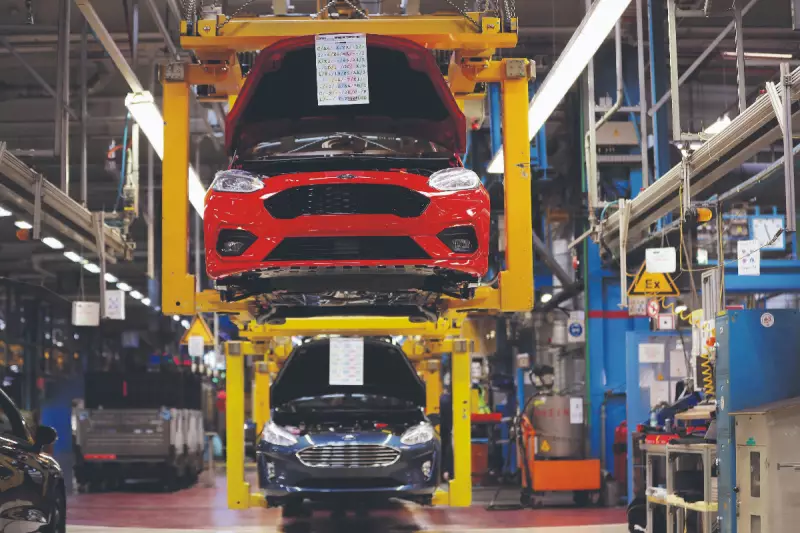
The UK's manufacturing sector ended a challenging 2025 on a cautiously optimistic note, with activity climbing to its highest level in fifteen months during December.
PMI Data Points to Tentative Growth
According to the latest S&P Global UK Manufacturing Purchasing Managers’ Index (PMI), the sector recorded a reading of 50.6 in December, up from 50.2 in November. This marks the second consecutive month the index has remained above the critical 50-point threshold, which separates expansion from contraction.
Rob Dobson, a director at S&P Global Market Intelligence, noted that manufacturers saw several headwinds ease towards the year's end. "The negative impacts of the uncertainty surrounding the Autumn Budget, tariffs, and the JLR cyber-attack all moderated," he explained.
The growth was primarily fuelled by an increase in output and new orders, alongside lengthening suppliers' delivery times. However, this positive movement was partially counterbalanced by continued declines in both stock purchases and employment levels.
Recovery Drivers and Persistent Headwinds
The sector's improvement was significantly aided by the restart of production at Jaguar Land Rover following a devastating cyber-attack. That incident, tracked by the non-profit Cyber Monitoring Centre (CMC), is estimated to have cost the UK economy around £1.9bn and impacted nearly 5,000 organisations.
Furthermore, the avoidance of anticipated major tax increases in Chancellor Rachel Reeves' Autumn Budget provided relief. Industry body Make UK had previously warned of an "existential threat" to many companies from soaring industrial electricity prices.
Despite the uplift, the expansion was narrowly based. Growth was powered by the domestic market, while new export orders fell for the 47th month in a row. Dobson cautioned that for growth to be sustained, "the base of expansion needs to shift more towards rising demand and away from inventory building and backlog clearance."
Manufacturer Confidence Remains Fragile
Looking ahead to 2026, business optimism among manufacturers actually fell in December for the first time in three months. Employment in the sector continued to decrease for the fourteenth consecutive month.
The PMI survey revealed that companies are nervous about the coming year, citing concerns over high costs, increased taxation, and reduced international competitiveness. Geopolitical uncertainty and potential government policy impacts also weighed on sentiment.
Make UK has highlighted specific policy worries, including the government's Employment Rights Bill and potential inheritance tax changes affecting family-owned firms. The Labour government has since made concessions on both fronts, including raising the threshold for Agricultural and Business Property Reliefs to £2.5m.
"The start of 2026 will show if growth can be sustained after these temporary boosts subside," concluded Dobson, signalling that the sector's road to full recovery may still be long and uncertain.