
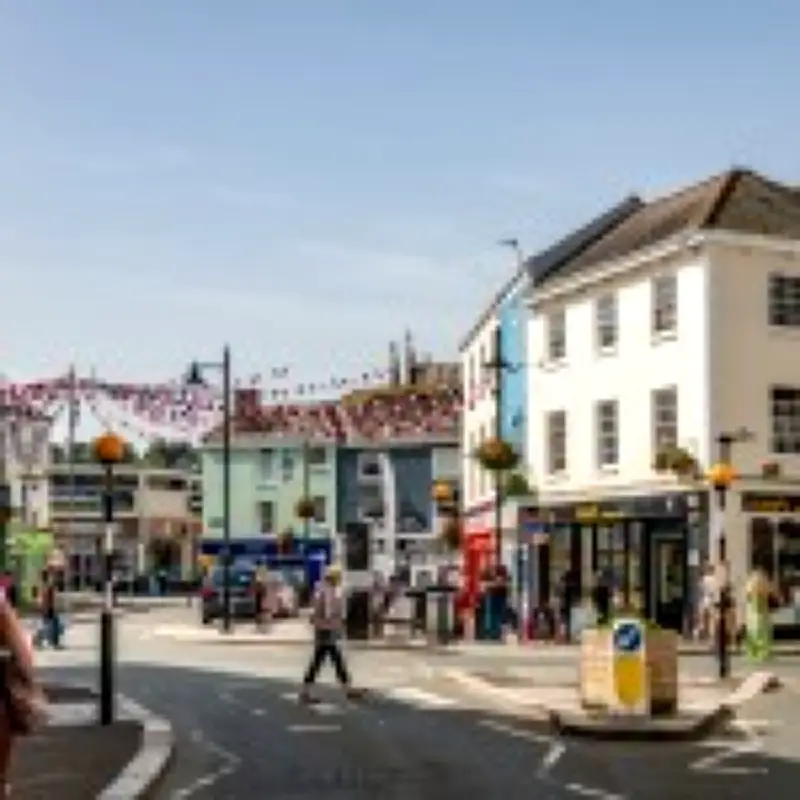
When you picture Cornwall, you probably imagine somewhere by the sea. Maybe it’s the turquoise waters of St Ives, the surf shops of Newquay or the fishermen’s cottages that hug the coast at Falmouth. But what of the interior? There’s Launceston and Lostwithiel, with their ancient castles and Civil War connections. Wadebridge, for shopping, and Helston, for punting on the lake and wandering around its charming folk museum. Yet Cornwall’s inland capital (and only city) rarely gets a look in.
Truro has what you might call a bad reputation. Long regarded as a polarising destination, it is consistently named as one of our least favourite towns. In March, The Telegraph named it the UK’s worst little city. ‘Not a looker,’ apparently, but I beg to differ.
Founded in the 13th Century, Truro (population: about 23,000) started life as a market town known for trading copper and tin, and its strategic location around 15 miles from the coast. These days, its ancient cobbled streets are full of independent boutiques and pretty pastel houses, all just a short drive from many of the UK’s (and indeed Europe’s) best beaches.
Tiny little Truro has a place in the rock hall of fame: Roger Taylor, the legendary Queen drummer, was raised here, having moved from West Norfolk as a young child. The band, under their original name ‘Smile’, even played their first ever gig in Truro’s city hall in 1970.
Truro: little city, big reputation
Truro is delightfully compact. Though a city, its diminutive size gives it a distinctly town-like feel. Everything is walkable. Its centrepiece is the stunning Gothic Revival cathedral, which was built between 1880 and 1910, and is one of just three cathedrals in all of Britain to have three spires.
I am staying at a friend’s flat in a high-rise block opposite the Cornwall Museum and Art Gallery (200 years old, recently refurbed and worth a visit), and above charity shops, right in the heart of it all. She pays £900 for her one-bed each month, more than 50% less than the average one-bedder in London (that will set you back £2,000, according to latest data from The Economist).
The centre is small but bustling, and there are local boutiques as well as High Street chains. It feels like somewhere people actually live, away from the second-home honeypots on the coast. On Wednesdays and Saturdays, the city’s outdoor farmer’s market in the square opens up, selling locally sourced produce and handmade crafts. There’s also Lemon Street, an indoor market selling baked goods and knick-knacks, Enjoy Clothing, one of the city’s most beloved vintage stores, and the incredibly cute Fig Cafe. A popular local haunt is The Plaza, an Art Deco cinema from the 1930s that is a regular host for regional premieres and one-off screenings.
Perhaps the biggest thing Truro has going for it is its social scene. And a good way to get a feel for the place is to pub hop. Start at Vertigo, a chilled-out wine and cocktail bar, then move on to The White Hart, a lively spot for pints and pub grub. End the night at The Old Ale House, an indie pub with live music that was named CAMRA Kernow Pub of the Year (in 2017). For a special occasion, book a table at Michelin-recommended Petty Fours, which opened in 2025 in the shadow of the cathedral.
Of course, we can’t talk about Truro without mentioning Poldark. For fans of Cornish scenery and Aidan Turner’s brooding looks, there’s a tour that begins at the harbour and covers several key locations from the story. TimeOut even featured it as one of the best things to do in Cornwall.
Day trips
Within an hour of Truro, you can reach many of Cornwall’s most beautiful coastal spots. St Ives (with its white sand beaches), St Mawes (with its luxury waterfront) and Falmouth, with its trendy restaurants and university scene, are all on the doorstep. Newquay, England’s undisputed surf capital, is 30 minutes by car or an hour by bus. And the charming village of Malpas is a picturesque walk away.
Using Truro as a base for exploring these treasures makes it significantly more affordable to do so. Often by more than half. Skyscanner advertise their cheapest St Ives hotels from £189 per night in 2026, whereas Truro is advertised for £95. Similarly, on comparison site airroi, it’s a £239 average daily rate for St Ives, and for Truro: £123.
For characterful pubs, interesting history and short jaunts to some of the country’s most beautiful beaches, it’s hard to argue with that.
Getting to Truro
Truro is five hours by car from London. Trains run direct from London Paddington with GWR, prices from £56 in June. Ryanair flies direct from London to Newquay from £15 one-way in July.




