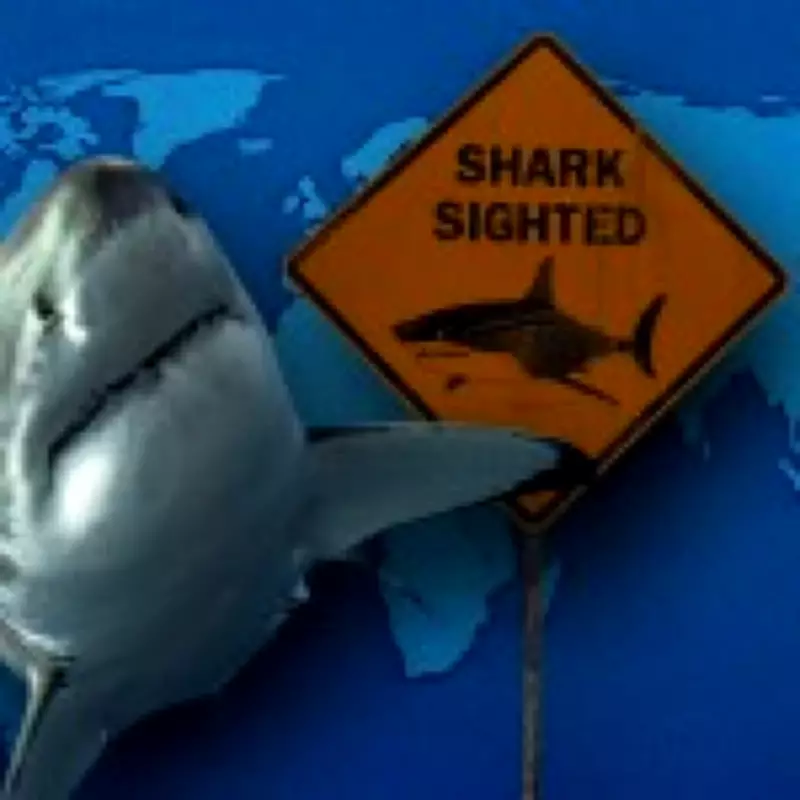
Global Shark Attacks Surge in 2025, New Report Reveals
A comprehensive new report from the International Shark Attack File has documented a significant increase in shark attacks worldwide during 2025. The data, compiled by the Florida Museum of Natural History, shows that beachgoers and tourists experienced 105 shark bites last year, marking a sharp rise from 88 incidents recorded in 2024.
Hotspot Locations and Fatal Incidents
The report identifies specific global hotspots where shark encounters are most likely, including popular British holiday destinations like Fuerteventura in the Canary Islands. Australia witnessed a dramatic escalation in attacks, with numbers jumping from 13 to 25, and accounted for five of the nine fatal shark bites recorded globally in 2025.
Overall, fatal shark assaults more than doubled from four deaths in 2024 to nine in 2025. The United States recorded the highest number of shark bite cases at 25, though only one proved fatal. Florida alone experienced 11 attacks, including a particularly distressing incident where a 9-year-old girl lost her hand while snorkeling in Boca Grande.
High-Risk Activities and Species Concerns
The data breaks down which activities are most associated with shark encounters:
- Swimming and wading accounted for 46% of incidents
- Surfing and board sports represented 32%
- Snorkeling and freediving made up 15%
- Other activities comprised the remaining 6%
Australia's particularly high fatality rate is attributed to the presence of what researchers call the 'big three' species responsible for most serious bites: white sharks, tiger sharks, and bull sharks. One tragic November incident involved a bull shark attacking a Swiss couple in their 20s while they were swimming and filming dolphins in New South Wales. The man survived after emergency air transport to hospital, but the woman died before paramedics could reach the scene.
Global Distribution of Attacks
The report provides a detailed breakdown of shark attack locations throughout 2025:
- United States: 25 attacks (one fatal)
- Australia: 21 attacks (five fatal)
- Bahamas: 5 attacks
- New Zealand: 3 attacks
- Multiple countries with single incidents including New Caledonia, Canary Islands, Vanuatu, Samoa, South Africa, Maldives, Puerto Rico, Canada, Marshall Islands, Mozambique, and Jamaica
British tourists were among those affected by the rising trend. One British surfer suffered a deep thigh wound when a shark bit his leg while he was riding a hydrofoil surfboard off the coast of the Canary Islands. Fortunately, he managed to reach shore and receive medical attention.
Provoked vs. Unprovoked Attacks
The majority of last year's incidents – 65 attacks – were classified as 'unprovoked.' Most remaining cases involved provoked attacks where victims interacted with sharks, such as attempting to touch or feed them. One such incident occurred in April off the coast of Tel Aviv, where a 40-year-old man snorkeling with a GoPro camera was bitten by a dusky shark investigating the device, triggering a feeding frenzy when blood entered the water.
Notably, 2025 saw the first confirmed fatality from a dusky shark, a species not typically known for biting humans. A free diver searching for crayfish in South Africa died after being bitten.
Safety Perspectives and Historical Context
Gavin Naylor, director of the Florida Program for Shark Research, emphasized that Australia's exceptional beach safety protocols likely prevented even more fatalities. 'Within minutes of a bite, they've got helicopters airborne ready to respond,' Naylor noted, highlighting how rapid emergency response systems can save lives.
The International Shark Attack File, established in 1958 with records dating back to the 1500s, provides crucial historical context. Despite the increase in cases last year, the number of unprovoked attacks remained slightly below the 10-year average of 72. However, the nine fatalities exceeded the 10-year average of six.
The report concludes with an important perspective: 'The total number of unprovoked shark bites worldwide remains extremely low,' offering reassurance to beachgoers while emphasizing the importance of awareness and safety precautions in known shark habitats.