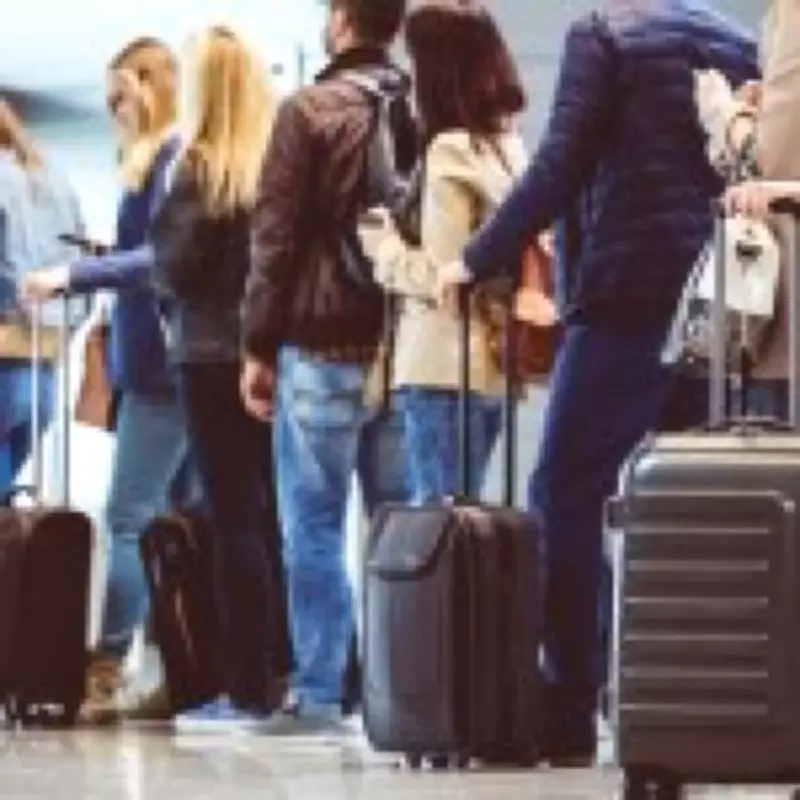
The Hidden Dangers of Common Suitcase Colors
While black, navy, and grey suitcases remain fashion staples for their versatility, security experts reveal these popular colors actually increase travel risks. The very qualities that make these shades appealing from a style perspective also transform luggage into prime targets for theft and misplacement during journeys.
Security Expert Insights on Luggage Visibility
Aran Dharmeratnam, a respected security consultant and personal safety training specialist, explains the concerning dynamics: "One of the skills I teach is how to blend into an environment to avoid attracting attention from street criminals. However, thieves possess similar blending abilities. They enter venues appearing ordinary and unassuming, then identify travelers who have dropped their guard or possess luggage that's easy to extract."
Recent market research underscores the problem's scale: black suitcases constitute approximately 40% of all purchases, while blue and grey variants hold roughly 30% and 20% market shares respectively. This overwhelming popularity means dark-colored luggage virtually disappears in crowded travel environments.
The Criminal Advantage of Generic Colors
Dark luggage provides multiple advantages to potential thieves, as Dharmeratnam details: "When a criminal walks away with dark luggage, they're less likely to be spotted if the owner suddenly realizes their bag has been stolen. Additionally, if approached while carrying generic-colored luggage, thieves can claim they mistakenly thought it was their own bag."
Whether at airport carousels or on public transportation, criminals can seamlessly blend into the background with stolen suitcases that are so commonplace they offer built-in excuses if confronted.
The Startling Statistics of Lost Luggage
Beyond deliberate theft, loss represents another significant concern. Approximately 33 million bags disappear globally each year, with 2.5 million never returned to their owners. Dark-colored suitcases prove particularly vulnerable in these situations.
Ryanair highlighted this issue in a 2024 statement, noting that black, navy, and grey suitcases rank as the most commonly lost items. Their extreme popularity among what the airline described as "99.9% of the population" makes identification challenging for both passengers and airport staff.
Practical Solutions for Safer Travel
Travelers needn't immediately discard their dark suitcases. Dharmeratnam recommends several protective measures: "You can make generic luggage look more distinct by adding colored tags or straps. Placing tracking devices like AirTags inside provides additional security coverage."
Maintaining situational awareness remains crucial, as thieves often employ distraction techniques to remove bags subtly or quickly relocate them nearby to extract valuable contents.
High-Risk Environments and Additional Precautions
Certain locations demand extra vigilance. Dharmeratnam warns: "In affluent areas like Knightsbridge, criminals may wait outside expensive shops to grab luggage from vehicle boots while owners enter establishments. Bars and restaurants also serve as common target zones where people naturally lower their guard during conversations."
Special travel straps that secure luggage to chairs offer some protection, though determined thieves may still attempt thefts. The fundamental principle remains keeping luggage within your line of sight whenever possible.
The Designer Luggage Paradox
Contrary to what some travelers might assume, expensive designer luggage doesn't improve security. Dharmeratnam cautions that high-end bags essentially announce to potential criminals that their contents are equally valuable, marking owners as particularly attractive targets.
Ultimately, while dark-colored suitcases dominate the market for their aesthetic appeal, travelers should carefully consider the security trade-offs. Brighter, more distinctive luggage colors, combined with tracking technology and heightened awareness, can significantly reduce vulnerability during journeys.