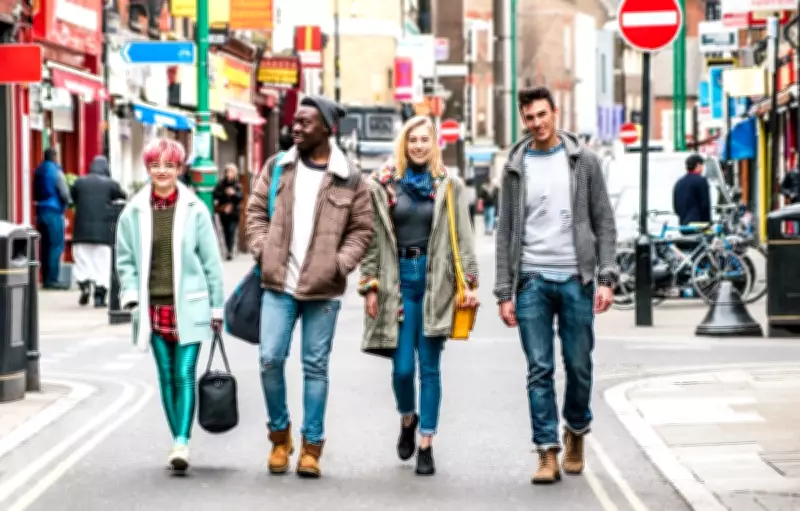
A recent nationwide survey conducted by Time Out has placed London in a fascinating position regarding its perceived attractiveness, revealing a notable disparity between admiration and action among its residents.
London's Standing in the Attractiveness Rankings
According to the comprehensive study, which gathered responses from over 2,800 individuals across various UK cities, the capital secures the fourth spot in terms of cities with the most good-looking inhabitants. Londoners report seeing someone they fancy an average of 12.01 times per month, equating to nearly every other day. This frequency suggests a vibrant visual landscape in the city, potentially influenced by its diverse population including celebrities, models, and influencers.
The Cities That Outrank London
While London performs well in this category, it is surpassed by Belfast, Cambridge, and Newcastle, which all claim higher positions in the attractiveness ranking. These cities evidently offer stiff competition in the realm of aesthetic appeal, according to the survey participants.
A Paradox in Romantic Engagement
Despite the high frequency of spotting attractive individuals, London finds itself at the bottom of the list when it comes to actual romantic pursuits. The capital ranked last for several key metrics including dating frequency, flirting incidents, nights out leading to romance, and sexual activity.
Detailed Statistics on London's Romantic Activity
The survey provides specific figures that illustrate this shortfall. On average, Londoners go on dates 2.27 times per month, flirt with someone 3.21 times per month, and experience romance from a night out 1.63 times per month. Most strikingly, residents of the capital report having sex only 4.5 times per month, the lowest rate among all UK cities surveyed.
Analysing the Disconnect
This data prompts questions about the dynamics of London's social and dating environment. With so many attractive people visible yet such limited romantic interaction, experts and observers might ponder what factors contribute to this gap. Potential influences could include the fast-paced lifestyle, high cost of living, or the transient nature of the city's population, which may hinder deeper connections.
Broader Implications for Urban Life
The findings highlight a curious aspect of metropolitan living where opportunity does not necessarily translate into engagement. This survey not only sheds light on personal behaviours but also reflects broader social trends within one of the world's major cities.
As London continues to evolve, understanding these patterns could be crucial for those navigating its complex social landscape, whether seeking romance or simply observing urban cultural shifts.