
Alice Murphy explores Europe's least-visited country, Moldova, uncovering Soviet relics, an underground wine city, and a self-ruling region frozen in time. This tiny nation, sandwiched between Romania and Ukraine, is consistently ranked as the least-visited in Europe and was once dubbed the world's unhappiest place. However, today Moldova offers an authenticity that is vanishing elsewhere on the continent.
Chișinău: A City That Lives and Breathes
Chișinău, pronounced keesh-ee-now, is a city where people actually live. Unlike many European capitals hollowed out by chain hotels and tourist shops, the Moldovan capital boasts wide boulevards filled with bars, restaurants, and leafy parks frequented by locals. Traffic is heavy, as the city was designed for 90,000 vehicles but now hosts over 500,000. Walking is recommended, and a taxi ride with a driver named Teodor highlights the local economy; a generous tip of £1.50 left him incredulous.
Moldova is the poorest country in Europe, with the lowest GDP per capita. Its economy relies on fruit farming and wine production, and roughly a quarter of the working-age population lives abroad. Local journalist Anastasia Bravia describes it as a place "where everything is just beginning," and tourism expert Valeria Bragarenco agrees, saying, "I think of Moldova as a little child. We are just starting out, figuring out where we fit in the world."
Walking Through History
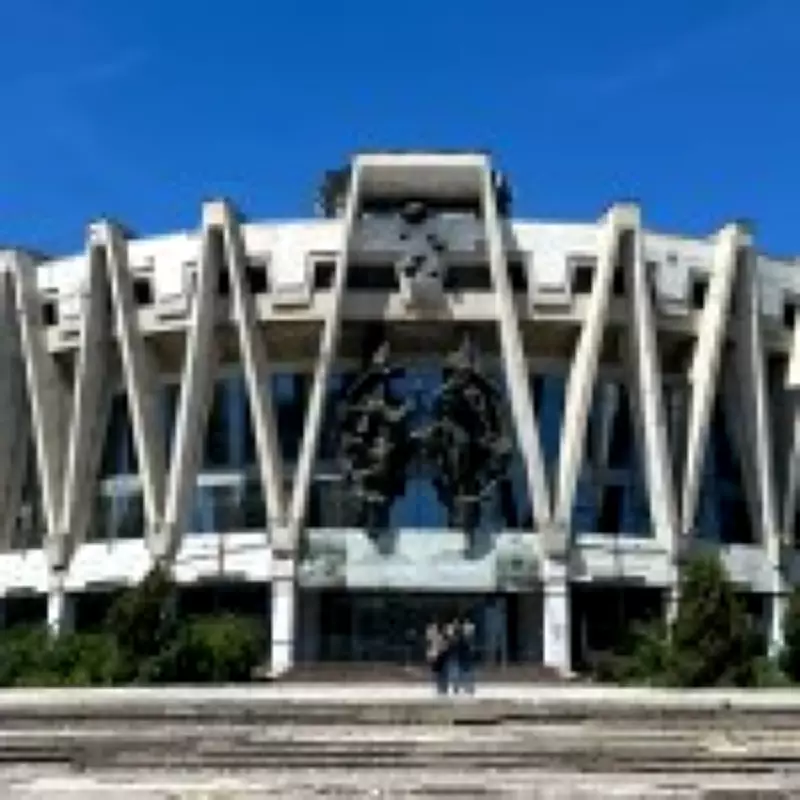
A stroll through the capital reveals Soviet relics like the abandoned State Circus, a circular structure with headless jugglers over the door, and the Romanita tower, the tallest building in town. Built in the 1980s as an ambitious housing project, Romanita features a futuristic "flying saucer" roof and spiral staircase. Today it is decaying but still inhabited, adding to its intrigue.
Chișinău straddles two worlds. On Arborilor Street, a Marriott hotel with a "New York restaurant and bar" sign stands next to Shopping Mall-dova, where brands like Calvin Klein, Mango, and Under Armour are available. A billboard features Italian influencer Chiara Ferragni. For a certain traveler, this juxtaposition is heaven.
Moldova had only 525,100 tourists in 2025, but it has big ambitions. Mtvarisa Luchian, Head of Marketing at Moldova's National Tourism Office, says, "In five years, we hope Moldova will be recognized as one of Europe's most authentic and surprising travel destinations — a place people visit for meaningful cultural experiences, nature, hospitality, and human connection." The goal is sustainable tourism that benefits both visitors and locals, spreading tourists evenly across small villages and family-run guesthouses.
Local Cuisine and Hidden Gems
At La Placinte, a beloved restaurant, the menu is in Moldovan only. Using Google Translate, the author orders placinta, a traditional pastry cake, with fillings including potatoes, cow cheese, and sheep cheese. One mysterious option, "pig hair and antenna sew," is wisely avoided. The meal is delicious. Later, at Lazy Crazy, an Asian restaurant recommended on Reddit, the sushi and ramen are excellent.
In the city center, three functioning schools and a public swimming pool are within walking distance of the National History Museum (50 leu entry). The museum houses ancient Greek funeral necklaces, Roman cooking pots from the 5th century BC, and numerous pianos. A photo exhibition by Anna Bedyńska documents Moldova's fading funeral traditions and its community with albinism. An elderly American couple on a cycling holiday remark, "The countryside here is like where we live now, but a hundred years ago. It's like Italy, but more authentic."
Cricova: Underground Wine City
Moldova's passion for wine is on full display at Cricova, a famous winery 11 km from Chișinău. Descending 100 meters underground, visitors find an icy cellar in a former limestone mine where one million liters of wine mature. Some bottles have a dark history, including a collection once owned by Nazi Hermann Goering, confiscated by the Red Army in 1945. One bottle could be worth £15,000 at auction. The standout wine is Cricova's Cuvée Prestige Brut, a sparkling wine made using the French traditional method. Moldova's wine can compete with European heavyweights like France, Italy, and Spain.
Other notable vineyards include Purcari, the oldest winery and "most awarded in Europe"; Castel Mimi, an architectural masterpiece; Milestii Mici, known for traditional tastings in handmade ceramic pots; and Chateau Vartely, with an excellent restaurant.
Transnistria and Gagauzia: Regions Apart
A recommended day trip is to Transnistria, an unrecognized breakaway state between Moldova and Ukraine. Known locally as Pridnestrovie, it is a surreal relic of Soviet times, with Lenin statues, its own unratified currency, a ghostly railway station, and Soviet-era restaurants. Another mysterious region is Gagauzia, an autonomous unit integrated into Moldova, about 90 minutes south of Chișinău. With just three towns and a population of 160,000, Gagauzia has a strong identity and a history of independence movements. The regional capital, Comrat, is tiny and fascinating.
Old Orhei: A Monastery Carved in Stone
Orheiul Vechi (Old Orhei) is a historic site with a 15th-century monastery carved into a mountainside. Reached by a marshrutka (minibus) from Chișinău's central bus station, the journey passes through a bustling market. The site occupies a remote ridge over the Răut River, with ruins from Dacian tribes over 2,000 years ago to Mongol and Tatar invasions. A 15-minute trail leads to the cave monastery and an Orthodox church built in 1905, closed by the Soviets in 1944. The author spends a pleasant afternoon hiking and writing on the hillside.
Returning to Chișinău, a taxi driver agrees to stop at his mother's house to drop off groceries. The author hopes Moldova never loses its authenticity as it pursues its tourism ambitions.
Getting There and Staying
Wizz Air flies direct from London Luton to Chișinău, with return fares from £98 in June. Mimi Hotel Jolly Alon in Chișinău offers double rooms from £137 per night (breakfast not included).




