
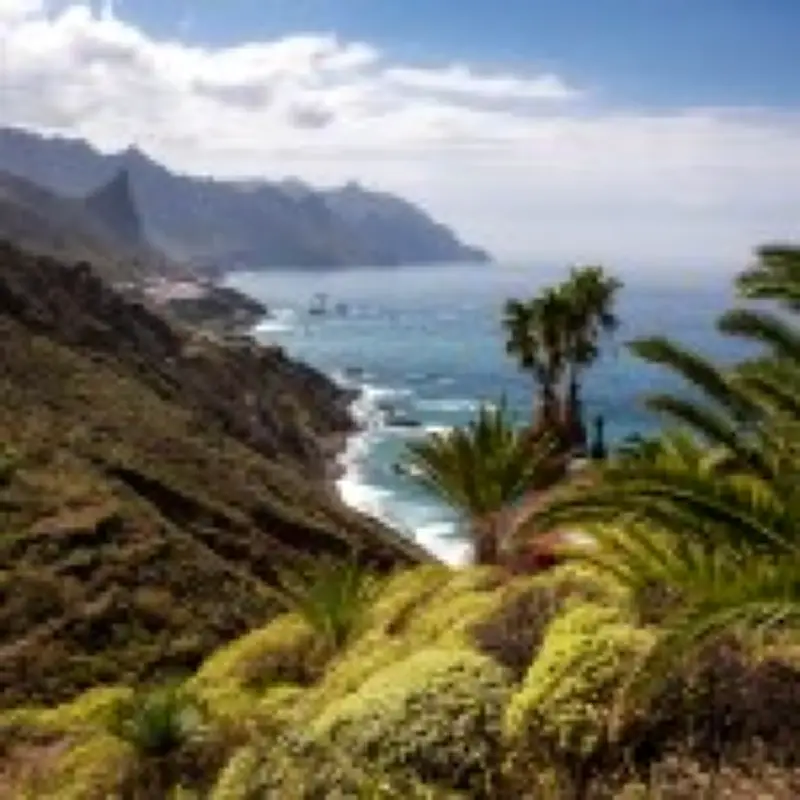
Our guide Roberto grins as he leads us past grazing goats with Mount Teide's dramatic volcanic peak in the background. 'The hikes here are like life – lots of ups and downs,' he says. This is not the Tenerife I thought I knew.
A Different Tenerife
Over the years, the largest Canary Island has earned a reputation for overtourism and all-inclusive resorts. Best known for Costa Adeje and Playa de las Américas, it is often viewed as a mere 'fly and flop' destination. I too fell into that trap, rarely leaving the hotel pool during previous visits. But recently, I experienced a different side of the island, far removed from the commercialised south.
Puerto de la Cruz, on the greener, quieter, and more authentic north coast, feels like another world. While mass tourism concerns persist, local business owners here are eager to share their Tenerife with visitors.
Arriving in Puerto de la Cruz
After a direct British Airways flight from Gatwick, a short transfer brings me to the Gran Hotel Taoro, a magnificent five-star property perched above Puerto de la Cruz overlooking the Orotava Valley. A swift check-in and a mango foam cocktail later, I sink into the sumptuous bed. Opened in 1890 as Spain's first luxury hotel, the Taoro once hosted Agatha Christie. After closing for 50 years, it reopened in late 2025 following a €35 million renovation. With 199 rooms and suites offering panoramic views of Mount Teide, the Atlantic, and botanical gardens, the hotel celebrates the northern landscape.
A Day in Teno
The next morning, we meet Roberto Carlos Martín López, a local guide from Puerto de la Cruz who is a walking encyclopaedia of the area. He drives us away from tourist buses toward Mount Teide, the 3,718-metre active stratovolcano. We glimpse natural rock pools and saltwater lidos before climbing into the spectacular incline overlooking the Atlantic. I can't believe this is still Tenerife. As we ascend, everything slows down, and we traverse rugged hills, stopping to admire the views.
In a rocky valley, Roberto demonstrates Canarian goat jumping, known locally as Salto del Pastor (the shepherd's leap). Developed by the indigenous Guanche people, it requires strength, agility, stamina, and a long pole with a steel tip called a regatón. Roberto wants such cultural identity infused into local tourism. He tells us: 'For me, quality tourism means working with smaller groups to offer a more personal experience. I collaborate with local producers—like goat farmers or wineries—to make activities authentic and rooted in the territory. Sustainability is about protecting nature and supporting the local economy.'
Rest Your Legs in a Local Guachinches
Fine dining at the Gran Hotel Taoro is outstanding, but the most memorable meal is at a small, family-owned restaurant on a hillside. Guachinches are rustic establishments serving simple, homemade food, often in garages or courtyards. They originated from selling wine from the owner's harvest and gradually became small restaurants. Roberto, a close friend of the owners of Guachinches Ramón, ensures we taste the best local food. One favourite dish is papas arrugadas (wrinkled potatoes) boiled in salted water and served with mojo rojo and mojo verde. Conejo en salmorejo (rabbil) is also popular and highly recommended. With a ginger cat purring at our feet and Roberto placing special requests at the kitchen window, it feels like dining in someone's backyard.
Where to Stay
For an authentic experience in Puerto de la Cruz, the Gran Hotel Taoro is the only choice. Its 199 rooms offer panoramic views of Mount Teide, the Atlantic, and botanical gardens. The hotel features a new wellness centre and five dining venues, including one helmed by Michelin-starred chef Ricardo Sanz. British Airways Holidays offers seven nights at the Gran Hotel Taoro from £1,229 per person, including economy return flights from London Gatwick, one checked bag, and breakfast, for travel between 1–30 September 2026, booked by 10 June 2026.




