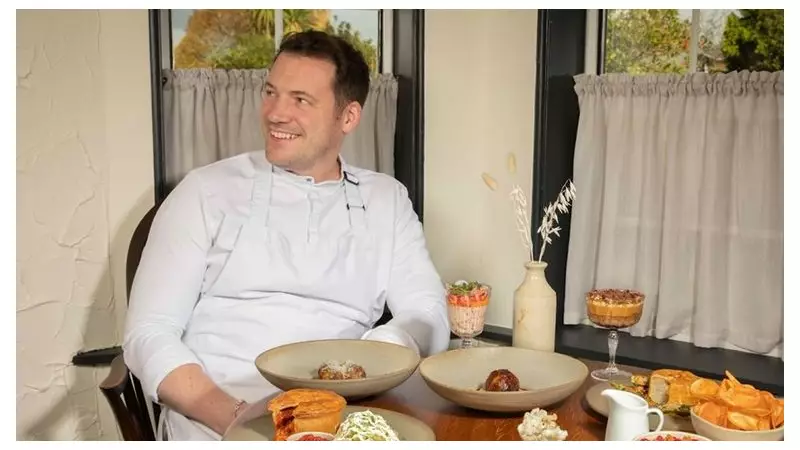
Michelin-starred chef and Great British Menu winner Tommy Banks has delivered a stark assessment of the challenges facing Britain's hospitality sector, citing "political decisions", soaring costs, and even weight loss drugs as factors squeezing restaurants and pubs.
The Real Cost of a £7 Station Toastie
Banks pointed to a recent experience at York Station to illustrate the public's misunderstanding of overheads. He witnessed a customer baulk at a £7 price tag for a cheese and ham toastie from an independent vendor. "It's not seven quid though, is it?" Banks argued. "Just take off the VAT as the starting point, and think about how much it costs to rent in the station. People don't consider the overheads."
Political Choices and a £250,000 Wage Bill Hike
The chef, who runs the Michelin-starred Black Swan in Oldstead, North Yorkshire, was forthright on government policy. He stated that the biggest effects on the industry have been "political choices". While supportive of a higher minimum wage, he warned that increasing the younger rate can decrease job prospects for youth.
He highlighted the combined impact of last year's national insurance hike and living wage increase, which alone added a staggering £250,000 to his business's wage bill. "Take the hike to employer national insurance - when you add in what is essentially a tax on jobs, you are going to see many redundancies," he said.
Weight Loss Drugs and the New Dining Landscape
Banks identified a surprising new pressure on casual dining, especially in London: the widespread adoption of weight loss drugs. "The invention or the take-up of weight loss drugs has had a massive effect on that area of the market because people are literally eating less," he revealed.
He described this as "good for the customer, terrible for the operator", summing up a broader trend where consumer benefits come at a high cost to business viability. He noted a clear move towards less drinking and earlier dining, compounding the pressure on margins.
From Farmhouse Breakfasts to Michelin Stars
Banks reflected on his unusual start, growing up in a farmhouse bed and breakfast run by his parents. His father's meticulous egg-grading ritual for breakfast service was an early culinary influence. He left school after one year of A-levels, "politely asked not to come back", and began working at the family's pub at 17, making it up as he went along.
His strategy during the 2008 financial crash defied convention. While others slashed prices, the then-21-year-old Banks raised them, focusing on experience over discounts. He won his first Michelin star young, battling imposter syndrome and driven by a life-threatening bout of ulcerative colitis at 18, which he credits for giving him an "insatiable drive for success".
Soaring Costs and the Chef's New Skill Set
The chef provided a stark example of ingredient inflation. A signature turbot dish required fish costing £18 per kilo in 2017. Today, it costs £86 per kilo. This forces a fundamental shift in a chef's role. "The creative skill of the chef now is more how you create something that people really want to buy, but at the price point they're willing to pay, while still having a margin. It's a nearly impossible thing," he admitted.
His key operational change has been rigorous measurement and reporting. "Every point of a percentage actually really matters in an industry that's operating at break-even," he stated.
Simple Hacks and Hopes for the Future
Banks shared a fundamental cooking tip for home chefs: using salt correctly. "A lot of people will cook without any salt and then add it at the end. But salt is a chemical you need to add throughout the cooking process," he advised, explaining that adding it only at the end makes food taste bland and salty.
For cheap, flavourful meals, he champions umami-rich, low-cost ingredients like Marmite and Worcester sauce as "cheat codes" to replace expensive stocks.
Despite the sector's struggles, Banks remains passionate about the irreplaceable human element of hospitality. "I just don't think it'll ever go out of fashion to spend time with loved ones and enjoy great hospitality and human interaction," he said. "Why can't we celebrate this?"
Tommy Banks spoke following the launch of his Classic British menu on Uber Eats in December, available in London, Manchester, and Liverpool.