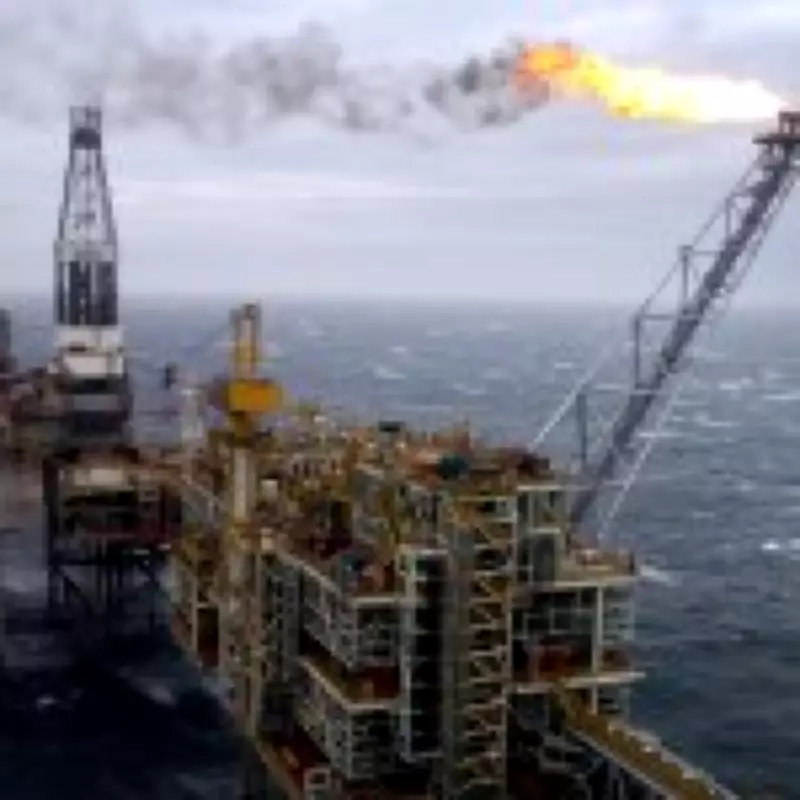
UK Government Halts New North Sea Oil and Gas Drilling Amid Energy Debate
Published March 26, 2026, this exclusive analysis delves into the ongoing political standoff over energy exploration in the North Sea. The government remains firm in not issuing new licences for oil and gas drilling, a decision that has ignited fierce debate among political parties and industry stakeholders.
Political Pressure to Drill Intensifies
With energy prices surging due to geopolitical tensions in the Strait of Hormuz, the Conservative Party, Reform UK, and the SNP are urging the government to authorize new drilling projects. They argue that tapping into domestic resources like the Jackdaw gas field, located 150 miles east of Aberdeen, could heat up to 1.6 million homes and potentially lower energy bills. Trade body Offshore Energies UK supports this view, warning that failure to exploit North Sea reserves leaves the UK vulnerable to global market volatility and higher emissions.
Government Stands Firm on Renewable Transition
Energy Secretary Ed Miliband is unwavering in his opposition, asserting that reliance on fossil fuels exposes the UK to international price fluctuations. He emphasizes that new drilling would not reduce energy bills, as prices are set on global markets. Instead, the government advocates for a shift towards renewable energy and nuclear power to enhance energy security and combat climate change. Miliband points out that the North Sea has been in decline for over two decades, making it crucial to prepare for a future less dependent on fossil fuels.

Counterarguments from Labour and Environmental Concerns
Interestingly, Labour MP Henry Tufnell has voiced support for domestic drilling, arguing that importing oil and gas from less carbon-efficient foreign sources merely displaces environmental problems and harms local communities. However, the government counters by highlighting the catastrophic global climate crisis driven by fossil fuel use. They stress that transitioning to renewables and nuclear energy is essential for long-term sustainability, even as oil and gas will remain part of the energy mix for years to come, particularly as backup during low wind periods.
Current Energy Supply Landscape
Prime Minister Keir Starmer noted at PMQs that the UK will continue using oil and gas for the foreseeable future, even with a net-zero target by 2030. Currently, the UK sources most of its gas from Norway, its own North Sea, and the US, with only a small fraction from the Gulf region. Similarly, imported crude oil primarily comes from the US and Norway, while petrol imports are dominated by the Netherlands and the US. This reliance on international markets underscores the government's argument for reducing fossil fuel dependency to mitigate future price shocks.
In summary, the debate over North Sea drilling encapsulates broader tensions between energy security, economic costs, and environmental imperatives, with the government prioritizing a green transition amid political pressure.