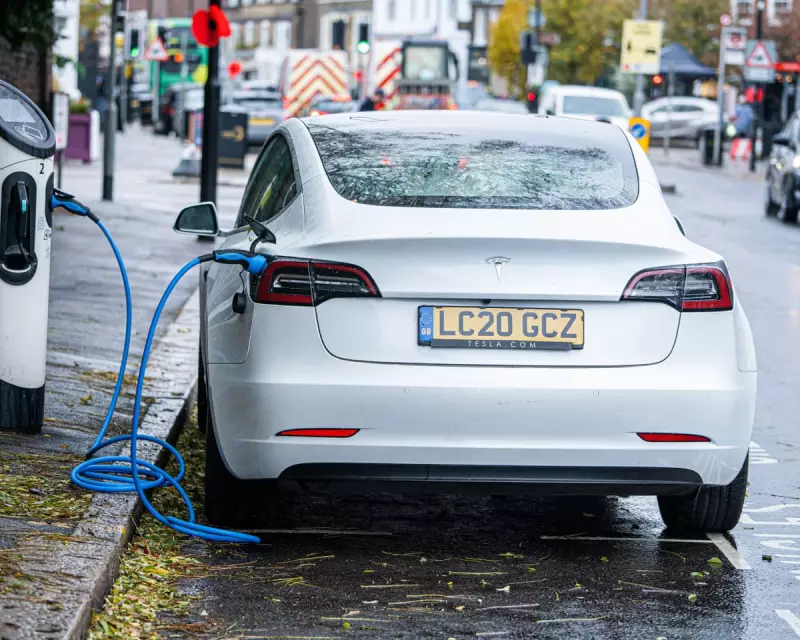
Newly released documents have exposed private warnings from electric car giant Tesla to the UK government, cautioning that any dilution of electric vehicle (EV) regulations would damage battery car sales and jeopardise national carbon dioxide targets.
Private Lobbying Revealed in Consultation Responses
According to submissions obtained via a Freedom of Information request by the Fast Charge newsletter, Tesla argued it was "essential" that ministers did not introduce new loopholes, known as "flexibilities," into the zero-emission vehicle (ZEV) mandate. The US firm, owned by Elon Musk, stated that such changes "will suppress battery electric vehicle (BEV) supply, carry a significant emissions impact and risk the UK missing its carbon budgets."
The Labour government had already alarmed some EV-focused manufacturers in April by softening the ZEV mandate rules. While the mandate legally requires carmakers to sell an increasing proportion of electric vehicles each year, new flexibilities were introduced, allowing them to sell more petrol and diesel models.

Carmakers Divided Over Mandate's Impact
The consultation responses revealed a sharp industry split. Traditional manufacturers with significant UK factory footprints, including BMW, Jaguar Land Rover, Nissan, and Toyota, claimed the strict mandate was harming investment because they were often selling electric cars at a loss.
In contrast, brands predominantly manufacturing EVs and environmental campaigners argued the rules were working as intended. Notably, no carmaker is believed to have faced fines for their 2024 sales under the mandate.
Beyond its core warning, Tesla's redacted submission also called for "support for the used-car market," though the company declined to comment on whether this should include financial grants. The firm also advocated for a ban on sales of plug-in hybrid vehicles with a battery range under 100 miles after 2030, a move that would exclude many popular models.
Budget Announcements Create Further Uncertainty
The political landscape for EVs became more complex following Chancellor Rachel Reeves's first budget. While extending grants for new electric car purchases was welcomed, the promise of a future "pay-per-mile" road charging scheme for EVs from 2028 caused significant concern. Industry figures fear this could reduce the cost advantage of electric cars over traditional, more polluting models.
Tom Riley, author of Fast Charge, summarised the tension: "Just as the EV transition looked settled, the budget pulled it in two directions at once. If carmakers push again for a softer mandate, Labour only has itself to blame when climate targets slip."
Other manufacturers also lobbied vigorously. Ford strongly criticised European governments for "not delivering their side of the deal" on EV support and warned of competition from Chinese manufacturers. Mercedes-Benz argued for cutting VAT on public charging from 20% to 5% and considering a price cap on charging rates. Both Ford and Mercedes-Benz, alongside Tesla, objected to their consultation responses being made public.
The revelations highlight the intense behind-the-scenes pressure on the UK government as it attempts to balance automotive industry demands with legally binding environmental commitments, all while navigating a rapid and costly technological transition.