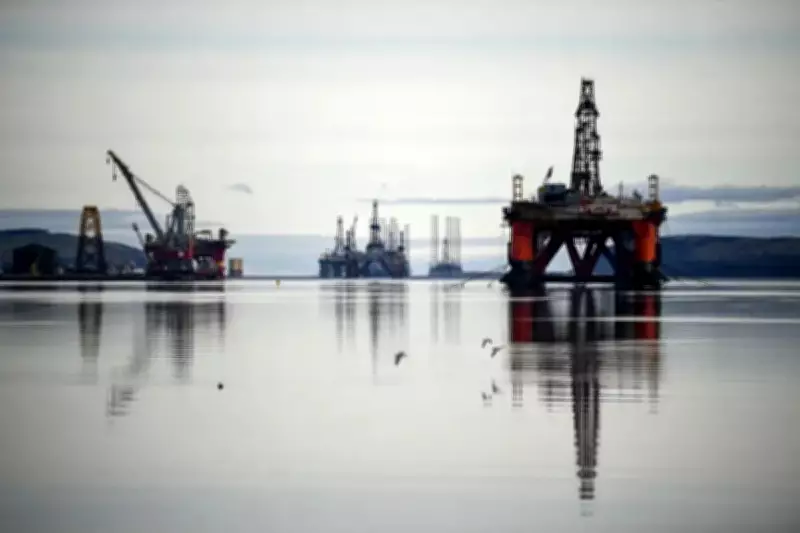
Serica Energy Urges Government Action on North Sea Production to Counter Iran War Fallout
Serica Energy has issued a stark warning to the UK government, urging it to prioritize domestic oil and gas production in the North Sea as supplies face severe disruption due to the ongoing Iran war. In its latest annual results, the company highlighted that confidence in the UK North Sea sector has been "eroded" and called for immediate action to translate consultations into tangible measures.
Addressing Global Supply Risks
The Strait of Hormuz, a critical chokepoint for roughly one-fifth of the world's oil supply, has been experiencing significant disruption since 28 February, leading to choked supply and the release of emergency oil reserves. Serica emphasized that approving new oil and gas field developments in the North Sea could reduce future crisis risks and potentially "help with the current crisis."
The company also called for the government to reconsider its decision to halt new exploration licences, noting that some companies are willing to take financial risks. Additionally, Serica proposed replacing the Energy Profits Levy with a permanent tax mechanism and reframing the sector as a "national asset."

Leadership and Analyst Perspectives
David Latin, Chair of Serica, stated: "Maximising the benefits available to the UK from domestic oil and gas and achieving net zero by 2050 are not mutually exclusive objectives. Indeed, they complement each other, not least when oil and gas imported over thousands of miles typically comes with significantly higher emissions than the equivalent domestic production."
He added that other Western European oil-producing nations are acting on these facts, and the UK should fully exploit its position for regional security benefits.
James Hosie, equity analyst at Shore Capital, commented: "The UK North Sea oil and gas industry's consistent lobbying for fiscal reform earned it renewed engagement from HM Treasury. The Chancellor's reported comments indicate that global events have merely delayed plans for the early retirement of the Energy Profits Levy."
He noted that the industry now has government recognition that the EPL is undermining investment, with efforts aimed at supporting jobs and improving energy security.
Financial Performance and Production Trends
Serica experienced a decline in revenue for the previous financial year, dropping to $601 million (£449 million) from $727 million in 2024, while profit before tax fell from $160 million to $80 million. The company attributed this to lower production, averaging 27,600 barrels of oil per day (boepd), down from 34,600 boepd the year before.
Production was primarily impacted by a 24-day shutdown for maintenance at its Triton FPSO site. However, following the completion of work in March, production rebounded, averaging 50,000 boepd.
Serica declared a final dividend of 10p per share, and shares surged 3.7 percent in early morning trading to 264.5p.
Future Outlook and Strategic Moves
The group maintained its 2026 outlook, expecting to produce over 40,000 barrels of oil equivalent per day, with potential to exceed 65,000 barrels per day by the end of 2026 upon completion of all acquisitions. Serica confirmed that its acquisitions of Catcher, Golden Eagle Area development, and Spirit Energy assets remain on track.
Additionally, Serica plans to transition from AIM to the main market of the London Stock Exchange during the third quarter of 2026, signaling a strategic shift to enhance its market presence and stability.