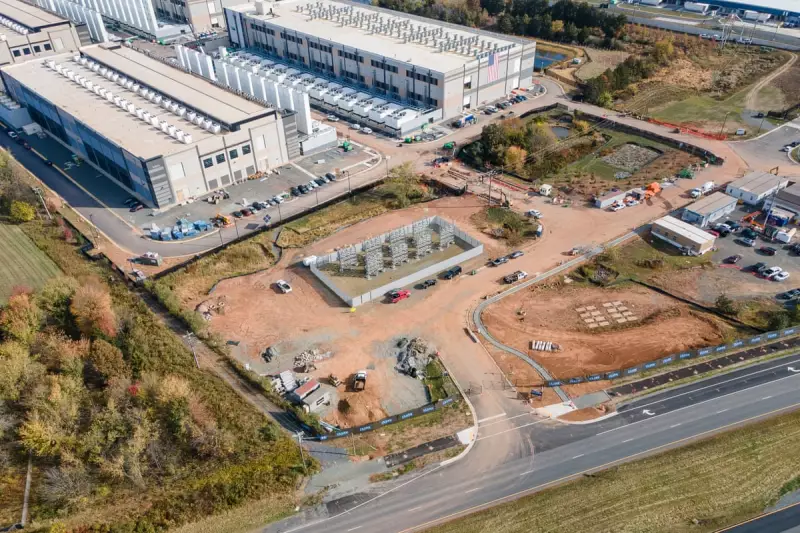
In a significant shift for the booming artificial intelligence industry, former President Donald Trump has announced a new initiative aimed at preventing massive AI data centres from driving up electricity bills for American households. The policy, starting with tech giant Microsoft, demands that major technology companies fully cover the substantial power costs of their facilities.
A New Deal for Data Centre Communities
On Tuesday, President Trump revealed the partnership via his Truth Social platform, stating Microsoft was "first up" in the plan. He framed the move as essential for maintaining America's AI leadership while protecting citizens' finances. "We are the 'HOTTEST' Country in the World, and Number One in AI," Trump wrote. "Data Centers are key to that boom, and keeping Americans FREE and SECURE but, the big Technology Companies who build them must 'pay their own way.'"
The announcement coincided with an event near the White House titled 'Community-First AI Infrastructure,' where Microsoft President Brad Smith detailed the company's commitments. Smith pledged that Microsoft would no longer accept local tax breaks or electricity rate discounts in towns hosting its data centres. Furthermore, the firm vowed to ensure its colossal energy use does not increase utility rates for individuals and to minimise water consumption.

"Like major buildouts of the past, AI infrastructure is expensive and complex," Smith noted in a blog post. "This revives a longstanding question: how can our nation build transformative infrastructure in a way that strengthens, rather than strains, the local communities where it takes root?"
Growing Backlash Against Power-Hungry AI Hubs
This policy adjustment comes amid a rising, bipartisan wave of concern across the United States regarding the impact of data centres. Communities from Oklahoma, Tennessee, and Louisiana to Oregon, California, and New York have protested new projects, citing spiking electricity costs, drained water resources, and local pollution.
The energy demands are staggering. A single large-scale data centre can consume as much electricity as a small city, with AI-specific facilities being particularly intensive. They can also use up to a million gallons of water per day for cooling. The International Energy Agency estimates global data centre electricity use could double by 2026 from 2022 levels—a consumption rate on par with Japan's annual usage.
This expansion has a direct environmental cost. Microsoft's carbon emissions have risen by 23% since 2020, primarily due to its proliferating AI data centres. Similar increases have been reported by other tech leaders like Google, Amazon, and Meta.
Balancing AI Ambition with Local Realities
President Trump's stance represents a notable modification. During his second term, he has actively embraced AI, hosting tech CEOs and signing executive orders to deregulate the industry and speed up federal permitting for data centre construction. However, the growing affordability crisis and community opposition appear to have prompted a strategic pivot towards ensuring corporate responsibility.
The tangible effects of community pushback are already being felt. In rural Wisconsin, Microsoft was forced to abandon plans for a new data centre following local opposition, which included fears over surging electricity rates.
Trump indicated that the arrangement with Microsoft is just the beginning, confirming he is working with other major tech firms to secure similar pledges. The move sets a potential new standard for how the United States manages the physical infrastructure of its digital economy, placing the financial burden of massive energy consumption squarely on the corporations that profit from it.