Israel's Attack on Iran's South Pars Gasfield Ignites Global Energy Turmoil
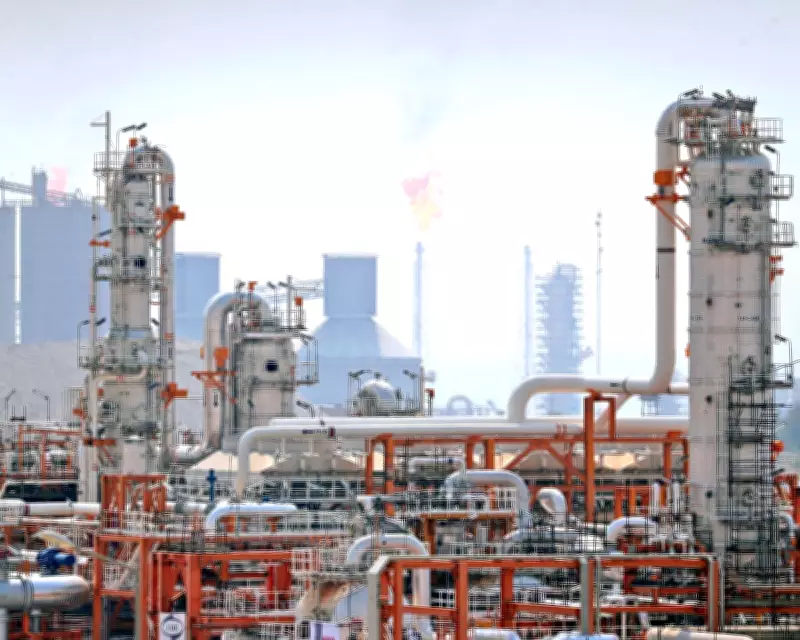
In a dramatic escalation of the ongoing conflict, Israel launched a strike on Iran's massive South Pars gasfield on Wednesday. This aggressive move has plunged the Middle East into deeper crisis, with Iran responding swiftly by targeting energy infrastructure across the Gulf region. The Iranian foreign minister, Abbas Araghchi, issued a stark warning on Thursday, declaring that Tehran would show "zero restraint" if its energy assets are attacked again. This threat underscores the volatile nature of the situation, as global markets reel from the fallout.
Retaliatory Strikes and Economic Fallout
Iran's retaliation included strikes on Qatar's Ras Laffan gas complex, a critical facility that supplies approximately 20% of the world's liquefied natural gas (LNG). QatarEnergy's chief executive, Saad Sherida al-Kaabi, revealed that the damage amounts to around $20 billion, with repairs expected to sideline 12.8 million tons of gas annually for three to five years. This disruption has sent shockwaves through global energy markets, causing Brent crude oil prices to surge by as much as 10% to $119 a barrel before settling at $110, a 3.3% daily gain. Since the war began on February 28, crude prices have skyrocketed by 60%.
European and UK gas prices also jumped sharply, climbing up to 24% before easing back, more than doubling since the conflict's onset. Stock markets worldwide experienced heavy sell-offs, with Japan's Nikkei, South Korea's KOSPI, and Hong Kong's Hang Seng leading declines that spread to Europe. The UK's FTSE 100 closed down 2.35%, while Germany's Dax and France's CAC saw similar falls. Airlines warned that rising fuel costs would drive up fares, urging passengers to book early and rerouting flights via Asia as Gulf hubs face operational challenges.

Political Tensions and International Reactions
Amid the chaos, political leaders scrambled to respond. Former US President Donald Trump claimed he had coordinated with Israeli Prime Minister Benjamin Netanyahu, stating he told Netanyahu not to attack Iranian gasfields again. However, Trump's messaging appeared contradictory, as he suggested Israel acted unilaterally while threatening to "blow up" all of Iran's South Pars gasfield if Tehran struck Qatar. Netanyahu confirmed Israel acted alone but acknowledged Trump's request to hold off on future attacks.
International concern mounted as the UK, France, Germany, Italy, the Netherlands, and Japan issued a joint statement expressing "deep concern" over the escalating conflict. They called on Iran to cease threats and attacks, including attempts to block the Strait of Hormuz to commercial shipping, and offered to contribute to efforts ensuring safe passage. The EU also pledged to mobilize diplomatic, legal, operational, and financial tools to reduce tensions and prevent a migration crisis similar to 2015.
Broader Implications and Future Risks
The attacks have highlighted the fragility of global energy infrastructure, with Iranian strikes also hitting Saudi Arabia's Red Sea refinery and two Kuwaiti oil refineries. Analysts warn that Gulf countries, including Saudi Arabia, remain reluctant to entangle themselves in Trump's conflict, despite Saudi Arabia's foreign minister not ruling out military action. French President Emmanuel Macron urged a return to reason, noting the long-term impact on global markets and calling for a moratorium on strikes against infrastructure and civilians.
US officials added to the confusion, with Treasury Secretary suggesting lifting oil sanctions on some Iranian cargoes, while Defense Secretary Pete Hegseth delivered a bellicose warning to Iran, accusing the press of misrepresenting US objectives. He emphasized that President Trump's goals remain unchanged, aimed at stopping Iran from holding the world hostage. As the war risks spiraling out of control, the global community faces unprecedented energy insecurity and economic instability, with no clear resolution in sight.