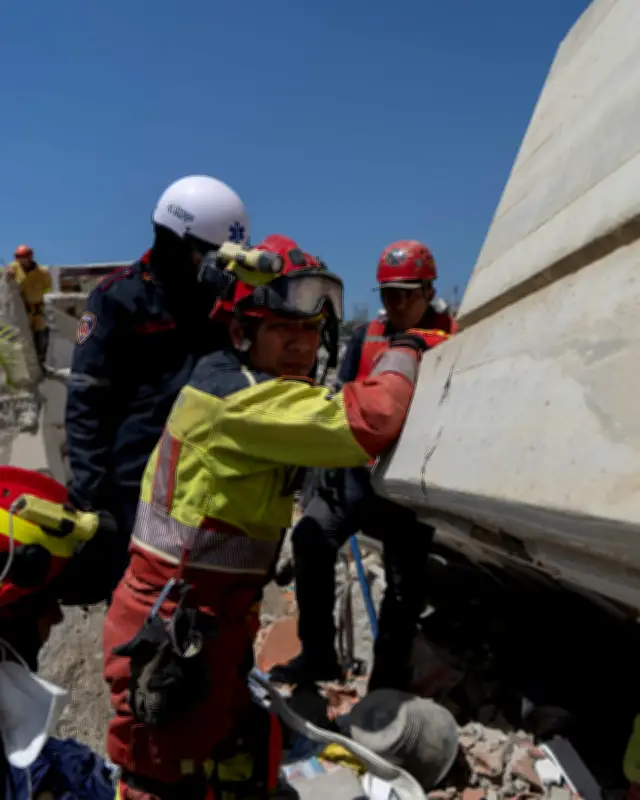
International rescue teams have begun arriving in Venezuela after a devastating earthquake struck the country, leaving a trail of destruction and thousands feared dead. The 7.8-magnitude quake hit near the capital Caracas, toppling buildings and triggering landslides in what officials are calling one of the worst natural disasters in the nation's history.
Rescue operations underway amid chaos
Teams from Mexico, Chile, Spain, and Russia have landed at Simon Bolivar International Airport, bringing search dogs, cutting equipment, and mobile hospitals. According to the Venezuelan interior ministry, at least 1,200 people have been confirmed dead, but the toll is expected to rise significantly as rescuers dig through rubble. President Nicolas Maduro has declared three days of national mourning.
“We are facing a hellscape,” said Maria Rodriguez, a spokesperson for the International Rescue Committee. “Entire neighborhoods have been flattened. The need for heavy lifting equipment and medical supplies is immense.” Aftershocks continue to rattle the region, complicating rescue efforts.
Political crisis hampers aid delivery
The disaster has exposed Venezuela’s crumbling infrastructure, worsened by years of economic collapse and political turmoil. Fuel shortages have grounded many domestic rescue helicopters, and hospitals are overwhelmed with the injured. The United Nations has pledged $20 million in emergency aid, but distribution remains a challenge due to road damage and fuel scarcity.
Opposition leader Juan Guaido called for international observers to oversee aid distribution, accusing the government of corruption. Meanwhile, the U.S. offered humanitarian assistance, but Maduro’s government has not yet formally accepted, citing political tensions.
Survivors dig through rubble with bare hands
In the coastal city of La Guaira, residents used shovels and their hands to search for survivors. “We have no water, no electricity, and no help from the government,” said local fisherman Carlos Mendez. “We are on our own.” The earthquake struck at 11:47 a.m. local time, with the epicenter 20 miles northeast of Caracas, according to the U.S. Geological Survey.
Hospitals in Caracas are treating thousands of injured, with many patients lying on floors due to bed shortages. The Red Cross has set up field tents, but medical supplies are running low. “We need blood donations and antibiotics urgently,” said Dr. Ana Perez of the University Hospital of Caracas.
International community mobilizes
Rescue teams from Colombia, Brazil, and Turkey are expected to arrive in the coming days. The European Union has released €5 million in initial funding, and China has sent a team of 50 specialists. However, experts warn that the full scale of the disaster may not be known for weeks.
“This is a catastrophe on top of a catastrophe,” said David Beasley, executive director of the World Food Programme. “Venezuela was already facing a humanitarian crisis. Now it’s unimaginable.” The earthquake has also damaged oil infrastructure, threatening further economic instability.