Gas Production Facilities Targeted in Dangerous Middle East Escalation
For the first time in the ongoing Middle East conflict, fossil fuel energy production facilities have become direct targets, marking a significant and dangerous escalation with potential long-term global consequences. The recent tit-for-tat attacks on gasfields represent a new phase in the regional war that could reshape energy markets and geopolitical dynamics for years to come.
What Exactly Has Been Targeted?
The recent wave of attacks began with an Iranian drone strike on Tuesday that successfully targeted the Shah gasfield, located approximately 111 miles southwest of Abu Dhabi. This critical facility, capable of producing 1.28 billion standard cubic feet of gas daily, supplies about 20% of the United Arab Emirates' gas needs and contributes 5% of the world's granulated sulphur used in phosphate fertilisers. Operations at this vital site have been suspended following the attack.
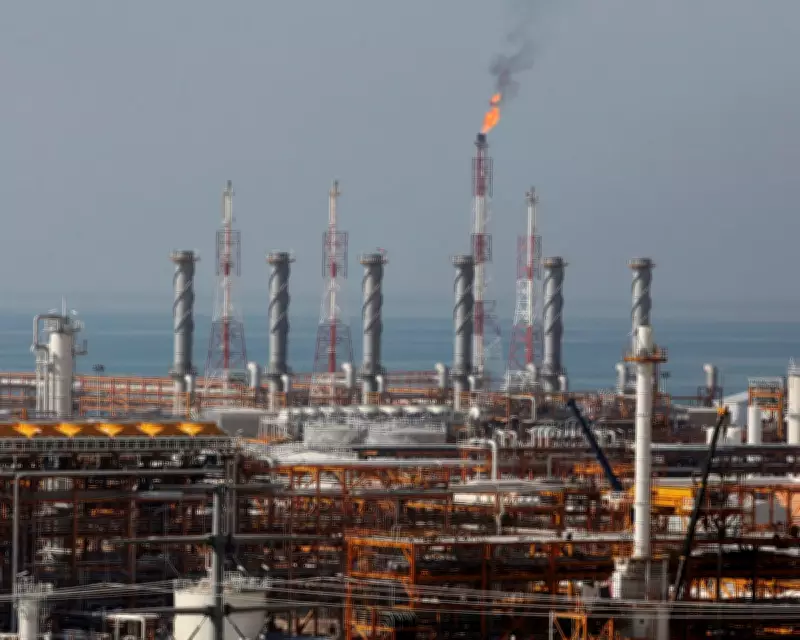
On Wednesday, the conflict escalated further when an Iranian production facility for the massive South Pars gasfield was struck. This field, which Iran shares with Qatar, represents the largest gas reservoir in the world and serves as Iran's primary domestic energy source. The country already struggles with electricity production, making this attack particularly damaging to its infrastructure and economy.

Israeli media widely reported that Israel conducted this strike with American consent, though neither country immediately confirmed responsibility. Former President Donald Trump stated the United States had not received advance warning, but experts consider it highly improbable that US intelligence would have been unaware of such a significant military operation between close allies.
Global Economic Impact and Regional Reactions
The conflict intensified further when an Iranian attack caused extensive damage to Qatar's giant Ras Laffan liquefied natural gas facility, sending European gas prices soaring by 35% and prompting serious warnings about global economic repercussions. Qatar ranks among the world's top LNG producers alongside the United States, Australia, and Russia, with Ras Laffan serving as the planet's largest LNG hub.
Theresa Fallon, director of the Centre for Russia Europe Asia Studies, described the attack on Qatar's facility as marking a significant escalation in the Middle East war, noting that the economic effects would likely be felt for years. French President Emmanuel Macron condemned the latest tit-for-tat attacks on energy infrastructure as a reckless escalation, while Germany's Economy Minister Katherina Reiche warned that a global recession could result from these developments.
Iran responded to the South Pars attack by declaring numerous prominent regional oil and gas sites in Saudi Arabia, the UAE, and Qatar as legitimate targets that should be evacuated immediately. Loud explosions were subsequently reported in Riyadh, the Saudi capital, just hours after this declaration.
Broader Implications and Historical Context
The political stakes have risen dramatically, particularly for the United States as it approaches midterm elections in November. Diesel prices in America have surpassed $5 per gallon for the first time since the 2022 inflation surge that eroded support for President Joe Biden's administration.
Historical precedents suggest that repairing damaged energy infrastructure could prove more challenging than anticipated. Following the 2003 invasion of Iraq, despite contractors accessing plants and $2 billion spent on oil projects, production took more than two years to return to prewar levels. Recent attempts to repair Ukrainian power infrastructure damaged by Russian attacks have highlighted similar equipment and logistical challenges.
Beyond immediate economic impacts, energy production in the Gulf region carries profound social, political, and diplomatic significance. Social settlements in often repressive monarchies depend heavily on sharing energy wealth, which directly affects living standards and the ability to attract foreign workers. Energy also fundamentally shapes how regional countries interact with each other.

The brief detente between Iran and Saudi Arabia, which survived Israel's attacks on Iranian nuclear facilities last year, represented a priority for Saudi Arabia's de facto ruler Mohammed bin Salman as part of his economic diversification plans. He assessed that tensions with Iran drained valuable resources, while Iran pursued the detente as its economy struggled under US-led sanctions.
Qatar's palpable anxiety over the South Pars attack stems from its historical closeness to Iran through their shared interest in the gasfield, which has sometimes served as a diplomatic bridge not only between Doha and Tehran but across the wider region.