In light of international crises like the war in Iran and the resulting energy price spikes, the UK’s fundamental energy vulnerability – its dependence on a volatile international market – can be solved by immediately approving further drilling in the North Sea, says Brandon Lewis.
Clarifying power of crisis
Moments of crisis have a clarifying power that peacetime politics rarely offers. They provide opportunities for governments and citizens alike to face their most uncomfortable truths head on, stripping away usual assumptions and laying bare reality. The war in Iran should be doing exactly this for Britain. Instead, the government has been choosing to look away.
Since Russia’s invasion of Ukraine in 2022, the West has tried to wean itself off Russian oil and gas. European nations have seen moderate success, reducing their dependency on Moscow, but stretching international supplies in the process by rapidly increasing demand from other sources. It is in the context of this already strained environment that the Iran conflict erupted, triggering the closure of the Strait of Hormuz, the narrow waterway through which around 20 per cent of the world’s oil and gas passes.

While the UK imports very little oil and gas from the Gulf region, every other major supplier – including Norway and the United States – now faces yet another surge in demand for their limited stocks, resulting in the skyrocketing prices we are now seeing.
Fundamental vulnerability
What this exposes is Britain’s fundamental vulnerability – we are not energy self-sufficient. Britain is far too dependent on a volatile international market, a market shaped by wars the UK has no say in, decisions made in capitals the UK has limited influence in, and by crises the UK has no control over. Energy security is key to national and economic security; our energy prices for commercial industries are already among the highest in the world, which affects our ability to be competitive in global markets.
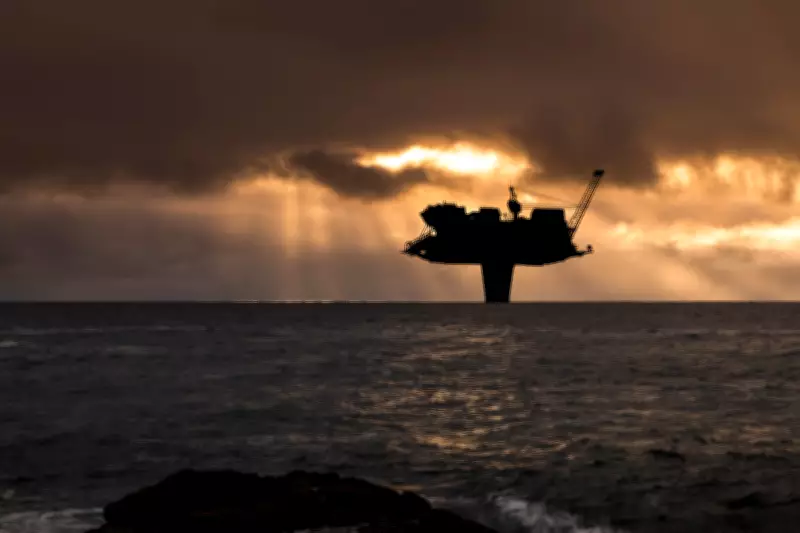
But it does not need to be this way. There is a pragmatic and obvious solution to this immediate crisis and the UK’s long-term issue – the North Sea. There are rumours now that the government might finally be seeing some logic to approving more work in the North Sea. The North Sea holds proven reserves of billions of barrels of oil and gas, just waiting to be extracted. A recent poll by Looking for Growth found that a majority of Labour voters support further North Sea drilling, demonstrating widespread societal recognition that the North Sea is a pragmatic solution to a very real problem.
To the government, their long-term solution remains green energy. Labour currently predicts that the UK will achieve Net Zero by 2050, which is highly ambitious. This is a near quarter-century stop gap in which the UK will depend on foreign imports of fossil fuels. Of course new domestic fields will take time to get up and running, but it is a worthwhile investment to stop our near total reliance on such a turbulent international market.
The next energy crisis
Labour’s predictions assume that there will not be another energy crisis in the next 24 years akin to the two that have taken place in the past four years, which is frankly naive and shows a government afraid to face the facts. This is not to say that green solutions are not also a fundamental part of our energy future, quite the contrary. The two do not have to be mutually exclusive.
At the time of writing (a very sunny Spring day), 43 per cent of Great Britain’s energy needs are being met by renewables – a genuine achievement but one that took decades to build. It also means that 57 per cent were not from clean energy sources. The honest position is that fossil fuels will remain a necessary bridging resource for decades to come, and treating that fact as ideologically inconvenient does not make it less true.
A militant commitment to reaching ambitious net zero goals, pursued without regard to the realities of this world, risks making Britain an even less competitive place to do business and undermining the prosperity that funding the green transition depends on.

The wider context makes urgency in drilling more pressing still. The world is entering a new world order, as relationships that previously seemed to be unshakeable are being called into question. War, rising costs, and resource scarcity have forced governments to look inwards. In this environment, it is secure borders, strong resource security, and a strong defence that enables countries to attract investment and sustain economic growth. Developing the North Sea reserves is a unique and powerful economic opportunity for our country. As the former Member of Parliament for Great Yarmouth, I have seen these economic positives first hand. North Sea development brings skills, opportunities, and infrastructure, and the same could be the case for towns all along the UK’s Eastern coastline.
The current government’s refusal to countenance further North Sea drilling is a self-inflicted wound that could damage the nation for decades to come. The world has changed but the UK is refusing to change with it. It is time for the Prime Minister and Energy Secretary to wake up and get drilling.
Brandon Lewis is a former chairman of the Conservative Party.