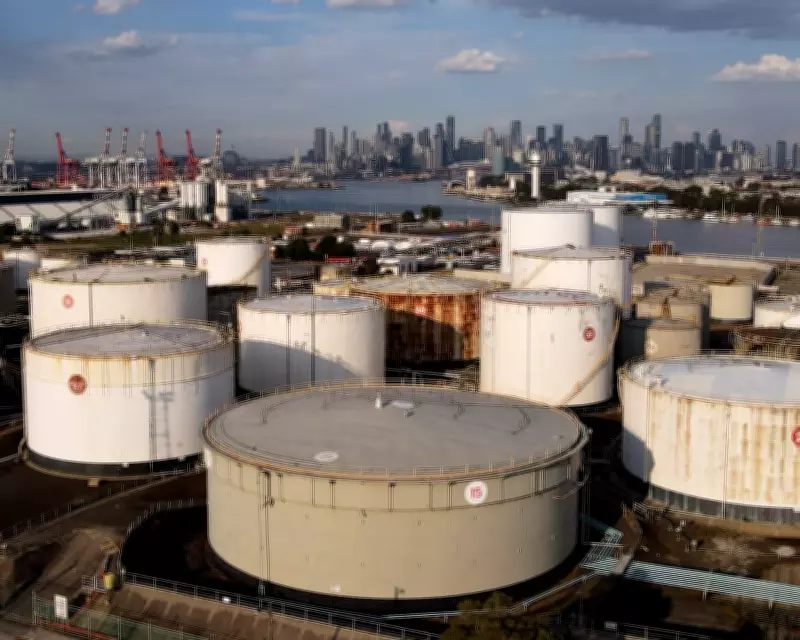
Australia Temporarily Lowers Diesel Standards Amid Widespread Fuel Shortages
The Australian federal government has implemented emergency measures to address a growing fuel crisis, temporarily lowering diesel quality standards in an effort to increase supply availability. Energy Minister Chris Bowen announced the six-month adjustment, which reduces the diesel flashpoint threshold from 61.5 degrees Celsius to 60.5 degrees Celsius, allowing access to imports from markets including the United States, Canada, and Europe.
Widespread Service Station Shortages
Minister Bowen revealed alarming statistics during parliamentary question time, detailing extensive fuel shortages across multiple states. In New South Wales alone, 164 service stations were completely out of diesel, with an additional 289 stations missing at least one type of fuel from their inventory. The situation extends nationwide, with Queensland reporting 55 stations without diesel and 35 lacking regular unleaded petrol.
Victoria has 162 service stations experiencing partial shortages, while South Australia reports 46 affected locations. Western Australia has six stations with supply issues, and Tasmania has one station without diesel and six missing unleaded fuel. These shortages come despite Australia having approximately 2,417 service stations in New South Wales alone.

International Supply Chain Disruptions
Analysts warn that Australia faces significant challenges in maintaining fuel imports, with Asian suppliers beginning to reduce production. Tom Woodlock, a senior analyst at Argus Media, noted that at least two major refineries in Singapore and Taiwan that supply Australia have decreased production by more than ten percent since geopolitical conflicts began. Six shipments have already been cancelled, with more expected in coming weeks.
Sushant Gupta, research director at Wood Mackenzie, explained that Asian fuel production could decline by twenty percent or more if refiners cannot access Middle Eastern oil. "Loss of supply is already happening now," Gupta stated. "Many refiners will have to cut their operations by more than twenty percent or potentially shut down completely within the next few weeks."
Government Response and Political Reactions
The diesel standard adjustment follows a previous sixty-day reduction in petrol standards, which was expected to add approximately one hundred million additional litres to the domestic market. However, political leaders have called for more coordinated federal action. New South Wales Premier Chris Minns emphasized the need for nationally consistent demand management procedures, potentially including rationing or work-from-home initiatives.
Queensland Deputy Premier Jarrod Bleijie placed responsibility squarely on the federal Labor government, stating that managing the crisis was "a Labor issue, federally." Meanwhile, Victorian Opposition Leader Jess Wilson proposed cutting the federal fuel excise, a suggestion supported by crossbench MP Rebekha Sharkie but rejected by Treasurer Jim Chalmers.
Industry Impacts and Future Outlook
The National Roads and Motorists' Association reported a fifteen percent increase in callouts for motorists running out of fuel in March, with approximately 306 incidents recorded in New South Wales alone. Analysts suggest Australia may need to secure alternative fuel sources from longer-haul markets like the United States and Europe, though this would require immediate planning.
Woodlock noted that Australian importers have already begun ordering more expensive fuel from the United States, with the country positioned to outbid other nations for available cargoes due to its ability to pay premium prices. As the situation develops, the government faces mounting pressure to implement comprehensive strategies addressing both immediate shortages and long-term supply chain vulnerabilities.