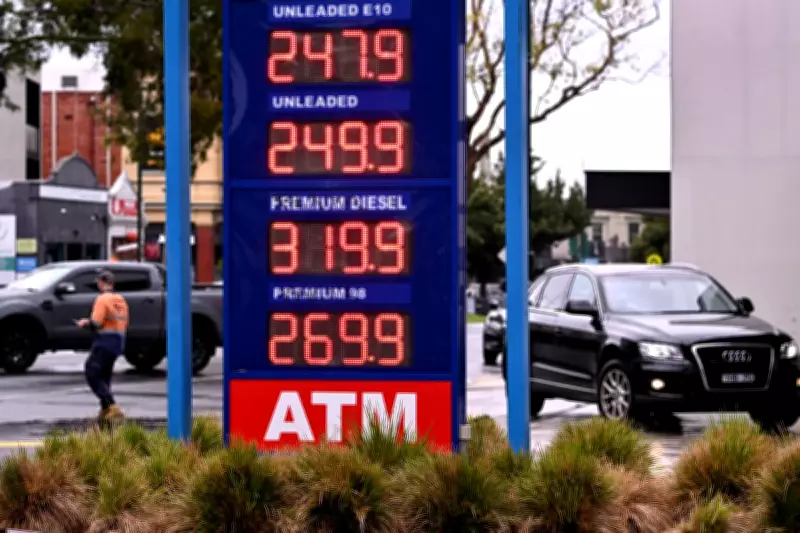
Australia's Fuel Crisis Intensifies with 25% Demand Spike
Petrol stations across Australia are reporting a dramatic surge in demand, with figures reaching up to 25% over the past two weeks alone. This increase compounds earlier spikes triggered by the Iran war, placing immense pressure on the federal government to develop a comprehensive national plan to address what officials are calling the "biggest energy crisis in history."
Retailers Struggle with Widespread Fuel Shortages
The Australasian Convenience and Petroleum Marketers Association has revealed the alarming scale of the situation, with hundreds of stations nationwide experiencing shortages of one or more fuel types. Rowan Lee, the association's chief executive, confirmed that retailers are observing drivers filling up more frequently than usual.
"Fuel retailers have reported an increase in demand of up to 25% over the past two weeks which followed a significant spike in demand," Lee stated. He attributed part of the surge to agricultural, freight, and commercial sectors accelerating their fuel purchases, creating additional short-term pressure on supplies.

Lee emphasized that when stations run out of specific fuel grades, the situation is typically temporary, with most resolved within two days. However, the cumulative effect has created significant disruptions across the country.
Government Response and Contingency Planning
Prime Minister Anthony Albanese is scheduled to meet with state premiers and chief ministers to formulate a coordinated national strategy for managing the fuel crisis. Federal authorities warn that disruptions could persist for months, even if the Iran conflict concludes immediately.
While fuel rationing remains off the table for now, governments haven't ruled out implementing voluntary measures to reduce consumption if conditions deteriorate. These could include encouraging remote work where feasible to decrease commuting fuel usage.
Energy Minister Chris Bowen characterized rationing as a "worst-case scenario" measure that would only be considered if the Middle East conflict extends for months, severely restricting oil supplies to Asian refineries and consequently reducing petrol and diesel availability in Australia.
"I don't think we're there," Bowen commented during a podcast interview. "I don't envisage being there. But of course, we are dealing with the biggest energy crisis in history and so there does need to be governments working together about prudent contingency planning."
State Leaders Call for National Coordination
State premiers have unanimously advocated for a nationally consistent approach to avoid the confusion that characterized pandemic response efforts. New South Wales Premier Chris Minns highlighted that 30% of his state's petrol originates from Queensland, underscoring the necessity for uniform regulations.
"We believe there needs to be a national plan, particularly on borders," Minns asserted. "We've got big populations on the Queensland border or Victorian border, we have to act in unison."
Legislative Measures and Industry Warnings
In response to the crisis, the Senate recently passed legislation imposing fines of up to $100 million on fuel companies engaged in price gouging. Treasurer Jim Chalmers declared, "We won't cop big corporates treating Australian consumers like mugs."
Opposition Leader Angus Taylor cautioned parliament about potential consequences, including truck drivers reducing deliveries and farmers facing harvest difficulties. Shadow Minister Andrew Hastie expressed concerns that families might eventually have to choose between purchasing food and transporting children to school.
Current Supply Situation and Expert Analysis
According to daily government updates, fuel shortages vary significantly by region:

- New South Wales: 178 stations without diesel, 48 completely out of stock
- Queensland: 55 stations without diesel, 33 without regular unleaded
- Victoria: 45 stations without diesel, 72 without unleaded
- South Australia: 9 stations without diesel, 10 without unleaded
- Western Australia: 40 stations without diesel, 14 without unleaded
- Tasmania: 5 stations without diesel, 9 with partial outages
- Australian Capital Territory: 2 stations without diesel
Bowen acknowledged that supply levels fluctuate daily due to varying regional demand and distribution challenges. He identified a "doubling" in demand for certain petrol types as the primary cause of supply issues, urging Australians to purchase only what they immediately require.
Despite current shortages, the energy minister noted that Australia maintains larger fuel reserves than at the onset of American and Israeli strikes against Iran. However, unprecedented demand increases have depleted supplies in specific areas.
Structural Vulnerabilities and Future Concerns
Energy analyst Kevin Morrison from the Institute for Energy Economics and Financial Analysis pointed out that passenger vehicles account for merely 25% of total fuel consumption. Consequently, rationing measures targeting personal vehicles would have limited impact on overall supply.
"Half the market is diesel," Morrison explained. "There's only so much you can try to advise behavioural change. We're vulnerable to what's happening in the Middle East and Asia, where we import the finished product from."
Morrison recommended that governments explore assistance measures for diesel-dependent industries like mining, agriculture, freight, and transportation. He highlighted Australia's reliance on imports, noting that the country refines only about 13% of its diesel needs and one-third of petrol requirements.
"There's only so much the government can do... there are things they don't have control over," Morrison concluded. "Some sort of fuel rationing would have to take place, that's what happened in the past. This all depends on how long this conflict goes on for. The longer it goes on for, the more severe it will get."