
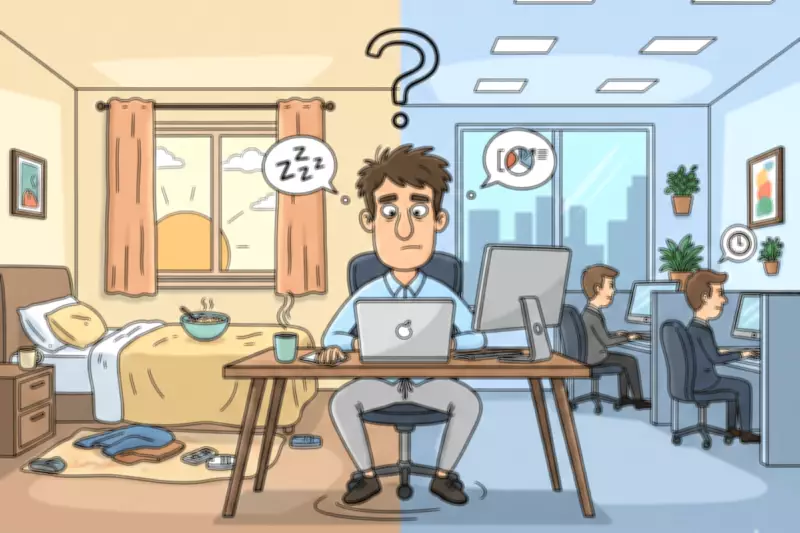
The Great Remote Work Debate: Is Working From Home Making Us Less Productive?
Nigel Farage has ignited fresh controversy by calling for a nationwide "attitudinal change" regarding working from home practices, citing concerns over sluggish UK productivity. The former UKIP leader's comments have reignited the ongoing debate about whether remote work arrangements are helping or hindering business performance and economic growth.
The Case Against Remote Work: Collaboration Suffers
Kevin Gaskell, former managing director of Porsche, Lamborghini and BMW, argues that while working from home has its place, it has made most teams less productive rather than more effective. "Business success is rarely about isolated individual output," Gaskell explains. "It's about energy, alignment, speed of decision-making, and shared momentum."
When teams are physically together, ideas move faster, problems are solved earlier, and accountability becomes visible. Remote working fragments this dynamic, creating communication breakdowns where messages become transactional rather than human. Nuance disappears, misunderstandings multiply, and conversations that would take two minutes in person become endless email chains or delayed video calls.
Teamwork also weakens significantly in remote environments. High-performing teams rely on trust built through everyday interactions including informal conversations, quick check-ins, and the ability to read body language. These elements prove difficult to replicate through video screens, making collaboration more structured and less creative over time.
Perhaps most concerning is the loss of knowledge transfer. Junior team members traditionally learn through observation and proximity, absorbing judgment, culture, and experience by being around senior colleagues. Remote environments limit these crucial learning moments, potentially creating capability gaps that could affect organizations for years to come.
The Case For Remote Work: Focus and Trust Matter More
Alice Greedus, a PR manager at Happiful, presents a compelling counterargument. "When people criticize working from home, they conveniently forget about the constant distractions present in traditional offices," she notes. Humans aren't built to sit and focus for hours without interruption, and attention spans vary significantly among individuals.
"At home, I may take a break to stand outside or start a load of washing," Greedus explains. "In the office, those same downtimes might involve conversations with colleagues unrelated to work or walks to the communal kitchen for coffee." The difference lies in perception rather than actual productivity loss.
Environmental control emerges as a crucial factor. Many workers find they can create optimal conditions for concentration at home. "Personally, I prefer to work in silence," Greedus shares. "Music with lyrics distracts me, and I struggle to focus when conversations occur within earshot." In previous office environments, she experienced constant compromises over temperature, noise levels, and workspace preferences that actually hindered productivity.
The fundamental element, according to Greedus, is trust. "I feel trusted by my employer to work to the best of my ability at home," she states. "In previous roles with environments that lacked trust and flexibility, I can promise employees weren't more productive just because they worked 'in the office.' Controlling employees doesn't equal productivity; motivation and respect do."
The Verdict: One Size Doesn't Fit All
City AM columnist Eliot Wilson has long lamented how working from home has transformed from flexible working policy to culture war battleground, a situation only intensified by Farage's characterization of remote working as "a load of nonsense." Yet amid undeniable UK productivity concerns, does Farage have a valid point?
To some extent, yes. As Gaskell argues, communication undeniably suffers under remote arrangements, and the long-term productivity effects on junior staff remain uncertain. However, Greedus makes an equally compelling observation: physical presence in an office doesn't guarantee productivity. Background noise, social distractions, and environmental discomfort can make traditional workplaces the least productive environments for many individuals.
Research studies present conflicting conclusions, with some finding remote work increases productivity while others demonstrate exactly the opposite effect. This contradiction reveals the fundamental truth: what constitutes a productive environment varies dramatically from person to person. The problem isn't working from home itself, but rather the persistent belief that a one-size-fits-all approach to work arrangements can possibly serve diverse workforces and business needs effectively.
The solution likely lies in flexible, hybrid approaches that recognize different roles, personalities, and tasks require different working environments. Rather than demanding universal office returns or complete remote freedom, organizations might achieve better results by tailoring arrangements to individual and team needs while maintaining opportunities for meaningful in-person collaboration when it genuinely adds value.




