
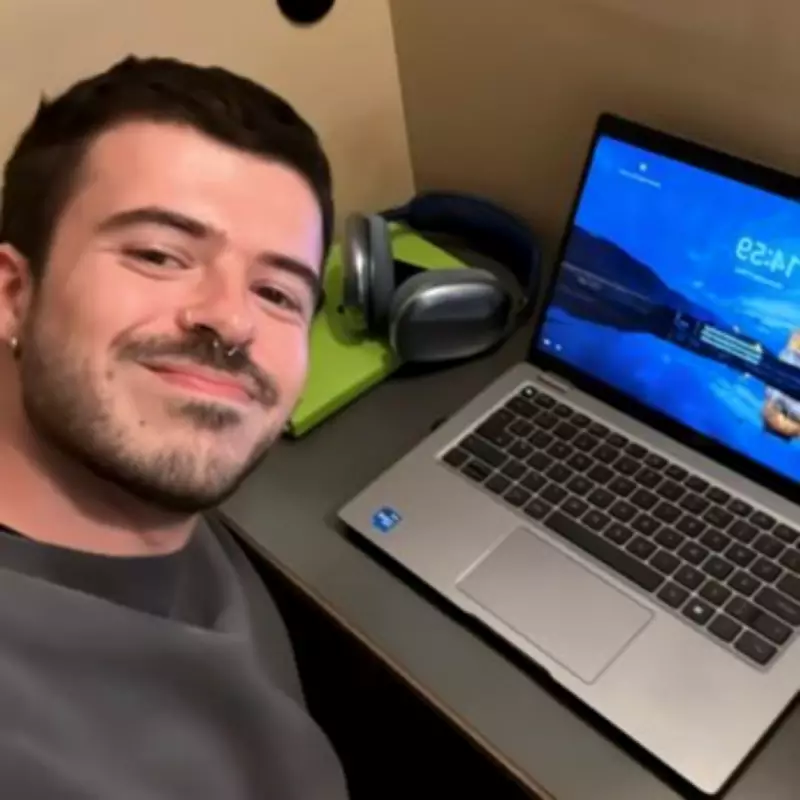
Copywriter Experiences Double AI Job Loss in 40 Days, Issues Stark Warning
Liam Rondi, a 30-year-old copywriter with nine years of experience, has endured the unsettling reality of losing his job to artificial intelligence not once, but twice within a mere 40-day period. This double redundancy has left him feeling betrayed and undervalued, prompting him to issue a dire warning that no industry is safe from automation's encroachment.
From London to Montpellier: A Career Upended by AI
Liam, who relocated from London to Montpellier in 2024 with his husband Xavier, had been working steadily as a copywriter for two years when he received the first devastating call informing him of his redundancy. In the same week, industry reports confirmed his company had laid off several writers, replacing them with AI Editors. Liam admits he had "zero inclination" this would happen, though in hindsight he recognizes critical red flags.
"I should've seen the signs," Liam reflects. "The introduction of AI training sessions and a strategic shift toward having writers edit AI-generated content instead of creating original work were clear indicators."
A Second Blow: Freelance Work Also Goes to Machines
After losing his primary role, Liam quickly transitioned to a freelance copywriting position, hoping to stabilize his income. However, just weeks later, he received an email stating the company would "no longer be using freelance writers" and would instead be "rolling out a range of AI tools." This second loss felt particularly brutal.
"Losing the second job was much scarier," Liam confesses. "It was my last bit of freelancing. For them to choose AI so soon after I lost my main role felt like a slap in the face. It made me seriously consider training for a completely different career."
The Human Cost: Frustration, Worry, and Betrayal
Liam describes feeling frustrated and worried about the shrinking opportunities in today's job market. "Job security was never a concern for me, even just two years ago when job boards were full," he says. "Now they're barren. Most roles I apply for involve AI in some capacity. I wish I could avoid it, but it's everywhere."
He emphasizes the emotional toll: "I'm feeling betrayed and undervalued because I never expected this to happen to me. But it can happen to anyone. The replacement of humans in creative jobs is abhorrent."
AI's Limitations: Factual Errors and Endless Corrections
Despite companies' rush to adopt AI, Liam insists the technology currently falls short in creative roles. He points to significant factual inaccuracies, particularly in sensitive subjects, that require extensive correction—often more time-consuming than writing from scratch.
"In my experience, AI wasn't capable of doing my job properly, even with the latest models," he explains. "There would be so many errors. I'd spend as much or more time correcting it. It often regurgitated AI-written content that was already incorrect, creating an endless cycle. It was pretty dire."
Warning Signs and Industry-Wide Concerns
Liam is now using his social media platforms to educate others about AI red flags and how to identify if their job is at risk. He recalls his former company's abrupt policy reversal: "The policy was always that using AI to write would get you fired. Then suddenly we had to embrace it. We got training, and initially it was a mix of AI and human content, but the goal became producing content as fast as possible."
He warns that AI's rapid improvement poses a broad threat: "I don't think any industry that isn't manual labor is safe right now. AI is improving at a scary rate, and companies are being way too hasty."
A New Path Forward: Anti-AI Opportunities and Cautious Optimism
Following his LinkedIn post about his experiences, Liam has secured a new freelance role with a company that explicitly opposes AI replacement. He acknowledges AI's potential benefits when developed carefully but remains critical of its current implementation.
"AI can speed things up and make lives easier," he concedes. "But stealing people's art and jobs is definitely abhorrent. There's also the environmental impact. What concerns me is we might stop getting new ideas, and it'll never be as effective as a human, even if we take more time. Right now, it's just stealing and repurposing existing copy."
Liam's story serves as a cautionary tale in an era of accelerating automation, urging workers across sectors to remain vigilant and adaptable as technological transformations reshape the employment landscape.




