Officials in New Zealand have announced that a fix to stop millions of litres of sewage from pouring into the waters off Wellington's coast will be in place by November, with full repairs costing NZ$53.5 million expected by late next year.
Catastrophic Failure and Ongoing Spill
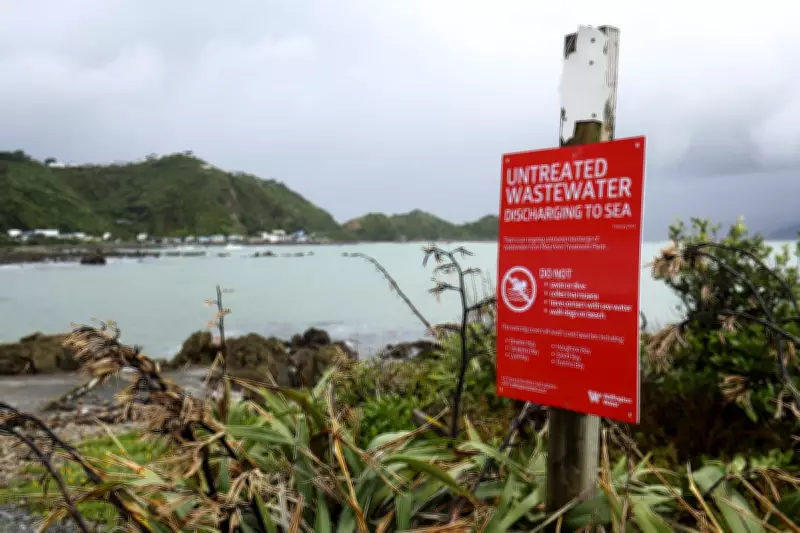
Since the catastrophic failure of the Moa Point wastewater treatment plant on 4 February, a mix of raw and partially screened human effluent has been continuously discharged directly into the Pacific Ocean. More than 100 days later, the spill continues, raising significant environmental and health concerns.
On Wednesday, Wellington's mayor, Andrew Little, announced that the Moa Point plant would be operational again within six months. Work has begun to assess damage and clean the facility, with major repairs scheduled for completion by November. By then, effluent removal will be underway, and waste products will be mostly treated, with water quality improving to the highest level within weeks.
“People are looking for certainty about when the plant will be up and running, and I’m confident this can be relied upon in terms of a timeline,” Little said, adding that the update would reassure hard-hit businesses on Wellington’s South Coast that have faced “massive disruption.” Full restoration of capacity and a fix for the design flaw that caused the failure are expected by late 2027.
Community and Business Impact
Wellington residents expressed mixed feelings about the timeline, emphasizing ongoing risks to human and marine health. “It would be better if it hadn’t happened, and we should still be significantly worried about the penguins, the dolphins, the fish who are going to be eating raw sewage,” said Nicole Miller, chair of the trust supporting the Taputeranga marine reserve, a network of pristine reefs and underwater ecosystems within the disaster zone.
Steve Walters, general manager of Destination Kilbirnie, expressed disappointment with the longer-than-anticipated timeline. The two dozen most affected businesses, including diving and water recreation companies, were projected to lose a combined NZ$3-4 million in earnings if the plant was fixed by September. Now, some may not survive winter. “Our concerns are: is this going to happen again? This is a council failure, and we still have to pay rates, electricity, staff costs. We feel let down, frustrated, and in a state of ‘how are we going to survive this?’” A council business subsidy of NZ$200,000 was deemed insufficient, and legal action is being considered.
Technical Causes and Response
An independent crown review of the disaster is due in August, with two damage reports indicating that an air bubble in a pipe likely contributed to the flooding of the treatment plant, destroying 80% of equipment. Since February, sewage has been pouring into the Cook Strait. During rain, sewage appears just metres offshore, forcing beach closures.
Charles Barker, chief operating operator of Wellington Water, told the Guardian they are working “incredibly fast” on the complex plan. “If you look at the scale of the floods, the enormity of the task, it’s not surprising. If this was a house you’d still be in the recovery phase as well.” The rebuild will focus on preventing another disaster, he said, adding there had been no indication the plant would fail. “Nothing in our understanding of the plant over 30 years led us to believe it couldn’t do what it was designed to do.” The chance of the plant flooding again will be “eliminated” once the work is complete.
Governance and Future Reforms
The Moa Point facility is owned and overseen by two layers of local government and a council-owned water utility, Wellington Water, which contracts the French-owned waste management company Veolia to run the plant. On 1 July, a new entity called Tiaki Wai, created by the government as part of its water reforms, will take over the Wellington region’s water assets.
The disaster coincides with a national Climate Change Commission report highlighting the country’s water infrastructure as at major risk of failure during increasing storm events. Local government and climate change minister Simon Watts said he shares the frustration of local residents. He noted that “historic underinvestment” in water infrastructure would be addressed by his reforms, including new environmental standards. “Due to the scale of the challenge, and constraints in the sector’s capacity to address it including the financial impact on local government and the public, this will take time.”
Health Risks and Community Concerns
Many who initially stayed out of the water have returned despite experiencing sickness. “Surfing’s an addiction, you can’t live without it but you know you’re putting your health at risk,” said local Simon Hurley. Other ocean-goers have reported gastroenteritis, fatigue, chills, and mouth ulcers, or what locals call “sea ulcers.” Official advice states the health risk is low unless it has been raining, but effluent can be pushed back into the bay by tides, currents, and southerly winds. Human-borne bacteria and viruses are of concern, said Otago University environmental epidemiologist Simon Hales. “The major immediate risk is various infections, and some of these organisms you only need to ingest a tiny amount to get very sick.”
South Coast resident Jamie McCaskill, from the Ngati Tamaterā iwi (tribe), has dived for seafood in the area for more than two decades, as did his tūpuna (ancestors) for generations. This year, eating it could make them gravely ill. “The way I look at the moana [ocean], the way I feel when I’m out there has changed, and it’s hit the grocery bill, too. We’re all gutted, and it’s like we’ve been forgotten about.”
Meanwhile, people like Real Aotearoa business owner Jane Fahy, who lives 200 metres from the beach, try not to think about the bacteria settling on their salt- and sand-smudged windows. “I used to call it beach glitter,” she says. “Now I don’t like to think too much about what’s in it.”