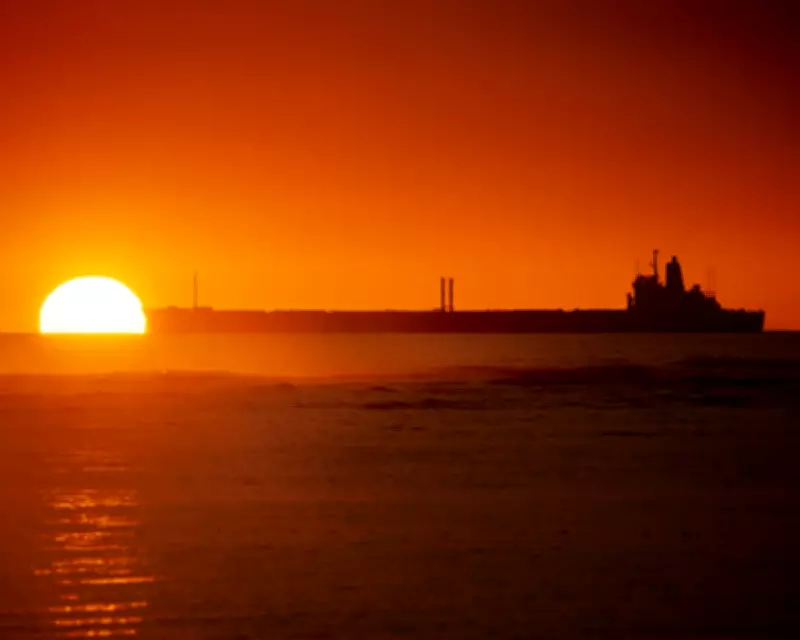
A record number of super-sized tankers are now headed to the US, where oil drillers and refineries are preparing to profit from Donald Trump's war in the Middle East. Almost 30 of these vessels, each able to hold 2 million barrels of oil, are contracted to load US crude, destined for a global market facing the biggest supply crisis in history.
It is just over five years since the shale revolution made the US a net energy exporter and the world's biggest producer of oil and gas. Now the White House is poised to strengthen its claim to an even greater share of the global oil market as the Middle East's decades-long dominance is dismantled by war.
Rise of the Americas
The world's turn to the west marks a potential reordering of global energy supplies, and the greatest threat to the future energy dominance of the Middle East. For decades, Saudi Arabia's vast oil reserves made the kingdom the world's biggest crude supplier and the de facto leader of OPEC. In a matter of weeks, the Iran war has erased a third of Saudi crude production.
Restarting the region's shuttered oil and gas fields and drone-damaged infrastructure is expected to cost between $34 billion and $58 billion, according to analysts at Rystad Energy. The process of restoring production to its previous levels could take years.
As doubts over the future market dominance of the Gulf's petrostates deepen, the surge in market prices has begun fueling the rise of the Americas. The growth in US and Canadian crude production is expected to continue through the 2020s, while almost half of the world's oil supply growth over the rest of the decade is expected to come from Latin America.
South America is now positioned as the world's most consequential source of incremental supply, with key areas including offshore Brazil, Guyana, Suriname, and Argentina's Vac Muerta shale formation. Together, these countries were expected to add almost 2.5 million barrels a day by the end of the decade, but if oil prices remain above $100 a barrel, this could unlock a further 2.1 million barrels a day by the mid-2030s.
Venezuela, holding the world's largest crude reserves, is on track to increase production by 1 million barrels a day by 2035, potentially rising to 2 million barrels a day if large western oil companies exploit its reserves. US refineries are already benefiting financially from Latin American growth, with jet fuel shipments to Europe fueled by oil imported from Venezuela.
The Electrostate Revolution
The rise of the Americas could be scuppered by a sooner-than-expected reopening of the Strait of Hormuz. However, the focus on rerouting fossil fuel flows overlooks another key reordering: the rise of the electrostate. Wood Mackenzie believes the "out-and-out winner" of the Iran crisis looks likely to be China.
China has long dominated supply chains for clean energy technologies, capturing between 60% and 85% of the world's renewables market. As the world's first "electrostate," China stands in contrast with the White House pursuit of fossil fuel dominance.
China's exports of solar technology capacity doubled to a record high in the first month of the Iran crisis alone, reaching 68 GW—more than Spain's entire solar power capacity. The country also amassed record crude reserves of an estimated 1.4 billion barrels, enough to cover seven months of imports via the Strait, while accelerating plans to curb reliance on imported fossil fuels.
Electric vehicles accounted for half of all new vehicle sales last year in China, far surpassing its 2020 target of 20%. The fuel saved from exceeding its own targets is roughly equal to what China imported from Saudi Arabia pre-crisis.
A New Era
Between the rise of the American petrostates to the west and China's electrostate future to the east stand Europe and fast-growing economies in Asia and Africa. The energy crisis means countries are scrambling to secure energy supplies in the short term, but many will be thinking decades ahead.
China's solar surge meant about 50 countries recorded new solar import highs, with exports to Africa rising by 176% and exports to Asia doubling. Countries in the EU, including Italy and Poland, also had record solar imports.
The economic rationale of cheap, secure renewable energy is simple to justify in an oil and gas crisis. However, for countries with legacy fossil fuel infrastructure, the lure of fresh supplies from the Americas could still slow a green revolution if the Strait of Hormuz reopens.
The next decade will prove decisive. New winners and losers will emerge. Companies and nations that wish to thrive in this era must rethink their strategies as fundamentally as the energy system itself is changing.