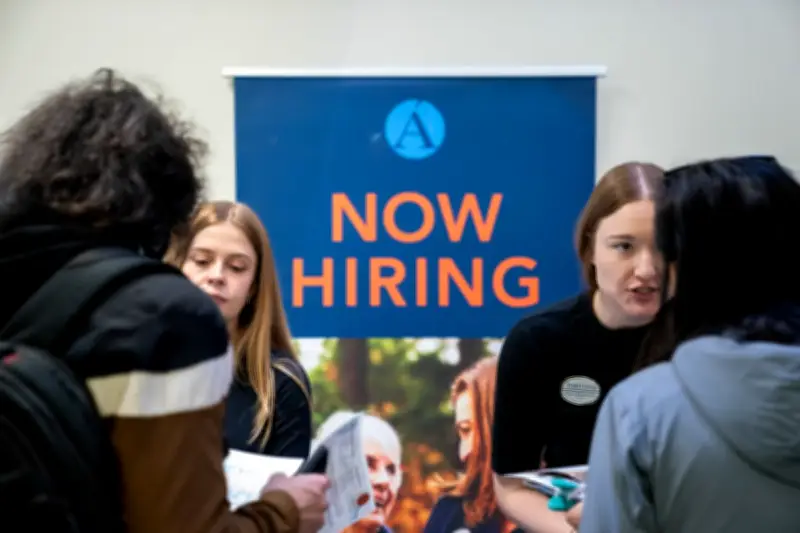
The US labor market showed unexpected weakness in July, with employers shedding 23,000 jobs, according to the latest Bureau of Labor Statistics report. This marks a sharp reversal from the 83,000 new jobs economists had projected, and the unemployment rate remained steady at 4.1%.
Revisions paint a weaker picture
Adding to the gloom, the figures for May and June were revised down sharply, with a combined 103,000 fewer jobs than initially reported. May's job gains were slashed to 63,000 from the originally reported 129,000, while June's figures dropped to 20,000 from 57,000. These revisions indicate that the labor market has been cooling more rapidly than previously understood.
The losses in July were concentrated in local government education, which shed 50,000 jobs, and retail, which lost 19,000. However, the private sector managed to add 30,000 jobs, with growth again led by healthcare. Hourly earnings increased by 3.2% over the past year, a modest gain that may not keep pace with inflation, which stood at an annualized 3.5% in June.
Impact on Federal Reserve policy
The weaker jobs report could influence the Federal Reserve's next interest rate decision. Pressure has been mounting within the Fed to raise rates to combat persistently high inflation, but the latest data may cool those expectations. The Fed held rates steady last month but signaled at least one hike before year-end. Ellen Zentner, chief economic strategist at Morgan Stanley Wealth Management, noted that next week's inflation data will likely be "the deciding factor" for the next rate meeting. "If those numbers come in hotter than expected, a cooler labor market may not be enough to quiet the calls for hikes inside the Fed, or lower expectations outside of it," she said.
Other signs of slowdown
Other data corroborate the slowdown. Private payroll firm ADP reported that employers added just 44,000 jobs in July, a significant drop from 98,000 in June. Job openings fell by 178,000 to 7.4 million in June, according to the Job Openings and Labor Turnover Survey, with healthcare and social assistance seeing the largest decline of 147,000. Layoffs, however, plunged to about 33,500 in July, the lowest in two years, according to Challenger, Gray and Christmas, reflecting a "low-hire, low-fire" labor market.
Consumer spending has remained resilient, rising 0.3% in June, but the personal savings rate hit a four-year low of 2.7%, the lowest since June 2022, according to the Bureau of Economic Analysis. This suggests households are dipping into savings to maintain spending.
Political reaction
The report drew immediate criticism from Democrats. Senator Elizabeth Warren stated: "President Trump's failing economic agenda is weakening the labor market. Job growth in May and June was revised down by more than 100,000 jobs, job openings have fallen and more people are out of the labor force than at any time on record. And wage growth slowed, straining families' paychecks even more as they struggle to keep up with Trump's inflation."
Economist Dean Baker of the Center for Economic and Policy Research commented: "With immigration having largely been stopped – and possibly now a net negative – the labor force is growing very slowly. However, slower wage growth, even in the face of rising inflation, indicates it is not a very good labor market for most workers. That story does not seem likely to change any time soon."