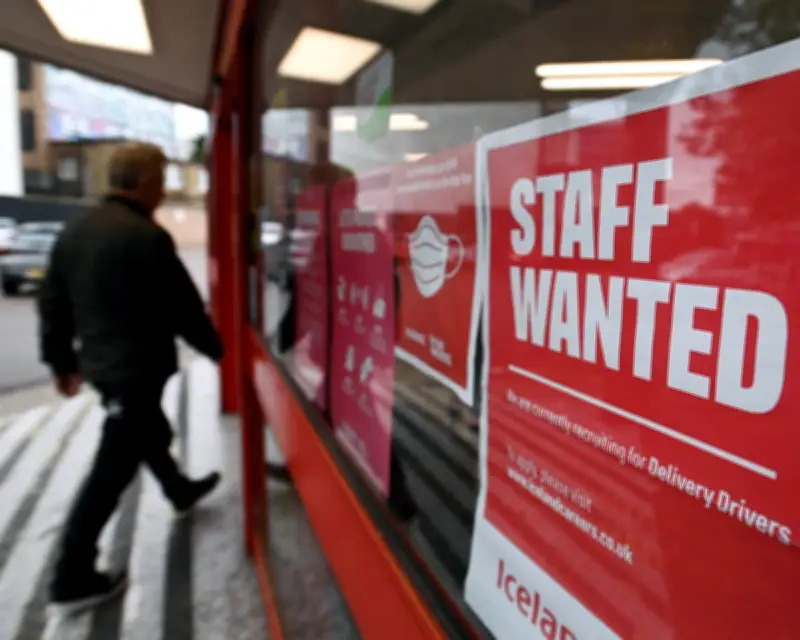
UK employers cut job vacancies in June, according to official figures that underscore the country's fragile economic outlook amid the Middle East conflict. The Office for National Statistics reported that job vacancies dropped to 712,000 in the three months to May, almost half the level seen in 2022, as employers delayed hiring new staff.
Unemployment holds steady at 4.9%
Separate data showed unemployment remained unchanged at 4.9% in May, the same as in April, highlighting the challenge facing Prime Minister Andy Burnham as he aims to revitalise the economy. The new prime minister has pledged to raise living standards across all regions as part of a 10-year economic plan due later this year.
Pay data revealed that private sector earnings growth slowed to 2.9%, bringing the average rise in earnings including bonuses to 4.3%. Economists had forecast a 4.5% increase in average pay with bonuses for the three months to May, up from 4.4% in the previous period. They also expected unemployment to rise to 5%, but it remained at 4.9%.
Labour market weakens over two years
The UK's jobs market has weakened over the past two years, with unemployment rising steadily from a low of 3.6% in summer 2022. Last year, the unemployment rate peaked at 5.2% before declining slightly after the autumn budget and before geopolitical tensions escalated.
Suren Thiru, chief economist at the accountancy body ICAEW, said: "These figures point to a fragile labour market, with soaring employment taxes and the economic turbulence sparked by the Iran war pushing some firms to limit recruitment and cut pay awards." He added that the continued fall in job vacancies is a stark warning that demand for staff is dissipating due to high staffing costs, more onerous regulation, and heightened uncertainty.
Unions call for action on living standards
Unions have urged Burnham to ease cost-of-living pressures as part of a broader package to boost incomes and economic growth. TUC general secretary Paul Nowak noted that Burnham started positively with a pledge to cut VAT on electricity bills. He said: "Working people are up against it with stagnant real pay, over a million people stuck on insecure zero-hours contracts, and a million young people not in employment, education, or training."
Nowak suggested that cutting VAT on energy bills provides some relief but added that the government needs to go further, given the ongoing impact of the conflict in Iran on household bills. He proposed raising up to £60 billion over four years from a tax on bank profits to further reduce bills for households across the country.
Government response
A government spokesperson said the employment figures show too many young people are still "locked out of work." They stated: "For too long, governments have paid for failure rather than invested in people's success. We're determined to turn that around by creating real opportunities for young people, reforming education so everyone has a clear path to a good job and providing the support people need to stay and get on in work."
Shadow work and pensions secretary Helen Whately criticised Labour, saying the party had damaged the jobs market with a succession of tax rises. She argued: "Higher taxes means lower growth and fewer jobs. The welfare secretary himself said every meeting he had with Labour MPs was about who they could tax more to pay for more benefits."
Impact on interest rates
Economists noted that the fall in private sector pay growth would ease pressure on the Bank of England to raise interest rates to curb inflation. Several Bank officials had expressed concern about persistently high pay growth adding to production costs and inflation. Rate-setters meet next week and are expected to hold interest rates at 3.75%.