Reserve Bank of Australia Governor Michele Bullock has issued a stark defence of central bank independence, joining a global chorus of warning against political interference led by former US President Donald Trump. The intervention comes as economists caution that pressure on the US Federal Reserve to cut interest rates could trigger higher inflation and financial instability, with direct consequences for the Australian economy.
Global Central Bankers Rally Behind Powell
The extraordinary show of solidarity was prompted by escalating attacks from the Trump administration on Federal Reserve Chair Jerome Powell. Powell revealed that the US Department of Justice had threatened him with criminal charges, which he directly linked to his refusal to follow Trump's orders on interest rate policy in 2025.
In response, Michele Bullock and the heads of nine other major central banks, including those of the UK, the EU, Switzerland, and Canada, signed an open letter declaring their "full solidarity" with Powell. They praised his "unwavering commitment to the public interest" and underscored the critical need for central banks to operate free from political pressure to maintain economic stability.
The letter, later backed by South Africa and New Zealand, also stressed that such independence must exist within "full respect for the rule of law and democratic accountability." Despite the defence, Trump continued his verbal assault, calling Powell "the jerk" and stating he would "love to fire him." Powell's term is set to end in May, with Trump expected to appoint a successor more favourable to rate cuts.
Economic Ripples: From Washington to Sydney
Economists have sounded the alarm about the potential fallout for Australia if Trump successfully influences Fed policy. Harry Murphy Cruise, head of economic research at Oxford Economics Australia, explained that central banks are granted independence precisely to make unpopular, inflation-fighting decisions on interest rates.
"Financial markets need steady policy," Murphy Cruise warned. "When you start to de-anchor inflation expectations, then you see financial markets run wild." He predicted that excessive and unpredictable rate cuts in the US would increase market volatility, first hitting Wall Street before spreading internationally.
The effects could be felt directly in Australian wallets. Richard Holden, a professor of economics at the University of New South Wales, noted that higher US inflation could increase the cost of imported goods like heavy machinery and computer equipment. "If there’s big inflation in the US and the price of a bunch of the things that we import from the US goes up, then that’s inflationary here," he said.
Currency markets are already reacting. The US dollar has weakened since April 2025 due to rate cuts, persistent inflation, and political pressure on the Fed, pushing the Australian dollar up to 67 US cents from 63 cents.
An Unprecedented Defence of Independence
The collective statement by central bankers is a rare and significant event. Jonathan Kearns, chief economist at Challenger, called it "quite unprecedented." He raised a critical question: "If the US government was successful in having more influence over the Fed, does that create a benchmark that other governments in other countries want to emulate?"
The RBA's own independence, while robust, is not without its pressures. Treasurer Jim Chalmers faced criticism in 2024 for claiming the bank was "smashing the economy," and the Greens party demanded early rate cuts. Legally, the Australian government retains the power to overrule the RBA's decisions, though it has never been used.
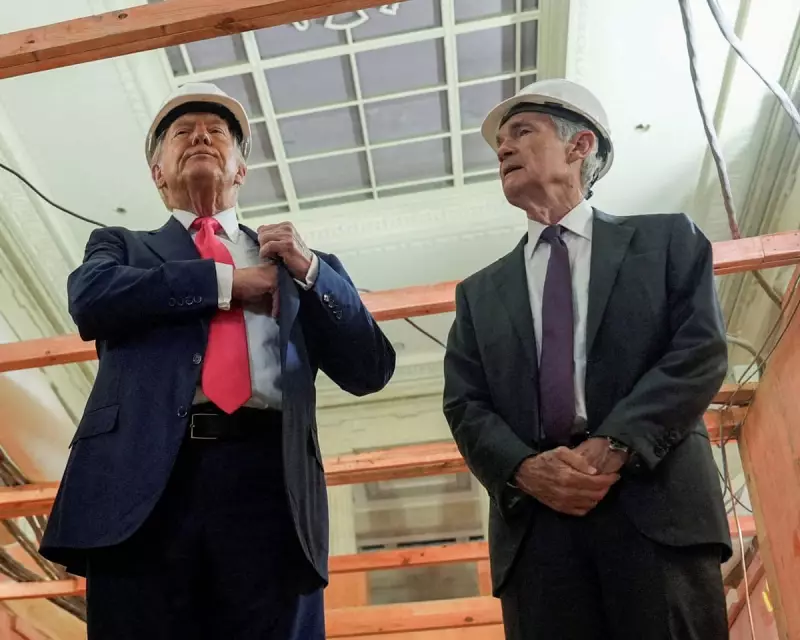
Bullock has generally avoided public spats with politicians. In July 2025, she praised Powell for focusing on the economy and "not getting drawn into the debate" over Trump's accusations regarding a $400m cost blowout in the Fed's headquarters renovation—a stark contrast to the political firestorm Powell now faces.
The episode highlights a growing global trend. The Fed is the latest institution to face political pressure, following similar interference in countries like Argentina and Turkey, which led to soaring inflation and stunted income growth. The defence mounted by Bullock and her peers is a clear signal that the world's leading monetary authorities view this as a fundamental threat to global economic stability.