Trump's Fed Chair Nominee Confronts Steep Hurdles in Rate Cut Push
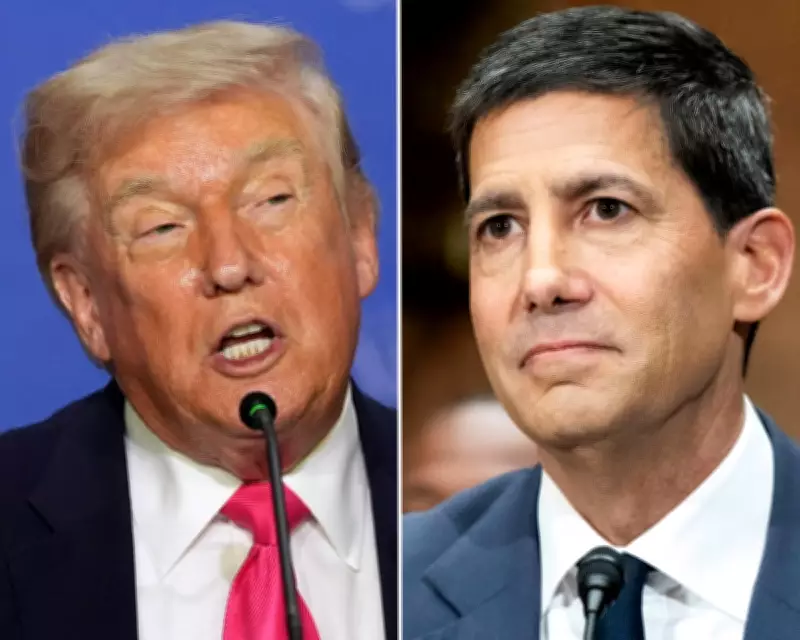
Donald Trump's aspirations to influence monetary policy through his Federal Reserve chair pick, Kevin Warsh, are likely to be thwarted by institutional resistance and economic realities. Even if Warsh succeeds Jerome Powell next month, the president's desire for control over the Fed remains a distant prospect, as Warsh must convince a skeptical board to lower interest rates despite persistent inflation.
Warsh's Partisan Shift and Hawkish History
Trump has praised Warsh as a "central casting" choice for the Fed, aligning with the president's views. However, Warsh's monetary stance has evolved from his previous role as a Fed governor, where he displayed hawkish tendencies by focusing on inflation concerns during Barack Obama's administration. Now, he advocates for lower rates, citing the AI revolution as a justification, despite current inflationary pressures. Warsh has developed a conceptual framework to support reduced borrowing costs, but this argument faces scrutiny from other Federal Open Market Committee members, most of whom are not aligned with Trump's agenda.
Historical Precedents and Weak Analogies
Warsh's reasoning mirrors that of former Fed chair Alan Greenspan, who in the late 1990s argued that information technology boosts justified holding rates low amid declining unemployment. Greenspan believed productivity gains from computers allowed economic flexibility without price hikes. Warsh contends AI will similarly enable rate cuts without fueling inflation, as he stated in a Fox interview last year, emphasizing the need to let technology lower prices rather than stifle economic strength.
Yet, this analogy is tenuous. In the 1990s, globalization and immigration helped control prices, while the Clinton administration's fiscal policies reduced debt. In contrast, Trump's tariffs and deportation policies are increasing costs and shrinking labor supply, with a budget deficit pushing debt to over twice its previous level. Inflation has risen above 3% recently, compared to below 2% in the late 1990s, undermining Warsh's case.
AI's Unproven Impact and Economic Realities
The promised productivity boom from AI lacks empirical support so far. There is little evidence of rapid AI diffusion across businesses, which is necessary for significant productivity gains. Instead, massive investments in data centers are driving up demand for resources like electricity and memory chips, fueling stock market growth and consumer spending. Even if AI eventually boosts productivity, it could lead to higher interest rates due to increased investment and capital demand, not lower ones as Warsh suggests.
Trump's Limited Influence and Board Dynamics
Trump has some allies on the Fed board, such as Stephen Miran, who co-authored a paper advocating for greater presidential accountability, including at-will removal of board members. With two other Trump appointees, Warsh's confirmation would bring three supporters. However, securing a majority of seven votes is challenging. Legal barriers prevent arbitrary dismissals, like that of governor Lisa Cook, and recent reappointments of regional Fed bank presidents have limited Trump's influence. As a result, Trump's vision of a compliant Fed that cuts rates on command remains elusive, offering reassurance to the American economy.