Economists are sounding the alarm that former President Donald Trump's efforts to exert pressure on the US Federal Reserve risk plunging the American economy into a period of runaway inflation reminiscent of the 1970s, while potentially sparking a severe backlash in global financial markets.
A Dangerous Precedent of Political Pressure
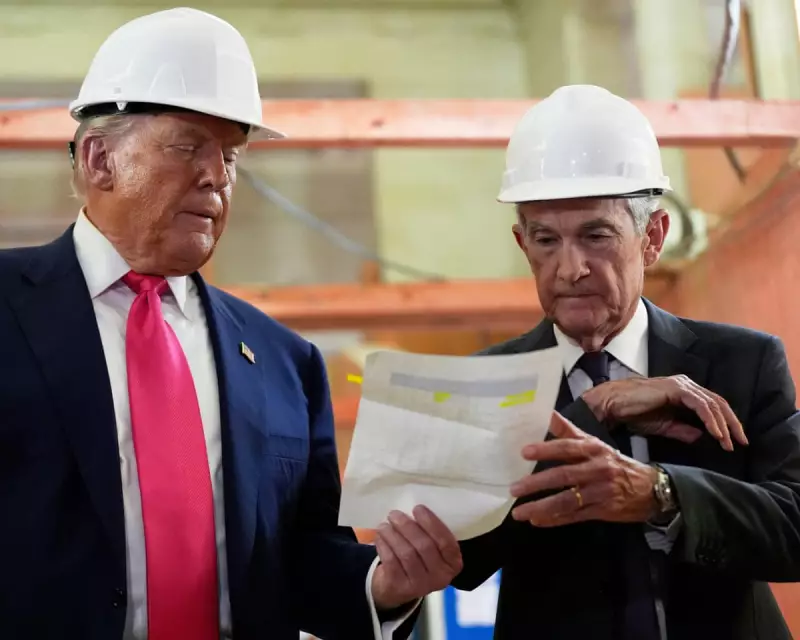
The warnings follow revelations that the US Department of Justice has launched a criminal investigation into the current Fed chair, Jerome Powell. Investors and analysts fear that White House pressure on the independent central bank to cut interest rates could put the stability of the world economy in jeopardy.
In a sharp rebuke, Powell himself labelled the threat of a criminal indictment—related to his testimony last year about renovations to the Fed's Washington offices—as a "pretext". He insisted the legal move was designed to intimidate the bank over its interest-rate decisions. "This is about whether the Fed will be able to continue to set interest rates based on evidence and economic conditions – or whether instead monetary policy will be directed by political pressure or intimidation," Powell stated.
Echoes of the 'Great Inflation' Era
Analysts are drawing direct parallels with a dark chapter in US economic history. In the early 1970s, President Richard Nixon pressured then-Fed chair Arthur Burns to adopt an overly loose monetary policy to aid his 1972 re-election campaign. This contributed to a devastating period of double-digit inflation that peaked at almost 15% in 1980, an era known as the "great inflation."
Atakan Bakiskan, US economist at Berenberg bank, outlined the severe risk: "If the Fed pursues an ultra-accommodative monetary policy despite higher inflation, the result could resemble the 1970s in a worst-case risk scenario." He further warned that if the Fed is seen to act on politics rather than data, foreign investors could retreat from financing US debt, seeking safer havens for their capital.
The immediate market reaction has been telling. On Monday, the US dollar fell and gold prices hit a fresh record high as investors scrambled for traditional safe-haven assets amidst the growing political uncertainty.
Global Repercussions and a 'Dangerous Moment'
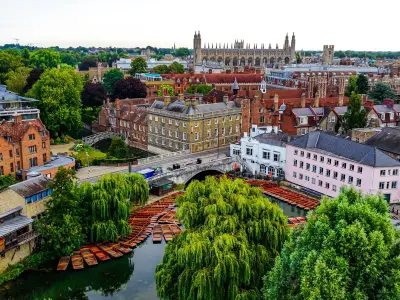
The stakes extend far beyond US borders. Jagjit Chadha, a professor of economics at Cambridge University, emphasised the global domino effect. He cautioned that cutting rates too quickly could let inflation "jump out of the box again," disproportionately harming those on low incomes. "If we can’t get dollar inflation under control – don’t forget many, many prices worldwide are set in dollar terms... we’ll find ourselves being immiserated. It’s a big problem," Chadha warned.
The situation is unfolding as Trump is expected this month to announce a nominee to replace Powell, whose term expires in May. Trump has repeatedly lambasted Powell for not cutting borrowing costs more aggressively, using insults like "stubborn mule" and "numbskull," though he denies involvement in the DoJ probe.
Jason Furman, a Harvard economist and former chair of Barack Obama’s council of economic advisers, called this a "dangerous moment" during the transition to new Fed leadership. In a social media post, he listed countries that have prosecuted or threatened central bankers for political intimidation: Argentina, Russia, Turkey, Venezuela and Zimbabwe.
With US inflation having cooled from a 2022 peak above 9% but ticking up to 3% as of September, the independence of the Federal Reserve is seen by markets as the critical bulwark against a return to an era of economic turmoil and lost price stability.