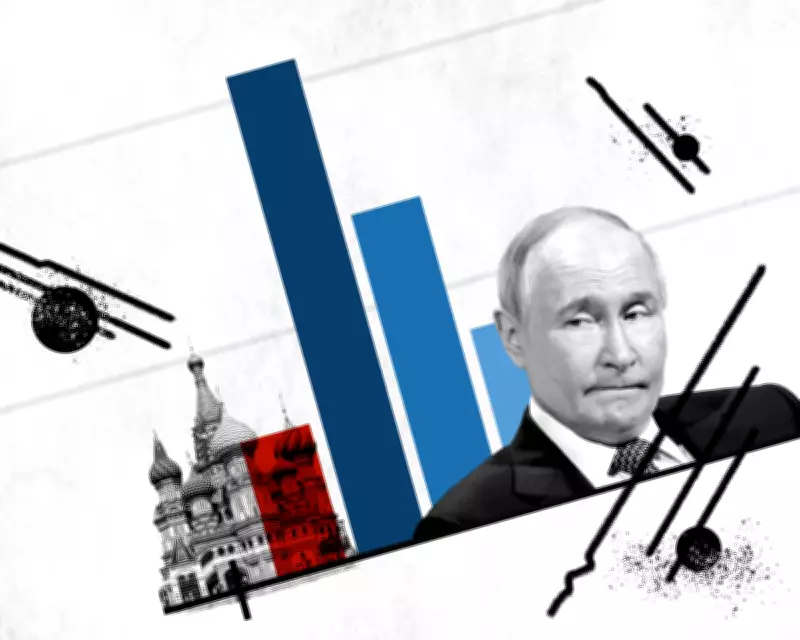
Russia's economy, which experienced a surprising wartime boom following the 2022 invasion of Ukraine, is now showing clear signs of stagnation. This shift presents significant challenges for Vladimir Putin's administration as it attempts to sustain military operations while managing domestic economic pressures.
From Boom to Stagnation: A Dramatic Economic Shift
Western predictions of Russia's economic collapse following sanctions proved premature. After initial shocks in 2022, military spending surged and the economy expanded, with Russia climbing to become the world's ninth largest economy by 2025, overtaking both Canada and Brazil. However, this upward trajectory has now stalled dramatically.
Recent data indicates the Russian economy is running aground, with growth slowing to a crawl. The International Monetary Fund has downgraded its forecasts to just 0.6% growth for 2025 and 0.8% for 2026 - the lowest rates since sanctions following the 2014 annexation of Crimea, excluding pandemic years.
Key Factors Driving the Slowdown
Several interconnected factors are contributing to Russia's economic stagnation:
- Declining Oil Revenues: Fossil fuel taxes, which provided about 40% of federal budget funding in 2022, have dropped to approximately 25% in preliminary 2025 estimates. This decline stems from both falling global oil prices and the impact of western sanctions, despite Russia's efforts to find alternative markets.
- Demographic Pressures: Russia's population has fallen consistently since 2019, decreasing from 145.5 million to 143.5 million by 2024. This decline, driven by falling fertility rates, war casualties, and emigration, has created severe labour shortages reflected in an unusually low unemployment rate of just 2%.
- Taxation Increases: To bridge fiscal gaps, the Kremlin has implemented multiple tax hikes including corporation tax increases from 20% to 25%, higher income tax bands, and a VAT rise from 20% to 22% in 2026 - higher than rates in the US, UK, France, or Germany.
The War Economy's Growing Strain
Russia's military expenditure has doubled as a share of GDP to more than 7% during the conflict - twice as high as US spending and exceeding any individual NATO member. However, the rapid increase in defence spending has slowed significantly, with only a 0.1 percentage point rise between 2024 and 2025.
This military spending surge has come at the expense of public services, with funding for welfare, education, and healthcare being crowded out of the federal budget. Meanwhile, trade with key allies has become more muted, corporate bankruptcies are rising, and inflation remains persistently high despite aggressive central bank policies.
Public Sentiment and Political Implications
Economic hardship appears to be affecting public morale. While optimism about economic conditions initially increased following the invasion, recent polling shows this sentiment softening. By August 2025, 39% of Russians believed economic conditions were worsening, up from 29% in 2022.
Experts suggest Russia should be able to continue funding the war in the short term through various measures including money printing, further tax increases, selling state property, and nationalising business corporations. However, the sustainability of this approach remains questionable as economic pressures mount.
Implications for the Ukraine Conflict
The critical question for Ukraine and its allies is whether Russia's economic weakness will translate into military constraints. While Russia maintains options for financing continued operations, including borrowing against its relatively low debt stock, much depends on global oil price movements and the effectiveness of ongoing sanctions.
Recent developments suggest the Kremlin may be adjusting its approach, with Russia agreeing to peace talks with Ukraine for the first time in months. For Ukrainian negotiators, Russia's economic stagnation represents a potentially significant factor that could influence the conflict's trajectory as the war economy shows increasing signs of strain that cannot be sustained indefinitely.