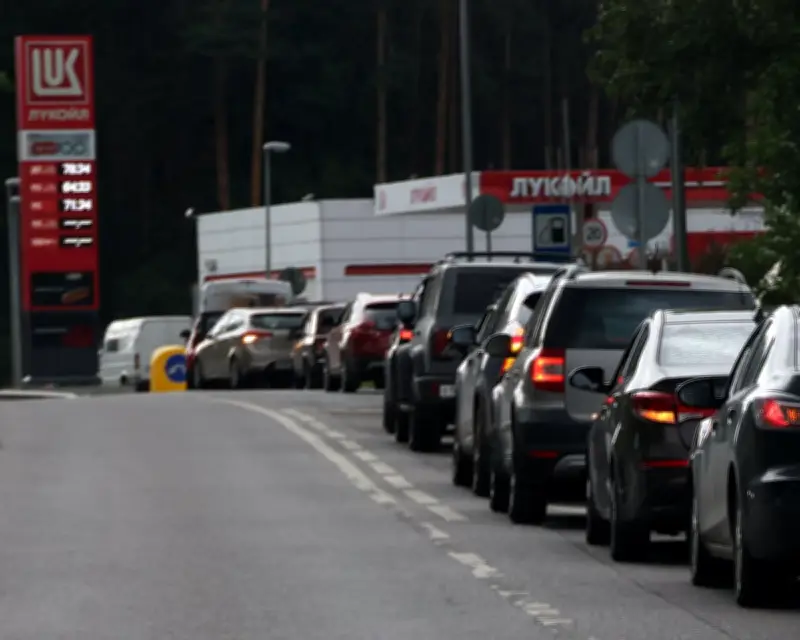
Russia introduced a ban on diesel exports on Wednesday as part of emergency measures to stabilize the domestic fuel market, after systematic Ukrainian drone attacks on oil refineries triggered gasoline shortages and price spikes. Drivers in many regions face hours-long lines to refuel as intensifying Ukrainian strikes on Russian energy infrastructure squeeze supplies.
Government measures to address fuel crisis
Deputy Prime Minister Alexander Novak told a televised government meeting chaired by President Vladimir Putin that the fuel situation remains complex and that "it is clear that the current situation at filling stations is causing concern among the public." The export ban is intended to ensure sufficient fuel for domestic consumers and curb rising prices.
Ukrainian strikes on Russian refineries
Ukrainian drone attacks have targeted Russian oil refineries in recent months, causing significant damage and reducing refining capacity. The strikes are part of a broader Ukrainian strategy to disrupt Russian military logistics and economic stability. In response, Russia has also considered other measures such as increasing fuel supply quotas and capping wholesale prices.
Russian attacks on Ukraine continue
Meanwhile, Russian ballistic missiles and jet-powered drones killed at least three people in Kyiv on Wednesday morning, according to officials. Moscow is exploiting Ukraine's critical shortage of US-made Patriot interceptor missiles. The attacks coincided with a NATO summit in Ankara, where Ukrainian President Volodymyr Zelenskyy met with Donald Trump and discussed obtaining licences to produce the interceptors.
Casualties and damage in Ukrainian cities
A Russian attack on Ukraine's Black Sea port of Odesa on Wednesday killed four people and injured six, a senior local official said. Kharkiv, Ukraine's second-largest city, also came under missile attack, with local officials reporting damage to private homes and a church. A later missile strike on a residential building in Kharkiv killed two people, according to Mayor Ihor Terekhov. In July alone, Russian strikes on Kyiv and its surrounding region have killed 60 people.
NATO aid and Russian warnings
Russia denounced NATO's decision to provide military aid to Ukraine, warning it could have catastrophic consequences. Foreign Ministry spokesperson Maria Zakharova said NATO's priorities remain unchanged: "The militarisation of the European continent, the focus on building up defence capabilities, preparation for an armed conflict with Russia, and, of course, aid to Ukraine." She added that if NATO strategists had paused to think, they might not have made such irresponsible decisions that could lead to a catastrophe for the alliance and the whole world.