Ghana's president, John Dramani Mahama, has affirmed that repatriation is a right for all people of African descent, a statement that bolsters the global push for reparatory justice from former colonial powers like Britain. The declaration came during his visit to Jamaica this month, coinciding with a series of emancipation celebrations and as Jamaican officials prepare to travel to the UK to petition King Charles for legal guidance on their slavery reparations claim.
Mahama's Commitments and Caribbean Response
Speaking in Jamaica's parliament, Mahama highlighted Ghana's 2000 Right of Abode Act, which permits eligible individuals of African descent to live and work in Ghana without a visa. He also announced that Ghana is considering a new homeland return bill to codify residence and citizenship pathways for the global African family. These moves were welcomed by the Caribbean reparations movement, which includes repatriation and resettlement among the ten points in the Caribbean Community Reparations Commission's vision.
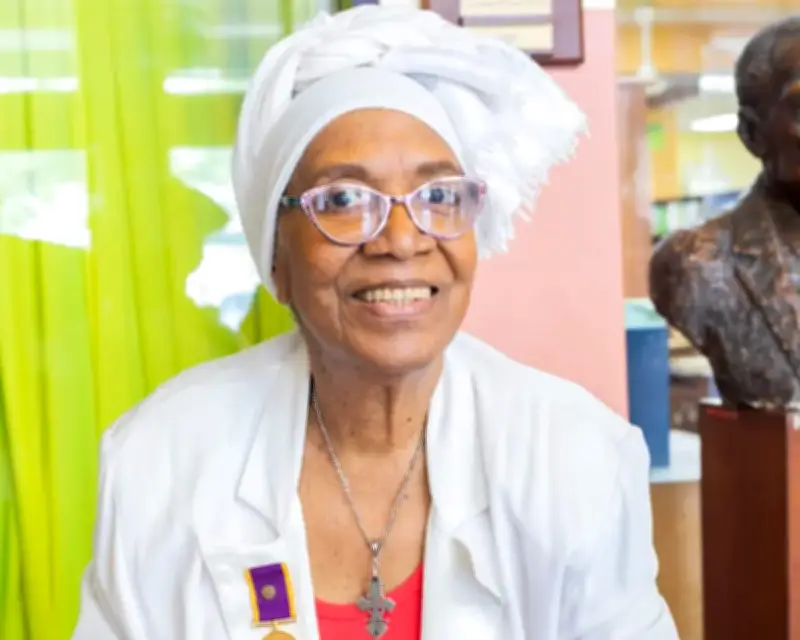
Jamaican author and cultural activist Barbara Blake Hannah described Mahama's visit as a signal that Africa is opening its doors, calling it "an achievement in the struggle for repatriation." Like many Rastafarians, she yearns to return to the continent from which her ancestors were enslaved. In her new book, The Jamaica Reparations Handbook, she calls the drive to return to Africa "the most powerful and continuous demand made by Rastafari."
Rastafari's Long-Standing Demand
Blake Hannah, who became a Rastafarian in the early 1970s, explained that repatriation is a core principle of the faith. "Every Rasta wants to return. So, Rastafari said we need reparations to finance our repatriation," she said. Aaron "Ras Iron" Alexander, president of the Iyanola Council for the Advancement of Rastafari and Pan African People in St Lucia, echoed this, noting that Rastafarians have championed these issues for decades, despite facing vilification. "Now we see that these issues are fast becoming part of one of the most important movements of the 21st century: the fight for reparations," he said.
Dr June Soomer, a founding member of the Saint Lucia National Reparations Committee, links repatriation to identity. She described her first visit to Johannesburg, saying, "My heart started to beat differently. You felt like you were coming home." Soomer emphasized that returning to Africa, physically or through reconnecting with ruptured history and culture, is vital for all people of African descent.
Repatriation as Remedy and Reclamation
Blake Hannah argues in her book that emancipation did not erase the cruelty of slavery, nor did it restore heritage, land rights, language, or customs. Instead, she writes, "it was expected that all citizens should aspire to copy the colonial behaviour, create versions of their own, and conform to the rules that kept 'The System' operating in a continuous repetition." She views repatriation as a spiritual homecoming and a right for those who lost their identity through slavery.
Steven Golding, president of the Universal Negro Improvement Association and African Communities League, stresses that repatriation is not solely about physical relocation. It involves rebuilding economic, cultural, and psychological ties severed by slavery. "It doesn't necessarily mean all of us are going to physically move to Africa," he said, "but by recognising your citizenship, the continent recognising you as a citizen ... that is what repatriation means." Golding also notes that physical repatriation has historical precedent, citing cases like Ayuba Diallo and Abdul Rahman, African princes trafficked in the 1700s but later returned, and the establishment of Sierra Leone and Liberia by Britain and the US.
Golding dismisses dismissive stereotypes, asserting that repatriation "really comes from a sound socio-economic political theory." He adds that the Rastafari movement emerged from Marcus Garvey's Black nationalist project, which envisioned diaspora Africans returning to help develop the continent. With Ghana and other nations offering citizenship or right-of-return programs, repatriation is now a policy conversation, marking a shift from decades of advocacy to tangible steps toward reparatory justice.