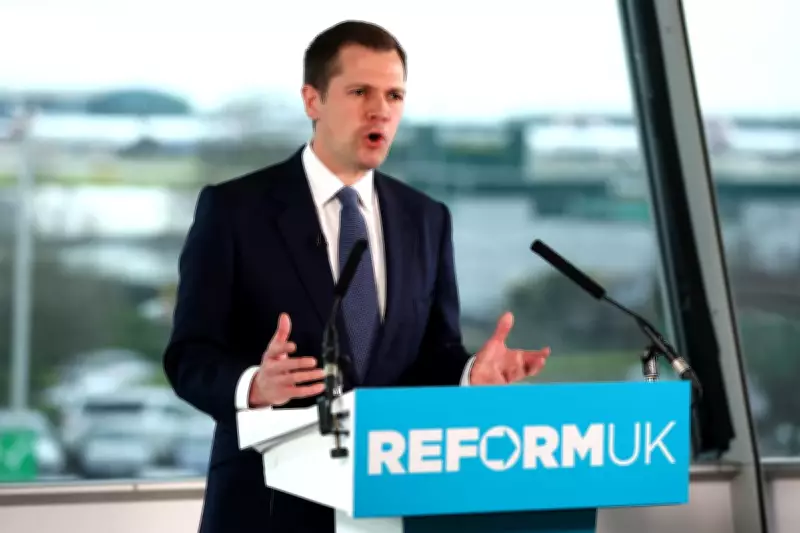
Reform UK is set to revise the terms of its 'Britannia Card' proposal, a scheme designed to attract wealthy foreign investors to the United Kingdom, Robert Jenrick has revealed. Jenrick, who serves as Reform's Treasury spokesman, hinted that party officials are working on a proposal that is 'even better' than the policy announced by Zia Yusuf last year, months before Jenrick joined the party.
Details of the Original Proposal
The 'Britannia Card' scheme was introduced as Reform's response to the Labour government's crackdown on non-domiciled residents, commonly known as non-doms. Under the original plan, wealthy migrants would pay a one-time fee of £250,000 and receive tax exemptions on all foreign assets. The policy was described as a 'Robin Hood' measure that would provide cash payments to 2.5 million lower-income workers.
However, the proposal faced criticism from tax experts. Dan Neidle of Tax Policy Associates sparked an online dispute with Yusuf after estimating that the policy would cost £34 billion between 2026 and 2030 and would 'deter higher earners' from moving to the UK.
Jenrick's Vision for Improvement
Speaking at the Centre for Policy Studies' Margaret Thatcher conference, Jenrick stated that the party would add details to the scheme to attract both 'bright young people' and wealthy investors. He noted that Yusuf had been 'thinking through' ways to attract investors following the abolition of the non-dom regime last year, and that the party would be 'saying more' about the scheme later this year.
'We think we can do something even better,' Jenrick said. 'It's not going to be called non-doms, but I want to have a regime that we could put in place on day one of a Reform government that welcomes back everyone who's left the country, whether that's bright young people who've gone to live abroad, young professionals or the world's richest investors.'
Broader Economic Agenda
The policy adjustment reflects Jenrick's influence on Reform UK's economic agenda since he defected from the Conservative Party in January. In recent months, Jenrick has stated that Reform would retain the Office for Budget Responsibility and maintain the independence of the Bank of England—commitments seen as efforts to win market confidence ahead of any election.
The party has also confirmed it would keep the triple lock pension, which ensures the state pension increases by the highest of inflation, wage growth, or 2.5%. While economists have labelled this mechanism as 'unsustainable,' it remains crucial for securing support from older voters.