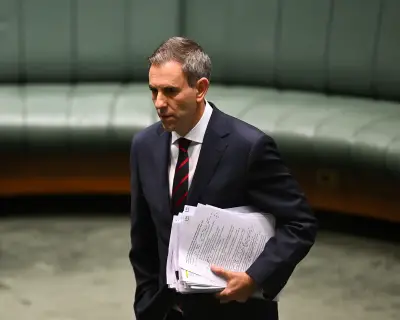
Australia's seventh intergenerational report (IGR) projects that by the 2060s, deaths will outnumber births for the first time, as falling fertility rates and an ageing population reshape the nation's demographics. The report, released by Treasurer Jim Chalmers, also outlines the country's entry into a new and uncertain age of artificial intelligence, which is expected to significantly influence the economy and society over the next four decades.
Key projections: population and economic growth
The latest 40-year projections indicate the population will continue to age as people have fewer children. The report notes, "This is a milestone that many advanced economies have already surpassed, including Japan, Germany, Italy and the Republic of Korea, with most of the rest expected to do so over coming decades."
Population growth is expected to slow to 0.9% annually for the foreseeable future, down from a historical average of 1.4%. This shift, combined with a shrinking share of working Australians, leads the IGR to predict a new normal of lower economic growth. Real GDP per person is projected to expand by about 1.2% over the next 40 years, down from 1.5% in the previous four decades.

Productivity and the role of AI
The report's outlook depends on productivity recovering from near-zero recent levels to the historical average of 1.2%. This assumption leans heavily on artificial intelligence, which Chalmers described as "the biggest economic transformation of our lifetime." The report states, "The rise and adoption of AI is likely to support the achievement of Treasury's long-term labour productivity growth assumption over time," with the treasurer calling its role "pivotal."
"As a medium-sized economy, Australia's productivity performance will depend on adopting innovation, supporting investment, developing skills and delivering regulatory reforms that improve the efficient operation of the economy," the report said. The forecasts highlight the challenge for the government to protect Australians from potential negative aspects of AI while not stifling a technology that could drive future prosperity.
Budget pressures and structural deficits
The IGR projects an ongoing, structural budget deficit over the coming decades, shrinking over the next 10 years before expanding again over the following 40. Government payments as a share of GDP are expected to rise by 1.1 percentage points to 27.4% by the mid-2060s.
"As the scale and interaction of these structural trends intensify, maintaining a sustainable budget position will require policies and ongoing reforms that manage growing spending and revenue challenges," the report says. The IGR also argues in favour of the compulsory superannuation regime, which has largely offset the huge budgetary impact seen in other countries for funding retirement incomes.
Major transitions and political context
This year's report includes a section on six "major transitions" for the next 40 years, topped by the AI "revolution" and geopolitical fragmentation. The other four challenges are the energy transition, ageing and the care economy, the country's "industrial transformation," and intergenerational equity.
Treasurer Jim Chalmers, in a speech at the Australian National University, said "this intergenerational report illuminates the road ahead." He added, "No previous IGR has contended with global challenges this great, with politics this fraught, or a future less certain. The global and generational risks are serious, but Australia's opportunities are endless." Chalmers also noted that "the world is becoming more dangerous, more unpredictable, more unequal, and more divided. These are not just individual threads but part of a bigger fraying of that intergenerational promise, of better times," and said responding to these challenges would be key to defeating populist insurgencies.