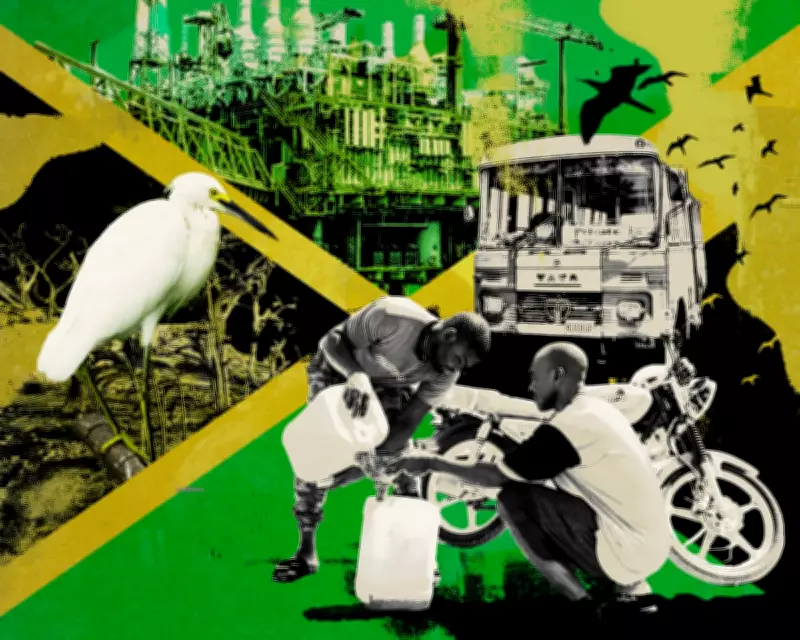
Jamaica Edges Closer to Oil Drilling: Economic Pressures vs. Green Commitments
Jamaica is on the verge of a significant shift in its energy policy as recent tests indicate the presence of crude oil beneath the seabed off its southern coast. The discovery has sparked a national debate on whether the island nation should pursue fossil fuel extraction despite its climate pledges and vulnerability to extreme weather events.
The Caribbean island imports all its fuel, costing between $1.5 billion and $2 billion annually, nearly half of its tourism revenue which reached $4.3 billion in 2024. This heavy reliance on imported energy is a persistent drag on the economy, making the prospect of domestic oil production highly attractive for energy security and economic development.
United Oil & Gas, a UK-based company, holds an exclusive exploration license for the Walton-Morant basin, a 22,400 square kilometer block off the southern coast. While surface oil seeps have been documented across the island for years, no commercial production has occurred. Recent hydrocarbon findings from seabed samples have been described as “very positive” by Energy Minister Daryl Vaz, who remains cautiously optimistic.
Economic Context and Recovery Challenges
Jamaica is still recovering from the economic fallout of the COVID-19 pandemic and the devastation caused by Hurricane Melissa, one of the most intense Atlantic hurricanes on record, which made landfall in October. The US-Israeli war on Iran has added further economic pressures. According to Radhika Bansal, vice-president of Latin American oil and gas research at Rystad Energy, Jamaica is closer than ever to a drill decision, but any significant oil production would not be expected until the mid-2030s.
Courtney Lindsay, an expert on the Caribbean at ODI Global, argues that Jamaica cannot afford to ignore the potential oil reserves. “We don’t have the luxury of saying, ‘We don’t want to contribute to this issue of climate change’ because we are talking about a bread-and-butter issue,” he says. Despite improvements in fiscal health, jobs, and crime reduction, many Jamaicans still face challenges in education, healthcare, and welfare.
Environmental and Climate Concerns
The prospect of oil drilling has alarmed environmental groups, especially given Jamaica’s experience with climate-related disasters. Theresa Rodriguez-Moodie, head of the Jamaica Environment Trust, points out the contradiction of pursuing fossil fuel exploration while dealing with the aftermath of Hurricane Melissa, which caused $12 billion in damages. “If we want to have any kind of moral high ground to stand up and even ask for assistance for climate loss and damage, we cannot be considering exploring and expanding the fossil fuel industry,” she says.
Jamaica ratified the Paris Agreement in 2017 and has called for a fossil fuel non-proliferation treaty. It also committed to ambitious targets for mangrove and seagrass conservation. The Walton-Morant basin is located near productive fishing areas and protected zones like Portland Bight and Black River wetlands, which are Ramsar-listed sites. Campaigners fear an oil spill would be catastrophic for these ecosystems.
Balancing Energy Security and Environmental Commitments
Nicole Leotaud, director of the Caribbean Natural Resources Institute, notes that Jamaica is a signatory to the Escazú agreement, which requires transparent public consultation on development decisions. However, she highlights implementation gaps, with complex scientific information often not reaching local communities and short consultation periods.
Leotaud adds that Caribbean small island developing states have been vocal globally about transitioning away from fossil fuels, but they must balance this with energy security and economic development. The tourism sector, the largest economic driver, could be compromised by an oil spill, posing a dilemma.
Renewable energy sources like solar, hydropower, and wind currently account for only 13% of Jamaica’s electricity generation. The government aims to reach 50% by 2030, but this requires significant investment. Meanwhile, the allure of oil revenue remains strong for policymakers seeking to improve living standards.
As Jamaica weighs its options, the decision will have implications for its green pledges, economic future, and role in the regional oil rush. The outcome could set a precedent for other Caribbean nations facing similar choices between fossil fuel development and environmental stewardship.