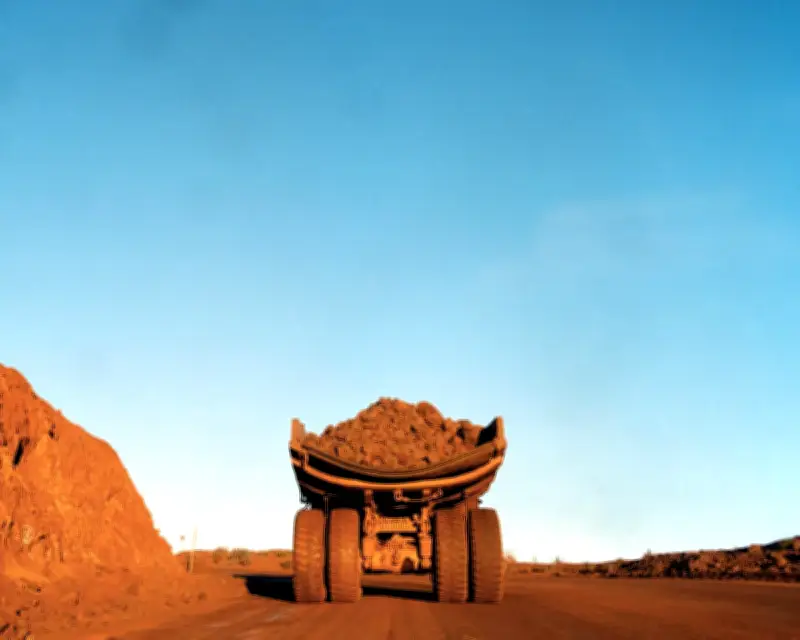
A briefing document circulated to BHP investors has warned that the federal government's fuel tax break is acting as a handbrake on the decarbonisation of the miner's Australian operations. The analysis, compiled by the Australasian Centre for Corporate Responsibility (ACCR), suggests the tax credit is having a material impact on the financial attractiveness of diesel abatement projects.
BHP's diesel fleet and tax credit
BHP's vast fleet of diesel haul trucks is one of its biggest sources of emissions. However, the company's costs for using diesel are offset by a federal tax break worth $622 million last financial year. BHP is the single largest recipient of this fuel tax credit.
The ACCR analysis found that removing the tax break would substantially improve the economics of four major diesel decarbonisation projects, likely including the electrification of its haul truck and rail fleets in inland Western Australia. ACCR head of engagement Naomi Hogan said removal of the credit would make most of BHP's fleet electrification projects financially viable.
Decarbonisation delays exposed
Earlier this year, a leaked cache of documents obtained by Guardian Australia and the ABC's Four Corners revealed BHP had halted or delayed key emissions reduction projects. The documents showed the miner had shelved massive renewables projects in Western Australia, pushed back electrification of its Pilbara diesel truck fleet, and scrapped a processing plant that would have cut emissions for steelmaking customers.
BHP has described climate change as an existential threat requiring the greatest mobilisation since World War II, but the leaked documents raised questions about its commitment. A briefing document distributed to investors this week cited those revelations and said they posed serious questions about transparency and accountability.
Political pressure mounts
Labor faces internal pressure on the fuel tax credit policy before the party's national conference in Adelaide next week. More than 270 local ALP branches have passed motions supporting a campaign to limit credits to $50 million per company. Labor MP Jerome Laxale broke ranks in May to publicly back changes, saying it was reasonable to expect more from big miners.
Independent senator David Pocock also backed calls for changes, saying BHP was laughing at Australia's key climate policy, the safeguard mechanism, while pocketing hundreds of millions in tax breaks. He noted BHP paid $8 million for emissions under the safeguard mechanism last year while getting $379 million in fuel tax credits.
Financial risks for investors
The ACCR analysis warned BHP investors that delays on decarbonisation would expose the company to greater carbon costs. BHP's initial decarbonisation plan would cost it US$11.2 billion to $19.3 billion in forced and voluntary carbon credit purchases by 2050. A 10-year delay would increase those costs to US$16.6 billion to $28.5 billion, a 48% increase.
Hogan said BHP's delays posed significant risks for investors. BHP has built a reputation as a safe set of hands to navigate the transition, but trust has been tested as more evidence of decarbonisation delays comes to light.
BHP's response
BHP set a target of 30% emissions reductions by 2030 and net zero by 2050. It has already achieved its 2030 target, largely by buying renewable power overseas and suspending its Western Australian nickel operations. The company has blamed slow technological advancement in large battery-electric haul trucks for delaying projects.
A BHP spokesperson said the company had reduced emissions by 36% from 2020 levels and continued to hold a net-zero goal. The delays had been explained publicly, and the company expected to adopt diesel displacement technologies at scale after FY2030, with at least US$4 billion in spending in the 2030s. Trials of two 240-tonne battery-electric haul trucks in the Pilbara and four battery-electric locomotives are underway.
A spokesperson for Resources Minister Madeleine King said the government was not considering changes to the fuel tax credit, which ensures businesses are not taxed for fuel used off public roads. The Safeguard Mechanism supports resources sector decarbonisation by setting clear incentives for companies to invest and reduce emissions.