The European Central Bank (ECB) has issued a stark warning that the climate emergency and the breakdown of nature pose a dramatically growing risk to the global economy. Frank Elderson, a member of the ECB’s executive board, said the eurozone’s central bank is intensifying its monitoring of financial risks linked to the destruction of “ecosystem services” – the natural processes and assets that underpin human activity.
Ecosystem Services in Rapid Decline
“These services are not stable but they are in rapid decline. That’s why we talk about the climate and nature crises,” Elderson said. “So knowing that dependency, and knowing those exposures by the banks, we come to the conclusion that this is relevant.”
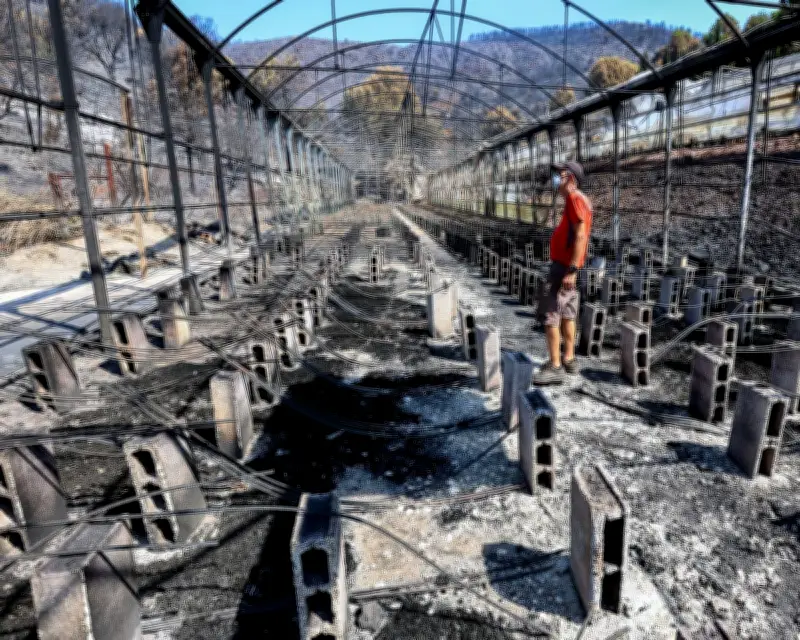
His comments come as wildfires rage across France and Spain amid record-breaking temperatures, torching land, businesses, and homes. The devastation carries a heavy economic cost alongside the direct human toll, underscoring the urgency of the ECB’s warning.
Financial Stability at Risk
In an interview with the Guardian, Elderson said the rising frequency of natural disasters linked to global heating clearly poses a threat to financial stability. He stressed that more work is needed to assess the risk from the collapse of ecosystem services, as reliance on nature is more complex to map than the impact of a single extreme weather event.
Ecosystem services include any benefit derived from natural structures or processes – water, for instance, serves as a raw material, an energy source through hydropower, and a transportation route. It also provides habitat for marine life critical to food production and forms the basis for recreational activities.
Core Economics, Not Tree-Hugging
“Nature-related risks can pose material economic and financial risks, including through their impacts on credit risk, growth, inflation and – over the long-term – potential financial instability,” Elderson explained. “I did interviews [previously] saying, you know, if you destroy nature, you destroy the core on which our economies depend. And that got people’s attention. This is not some kind of a flower-power, tree-hugging exercise. This is core economics. This is core financial stability, core price stability.”
As the supervisor responsible for Europe’s largest banks, the ECB has launched a programme to assess how escalating damage to ecosystem services could expose the financial system to risk. The central bank plans to publish analysis later this year investigating how “ecosystem degradation pathways” could translate into credit loss dynamics for the eurozone’s banks.
Leading the Green Finance Agenda
A Dutch lawyer and central banker, Elderson was instrumental in creating the Network for Greening the Financial System (NGFS) in 2017, alongside Mark Carney and François Villeroy de Galhau, then chiefs of the Bank of England and Banque de France. He served as founding chair of the group of 114 global central banks and financial supervisors pushing to develop climate risk management.
The green agenda in financial services has faced pushback under the US presidency of Donald Trump, as some businesses battle to remain engaged in the fossil-fuel economy. Trump pulled the US out of the NGFS last year, leaving Europe to take the lead on climate-related risks without the involvement of the world’s most powerful economy.
Banks Acknowledge Relevance
Elderson said the banking industry remains convinced that climate and nature-related risks must be addressed. “I would think it’s very difficult to find a bank in Europe that will honestly tell you that they think this is not relevant,” he said. “I think that time has passed.”