Ocado's chief executive Tim Steiner has publicly acknowledged the company's naivety in accepting warehouse automation orders from North American retail partners, as the announcement of 1,000 job cuts and ongoing operational challenges triggered a dramatic ten per cent plunge in the company's share price on Thursday morning.
Financial Results and Market Reaction
The retail technology group released financial results showing easing losses and slowly climbing revenue, but it was the planned workforce reduction – predominantly at the Hertfordshire headquarters – that captured market attention. Shares in the FTSE-250-listed company dropped ten per cent at market open, though they recovered slightly to an 8.5 per cent decline by midday, leaving the stock down more than nine per cent since the beginning of the year.
Operating costs at the online retailer jumped three per cent to £1.6 billion, while the group's adjusted loss before tax eased slightly, shrinking seven per cent to £353 million. Ocado has been investing heavily in automation and artificial intelligence in recent quarters and is now looking to implement £150 million in cost reductions as it attempts to streamline operations.
North American Partnership Failures
The company had secured exclusivity agreements with major retail chains in North America, but these partnerships have encountered significant difficulties. US grocery giant Kroger closed three automated warehouses last year, wiping out nearly one-fifth of Ocado's UK market value. The situation worsened in January when Canadian retailer Sobeys announced the closure of its Calgary facility that utilized Ocado's robotic systems, citing a "slower than anticipated" growth rate.
During a results briefing with analysts, Steiner was questioned about whether commentators had been too lenient in assessing Ocado's responsibility for these warehouse shutdowns. The CEO responded with surprising candor, stating: "Did we just accept the orders? Yes. Is that, in hindsight, a bit naive? Yes."
Shifting Responsibility to Partners
Steiner appeared to place greater blame on the North American partners for the collapse of these automation projects, emphasizing: "Our partners are the ones that need to drive the acquisition of customers. We can help them, but we need our partners, having made a commitment to a site, to work very hard to put volume into that site."
The CEO suggested he regretted not advising Sobeys to construct its warehouses in a different sequence, ensuring that earlier facilities were located in areas with stronger consumer demand. "We've been aware of the challenges of our early business model and we've been working on that for the last eight years," Steiner explained. "We obviously still have to live with the consequences of those early sites and those early decisions."
Analyst Criticism and Structural Changes
Chris Beauchamp, chief market analyst at IG, delivered particularly harsh criticism of the company's performance: "Ocado continues to be one of the most impressive vehicles for shareholder value destruction we have seen. For a company once viewed as the future of supermarket delivery, its fate has been to be overtaken by its more pedestrian, but larger, rivals, utilizing their size and reach and building on their existing business to tell a much more compelling story for investors."
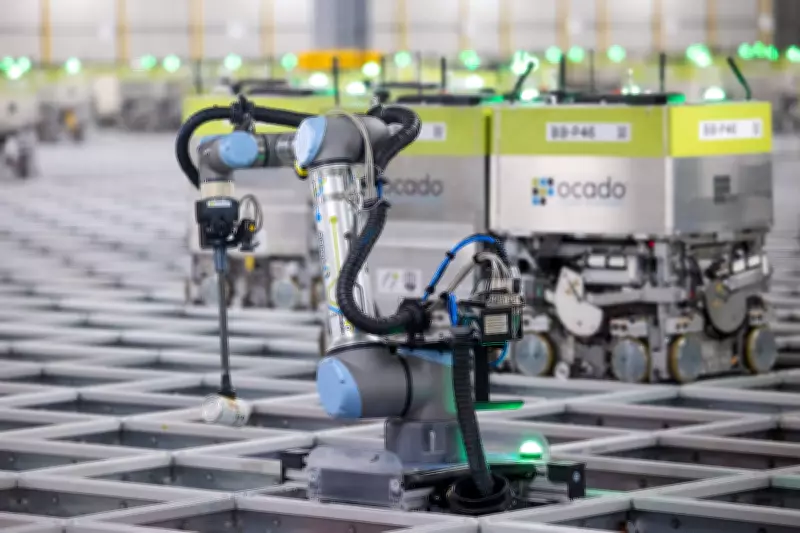
Ocado Group operates robotic warehouses for supermarket chains worldwide and recently transferred control of its UK food delivery operation to Marks & Spencer, meaning the two companies now report their financial results separately. Steiner's warning about impending redundancies clearly unsettled investors, contributing to the sharp decline in share value at Thursday's market opening.
The company's acknowledgment of strategic missteps in its international expansion, combined with substantial workforce reductions and ongoing financial losses, presents significant challenges for the once high-flying technology firm as it attempts to navigate an increasingly competitive global retail landscape.