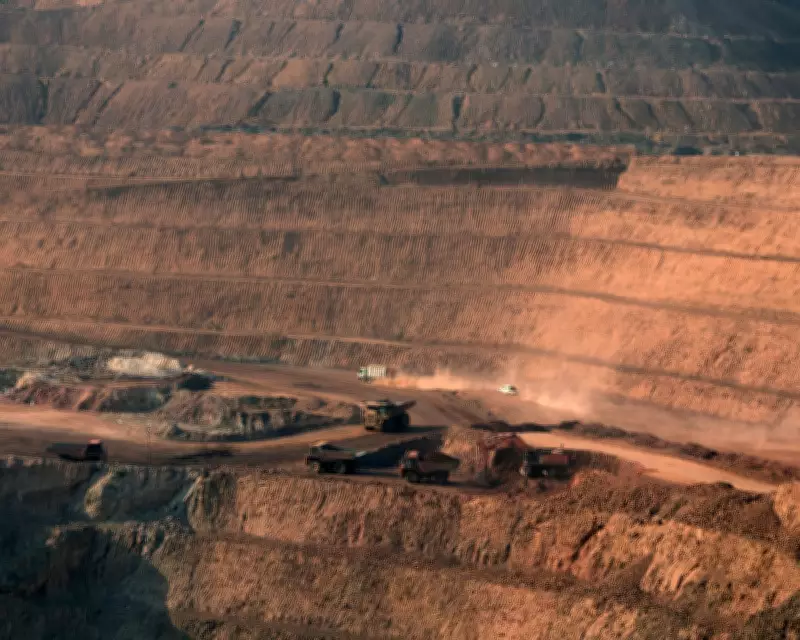
Glencore Proceeds with $2 Billion Shareholder Return Amid Challenging Year
In a bold financial move, the global mining giant Glencore has declared its intention to return a substantial $2 billion to its shareholders, equivalent to approximately £1.47 billion. This decision comes in the wake of a notably turbulent period for the company, marked by a decline in profitability and the dramatic failure of merger discussions with industry peer Rio Tinto.
Financial Performance and Strategic Shifts
The FTSE 100-listed firm, headquartered in Switzerland, disclosed these plans on Wednesday alongside its annual financial results. The report revealed a 6% decrease in profits compared to the previous year, with earnings falling to $13.5 billion. This downturn was primarily driven by significant drops in coal and energy commodity prices, which overshadowed gains from rising metals prices and increased copper output in the latter half of the year.
Glencore, originally founded in 1974 as a trading entity, now operates across more than 30 countries and employs around 140,000 people worldwide. Despite the profit slump, the company is forging ahead with an ambitious strategy to more than double its copper production over the next decade, positioning itself as a key player in the global transition to renewable energy.
Failed Merger and Historical Context
The collapse of talks with Rio Tinto represents a major setback, as the proposed merger would have been the largest in mining history, valued at an astounding $260 billion. This is not the first time such a combination has been contemplated; discussions have surfaced repeatedly over the past two decades, including an initial proposal just before the 2008 global financial crisis. Rio Tinto previously rejected Glencore's merger approach in 2014, and the latest round of negotiations in 2024 similarly ended without agreement.
These recent efforts followed the landmark $53 billion deal between Anglo American and Canadian rival Teck in September of last year, which consolidated two of the world's leading copper producers. Despite the disappointment, Glencore's Chief Executive, Gary Nagle, emphasized that the past year brought "significant progress" and highlighted "clear momentum for our copper-led growth strategy."
Copper at the Core of Future Growth
Copper has become increasingly central to Glencore's long-term vision, fueled by surging demand for electric vehicles, renewable energy infrastructure, and power grid expansions. The company has set aggressive production targets, aiming to exceed 1 million tonnes of copper annually by the end of 2028 and reach 1.6 million tonnes by 2035. Achieving these goals would elevate Glencore from its current position as the world's sixth-largest copper producer to one of the top global producers.
Currently, Glencore also holds the title of the largest listed coal producer, a segment that has drawn criticism from climate activists. In 2024, the company abandoned plans to spin off its coal business after shareholders advocated retaining this highly profitable, albeit polluting, division, arguing it remains essential for energy needs in developing economies.
Rationale for the Shareholder Payout
Gary Nagle justified the $2 billion payout by pointing to Glencore's $4 billion stake in Bunge, a U.S. agricultural trader acquired through the merger of Bunge with Glencore's Viterra grain business last year. He described this as surplus capital being allocated specifically for shareholder returns, underscoring the company's commitment to delivering value despite broader challenges.
This strategic payout reflects Glencore's resilience and adaptability in a volatile market, balancing immediate shareholder rewards with long-term investments in copper production to capitalize on global energy transitions.