Explosive Report Alleges CFMEU Victorian Branch Was 'Crime Syndicate'
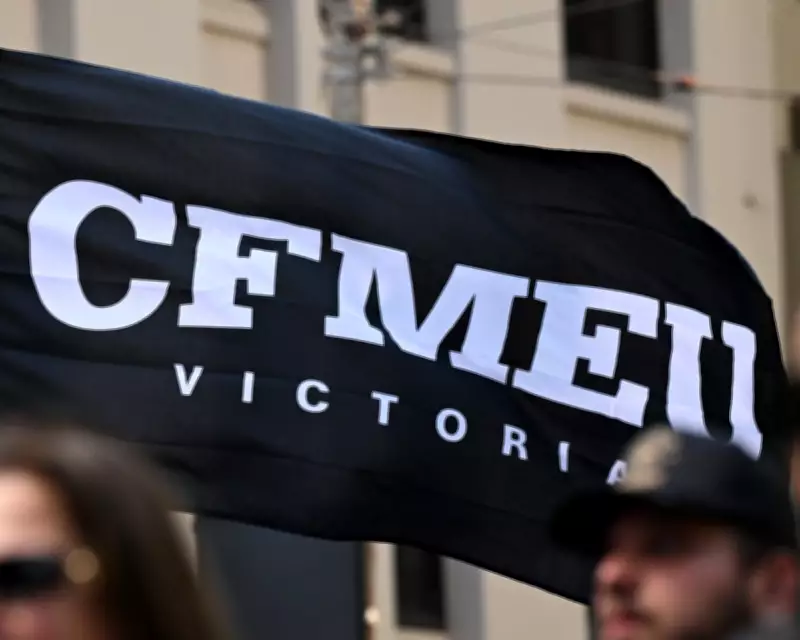
A shocking report commissioned by the administrator of the Construction, Forestry, Maritime and Energy Union has made explosive allegations about the union's Victorian branch, claiming it had transformed from a legitimate trade union into what was effectively a criminal organization. The document, authored by prominent corruption fighter Geoffrey Watson SC, contains claims that have sent shockwaves through Australian politics and the construction industry.
Staggering $15 Billion Taxpayer Impact Alleged
The most eye-catching allegation in the report suggests that corruption involving the CFMEU's Victorian branch may have cost taxpayers as much as $15 billion. This staggering figure emerged from redacted sections of Watson's report that were recently released during a Queensland inquiry into the union's activities. The report specifically focuses on the period when the Victorian branch was under the leadership of John Setka and coincided with the state's massive $100 billion infrastructure program known as the Big Build.
Watson's report, titled "Rotting from the Top," alleges that as major projects like level-crossing removals, station redevelopments, and the construction of the Metro and West Gate tunnels accelerated, the union's influence grew disproportionately. The document claims that unskilled labor positions became so lucrative—with base salaries exceeding $1,900 per week before overtime—that corrupt union officials and delegates began buying and selling these jobs.
Government Knowledge and Inaction Alleged
Perhaps even more damaging are the allegations about government awareness and response. In a redacted chapter titled "Government inaction on the CFMEU," Watson claims the Victorian government "knew and had a duty to know" that corrupt union figures and underworld elements had infiltrated the Big Build projects but chose to take no meaningful action. The report suggests the government may have been intimidated by the union's industrial power and willingness to operate outside legal boundaries.
Mark Irving KC, the CFMEU administrator who commissioned the report, later explained that the two controversial sections about government inaction and the $15 billion cost estimate were redacted because he "was not satisfied that they were well-founded or properly tested." Despite this qualification, the allegations have created a political firestorm in Victoria.
Political Fallout and Calls for Investigation
Victorian Premier Jacinta Allan has described the report's allegations as "sickening" and "disgusting," though she has specifically rejected the $15 billion figure, noting that even the administrator questioned its validity. Allan maintains that she only became aware of systemic issues within the CFMEU through media reporting in July 2024, at which point she referred matters to the Independent Broad-based Anti-corruption Commission.
The political opposition has seized on the report, with Shadow Attorney General James Newbury requesting an Ibac investigation into Watson's findings and the redacted sections. Opposition Leader Jess Wilson has gone further, calling for a royal commission with proposed terms of reference that would investigate "the true extent" of the cost to taxpayers and determine exactly what Premier Allan and her ministers knew about the situation and when they knew it.
How the $15 Billion Figure Was Calculated
Watson's methodology for arriving at the controversial $15 billion estimate has come under scrutiny. He described it as a "very rough" calculation based on opinions from "highly qualified stakeholders." With the Big Build valued at approximately $100 billion, and industry sources suggesting cost blowouts linked to CFMEU conduct ranged between 10% and 30%, Watson settled on a middle estimate of 15%, which he described as "not unreasonable" and "probably conservative."
However, some experts have questioned this approach. David Hayward, an emeritus professor of public policy at RMIT University, suggested that while criminality within the union was concerning, "there doesn't seem any reason to believe criminality was as financially significant" as Watson's redacted chapters suggest. Hayward noted that construction overruns were more likely due to increased materials and equipment costs rather than union corruption alone.
Broader Implications for Construction Industry
The report paints a disturbing picture of union infiltration by criminal elements, alleging that CFMEU figures and outlaw motorcycle gangs had penetrated major construction projects, with some building sites being "converted" into "drug distribution centers." These allegations, if proven, would represent one of the most serious cases of organized crime infiltration into legitimate industry in Australian history.
As parliament resumes, the Victorian government faces mounting pressure to address these allegations comprehensively. The Coalition is expected to use its numbers in the upper house, where the government lacks a majority, to push for further investigations, including another referral to Ibac and motions supporting a royal commission. The coming weeks will likely see intense political debate about union governance, construction industry regulation, and government oversight of major infrastructure projects.