
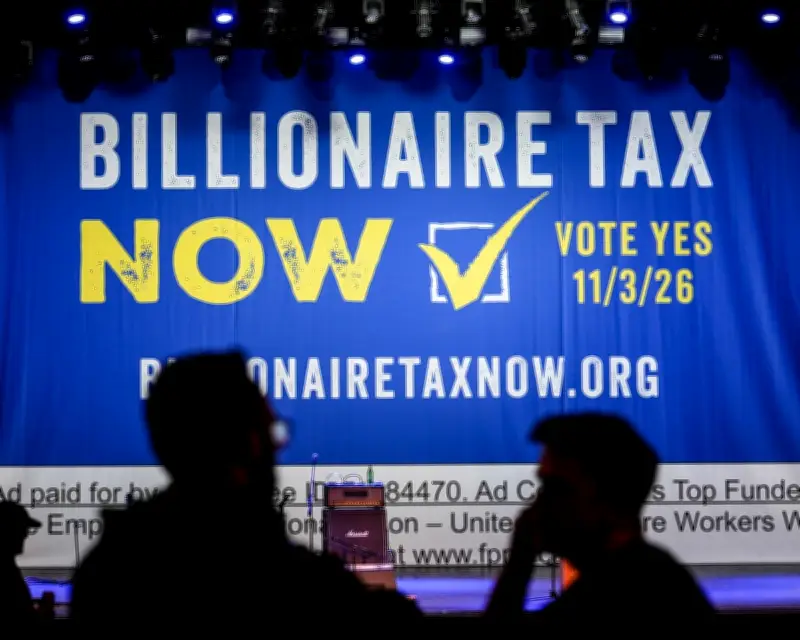
A California bill that would impose a tax on the unrealized capital gains of billionaires has cleared a crucial committee hurdle, advancing a proposal that could reshape state taxation and directly target the immense wealth concentrated in the technology sector. The measure, known as the Wealth Tax Act, passed the Assembly Revenue and Taxation Committee by a 7-3 vote on Tuesday, moving it closer to a full floor vote in the state legislature.
How the Tax Would Work
The proposed tax would apply to California residents with a net worth exceeding $1 billion, taxing their unrealized capital gains—the increase in value of assets like stocks or real estate that have not yet been sold. The tax rate would be 1% on gains above $1 billion, with an additional 1.5% on gains over $10 billion. According to the bill's author, Assemblymember Alex Lee (D-San Jose), the tax would generate an estimated $12.5 billion annually. These funds would be earmarked for public education, affordable housing, and homelessness prevention programs.
"We are facing a crisis of inequality that is tearing our state apart," Lee said during the committee hearing. "This tax asks the very wealthiest to pay their fair share on the wealth they are accruing every day, even if they don't cash out. It's time for a new approach."
Tech Industry Opposition
The bill has drawn fierce opposition from tech industry leaders and business groups, who argue it is unconstitutional and could drive wealthy individuals out of California. The California Chamber of Commerce released a statement calling the tax "a job-killer that will push innovation and investment to other states." Some billionaires, including venture capitalist Michael Moritz, have threatened to relocate if the tax passes. "This is a direct attack on the entrepreneurs who built California's economy," Moritz said in an interview.
Legal experts are divided. Supporters point to a 2021 Supreme Court decision that upheld a federal tax on foreign earnings as a precedent for taxing unrealized gains. Opponents argue that a state-level tax on unrealized gains would violate the Commerce Clause and the Fourteenth Amendment's Due Process Clause. "This is untested legal territory," said Professor David Gamage of Indiana University, who has studied wealth taxes. "But there is a plausible path for it to survive judicial review."
National Implications
If enacted, California would become the first state in the U.S. to tax unrealized capital gains, a move that could inspire similar proposals in other states. The tax would affect approximately 200 billionaires in California, including tech figures such as Elon Musk, Larry Page, and Sergey Brin. The bill's progress comes amid growing national debate over wealth inequality, with President Joe Biden recently proposing a similar tax at the federal level as part of his budget plan.
"California has always been a laboratory for democracy," said state Senator Scott Wiener (D-San Francisco), a co-sponsor. "If we can show this works, it could change the conversation across the country."
Next Steps
The bill now moves to the Assembly Appropriations Committee, where it must pass before a full floor vote. Governor Gavin Newsom has not taken a public stance on the proposal, but his administration has signaled openness to exploring new revenue sources. The legislative session ends in August, giving supporters a narrow window to push the bill through.




